

Highlights
-
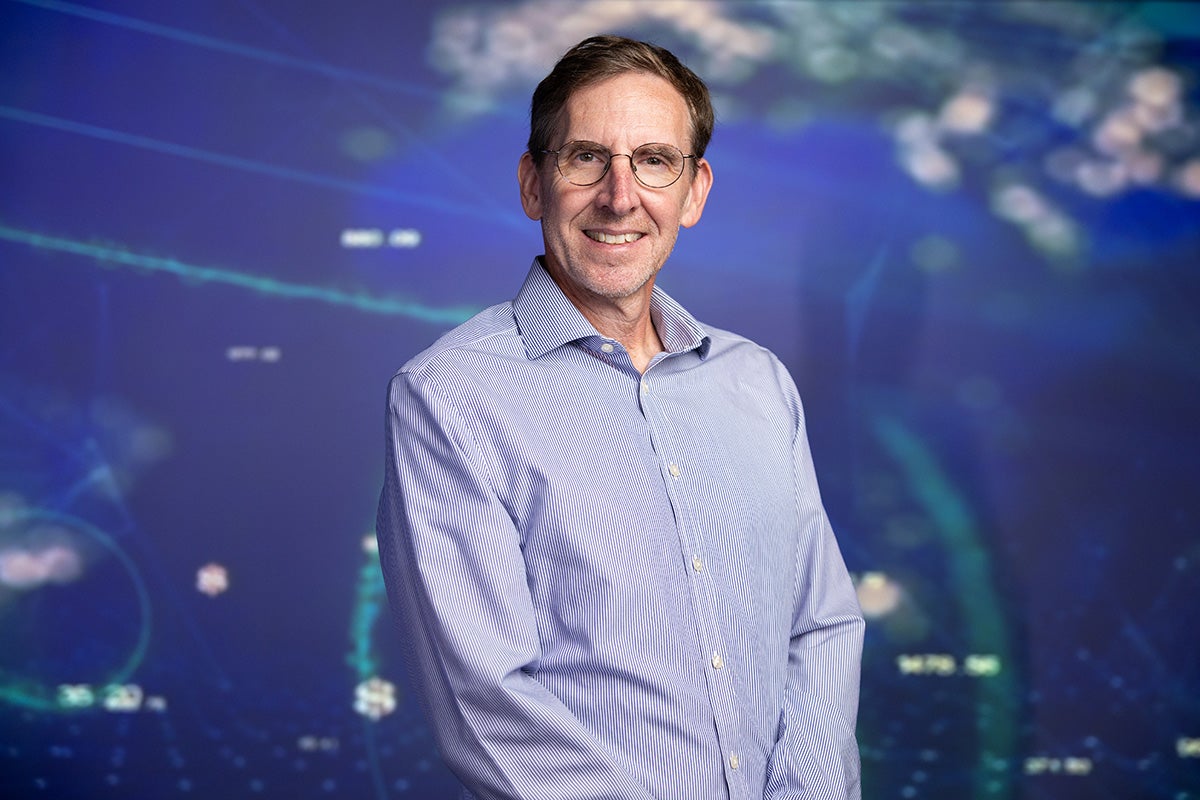
UCF Accounting Professor Jake Rose is among a small group of researchers worldwide merging artificial intelligence (AI) and neuroscience to shape the future of business decision-making.
-
Rose believes neuro-accounting could transform how businesses and governments analyze financial risk, make decisions and work alongside AI.
-
To advance this work, UCF’s Dixon School of Accounting is pursuing the first neuro-accounting lab of its kind in the U.S.
The more Jake Rose’s colleagues at UCF and his neighbors around Chuluota, Florida, get to know him, the more he surprises them. The California native surfs and gardens. He is as comfortable building barns as he is building frameworks for AI-driven interfaces. He studied premed, minored in information systems and at heart admits to being “a closet psychologist.” He and his wife, University of Missouri Accounting Professor Ania Rose, raised their two children in New Zealand and recently purchased seven acres of workable land in the Orlando area.

The man with the callused hands is one of only a handful of professors in the world merging artificial intelligence (AI) and neuroscience to shape the future of the field he’s best known for at UCF — accounting.
Welcome to the dawn of neuro-accounting.
“When my master’s students hear about these new ways to view and practice accounting and the tremendous difference technology can make, it heightens their interest,” Rose says. He adds with a smile, “I’m also more relatable when they find out how I spend my weekends.”
“Accounting provides the information needed for [business] decision-making, and that’s why neuro-accounting will eventually impact the entire global economy.”
On his most recent Saturdays, he’s been using his hands to dig postholes for 2,000 linear feet of fencing while letting his mind do what comes naturally to him: envisioning the future. In this one, he sees Paso Fino horses and an orchard.
Then, fully refreshed on Monday, he’s Professor Rose again with his thoughts laser-focused on what he calls “this unusual combination” of behavioral science, technology and accounting.
“I’ve never viewed accounting as just credits and debits,” he says. “When you take a step back, you see business is about decision-making. Accounting provides the information needed for this decision-making, and that’s why neuro-accounting will eventually impact the entire global economy.”
Trailblazing with Technology
Rose joined UCF in August 2025 after directing accountancy programs at universities from the South Pacific to America’s heartland. He made the move because he recognized a unique culture in UCF’s Barry S. Miller College of Business, which recently received a $50 million gift from entrepreneur and alum Barry Miller ’95 to strengthen tech-driven business education — including Rose’s work.
“This is one of the very few business schools that want to pursue experimental work with technology,” Rose says. “I saw it as a unique place to make progress in neuro-accounting, which, other than UCF, only exists in a colleague’s lab in Australia.”
He’s made rapid progress. Within weeks of arriving at UCF, Rose was named the university’s Kenneth G. Dixon Eminent Scholar for excellence in accounting research. At the award ceremony, Rose emphasized the larger mission driving his work: “We can literally improve the world.”
When he says “we” in this context, he refers to a collaboration between people and advanced tech.
“When we design systems and interfaces that allow people and AI to make important decisions together, then every business and government can benefit.”
“The basic mechanics of accounting are already being automated,” he says. “The future will be about how people perceive risks within financial data and how technology can improve professional judgment. The consequences of good judgment are massive and affect businesses and lives worldwide. The truth is, we’re bad at dealing with large amounts of data because our brains are limited. But AI and other new technologies are expanding our limits. When we design systems and interfaces that allow people and AI to make important decisions together, then every business and government can benefit. The implications are massive.”
Those improvements, the way Rose sees them, will have their origins at UCF’s Dixon School of Accounting, in the first neuro-accounting lab of its kind in the U.S.
Fun and Fresh: The Future of Accounting
Rose already knows what the future lab could look like because he’s worked in the Clinical Neuroscience Laboratory at James Cook University in Australia. The Dixon School’s director, Jay Thibodeau, is currently seeking funding to bring the concept to UCF.
Once complete, the lab would allow researchers to measure how new technology and financial information influence crucial judgment factors like stress and attention.
“Ultimately, we’ll be able to help firms make better decisions,” Rose says.
However, he doesn’t want to be one of the only people in the world who understands neuro-accounting.
“This is why I love teaching,” Rose says. “I get to spread the word with students and let them experiment. It’s fun. They’re enthusiastic about taking accounting where no one has taken it.”
Pegasus Magazine
Pegasus Magazine Featured Story
Robots in the Real WorldFrom smart-assistant robots that can feed people cereal to Mars-ready rovers built by UCF’s robotics club, the university is developing the minds and machines that will shape our future.
Pegasus Magazine Featured Story
Community CareUCF-HCA Florida Healthcare residency programs are playing a
crucial role in bringing more in-demand physicians to the state.
Pegasus Magazine Featured Story
Stellar HealthUCF researchers are exploring how space travel impacts the human body.
Pegasus Magazine Featured Story
The Rise of SpaceUFounded to help fuel talent for the nearby space industry, UCF continues to build its reputation as SpaceU. Here’s a look at the early days of UCF’s space ties and journey to new frontiers.
