

Thai startups eye Korea as Korean firms explore Thailand
Thailand is strengthening startup cooperation with South Korea, helping Thai firms enter the Korean market while creating opportunities for Korean startups to test technologies and expand in Thailand.
The initiative brings together the Thai Embassy in Seoul, universities and startup organizations to connect entrepreneurs with potential partners and markets in both countries.
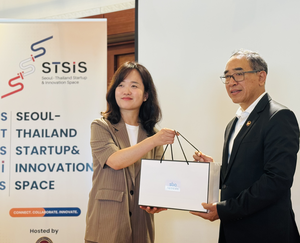
“We serve as a bridge,” Thai Ambassador to South Korea Tanee Sangrat said at a startup event at his residence in Seoul.
Sangrat said startups are becoming an increasingly important part of bilateral economic cooperation and that the embassy aims to support companies moving in both directions.
“We also support Korean startups,” he said, encouraging Korean entrepreneurs to explore opportunities in Thailand and work with universities and young innovators there.
The embassy is renovating the first floor of its building to provide a base for STSiS, an organization aimed at connecting the two countries’ startup ecosystems.
For Thai startups, however, entering South Korea can be difficult.
Piyada Sukonpan, vice president for strategy and planning at STSiS and CEO and co-founder of Taste Vision Korea, said intense competition and high consumer expectations make South Korea a demanding market for foreign companies.
“Korea is a very serious market,” Sukonpan said. “A serious market doesn’t reward a good idea or just a translated pitch deck.”
She said foreign startups must demonstrate that their products can “solve a Korean problem better than the option that has already existed in Korea.”
“A translated landing page doesn’t create product-market fit,” Sukonpan added. “A pilot project doesn’t automatically become a contract.”
Sukonpan urged Thai founders to focus on evidence that could persuade Korean customers rather than relying on the appeal of their technology.
“What fact can I create in the next 90 days that makes a Korean buyer more confident to say yes?” she said.

Ronnakorn “Ronnie” Vaiyavuth, deputy executive director for innovation and commercialisation at Chulalongkorn School of Integrated Innovation, said similarities between the Thai and Korean markets could create opportunities for startups from both countries.
“We often identify similar gaps in the market,” Vaiyavuth told The Korea Herald.
Many Thai startups remain at an early stage and need further development before entering the Korean market, he said.
“If we have time to incubate them until the maturity stage … to match with the Korean needs, then I think it will be a perfect match,” Vaiyavuth said.
The initiative also aims to bring more mature Korean startups to Thailand for proof-of-concept testing.
Some Thai entrepreneurs, however, view South Korea more as a
“I don’t want to expand my business in Korea, but I want to partner with Korean startups to expand in Thailand,” said Chanin Traitrongsat, CEO of Thai startup GMS.
GMS operates a booking and guest-management system integrated with Line, a messaging platform widely used in Thailand. Customers can reserve and pay for sports facilities and access them through the app, reducing the need for on-site staff.
Users can “book, pay for a slot, get in, play the sport and get out,” Traitrongsat said.
He identified Korean companies involved in golf simulators, sports facilities and co-working spaces as potential partners, particularly those seeking to enter Thailand with services tailored to local consumer behavior.
The initiative reflects a two-way strategy: preparing Thai startups for the Korean market while giving Korean companies opportunities to test products and find partners in Thailand.
