

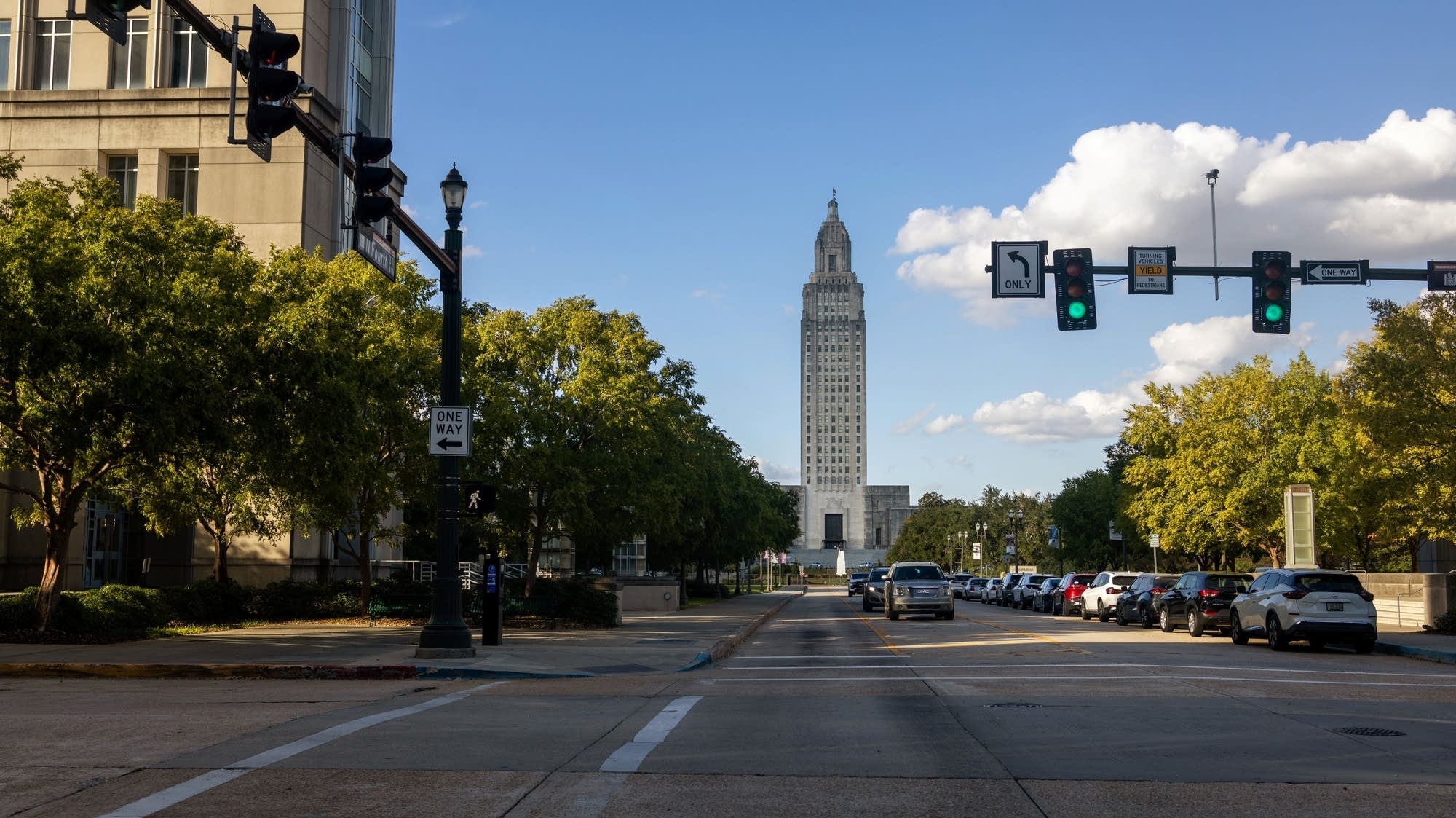
States are spending rural health dollars on tech startups, betting that untested companies will succeed where doctors have vanished and hospitals have collapsed.
When Josh Fleig, Louisiana’s chief innovation officer, learned his state had set aside $20 million a year, for five years, to invest in startup rural health companies, his reaction was not surprising: “Wow,” he said.
In rural America, where people are often reported to be sicker with poor access to healthcare, the cash influx is a relief. In the economic development space where Fleig operates, it’s an opportunity.

“Look, that’s a lot of money for what we do,” said Fleig, whose state-funded economic development office invests in corporate launches, ranging from software startups to shipbuilders.
Louisiana and a handful of other states set aside money from their share of the $50 billion federal Rural Health Transformation Program to quickly invest in new technologies, mirroring private industry moves. Lawmakers added the rural health program to offset more than $900 billion in reduced Medicaid spending expected over 10 years from Republicans’ sweeping 2025 tax and spending law.
But rather than filling the budget hole, the rural program’s assignment is to find new approaches for revitalizing rural communities where doctors are in short supply and hospitals have been downsizing and closing for decades. The federal government doled out the first-year rural health program awards to states this year, with pots ranging from $147 million in New Jersey to $281 million in Texas.
Modernizing technology infrastructure is a key pillar of the federal rural health program, and the catalyst money epitomizes the administration’s strategy to move fast and experiment with untested technology — much like the “move fast and break things” mantra during the heyday of Silicon Valley.
Instead of breaking things, though, the goal is to “move fast, fast-fail, innovate quickly, and move to sustainability,” said Aaron Bujnowski, a managing director with the healthcare industry group at consultancy Alvarez & Marsal. “This is a transformation that is still meant to serve the people.”
Rigorous rules and tight deadlines
Beyond Louisiana, Timothy Foster, spokesperson for the Centers for Medicare & Medicaid Services (CMS), confirmed that Delaware, Georgia, Massachusetts, Nebraska, South Carolina, Virginia, and West Virginia are also creating rural health tech catalyst funds.
Every year, states must compete for rural funding in the five-year federal program. Federal regulators will take money away from states that do not meet the goals promised in their applications, including whether they designated money to companies for tech innovations.
CMS, which is overseeing the program, released a seven-step guidance document for states to follow when creating the tech catalyst operations. No more than 10% of each state’s award can be spent on a rural tech catalyst fund.
States’ initial annual progress reports for the rural fund are due at the end of August. CMS has declined to publicly post those reports; it plans to publish an annual report on state progress. States must show that first-year funds will be obligated — but not necessarily spent — by Oct. 30, according to the CMS guidance document.
Daniel X. O’Neil, a technology consultant who advocates for open data and open government, created a state tracker and parsed the original state applications to find dozens that mention catalyst awards and technology funds.
“[I’m] looking forward to the clawbacks and the craziness of October because, you know, that’s serious stuff,” O’Neil said.
For the rural health catalyst funds, CMS requires states to submit the list of finalists “at least 15 business days” before announcing winners, along with “sufficient information” for the agency to “assess each proposed project,” according to the guidance document.
The document outlines intellectual property and federal rights but does not provide guidance or standards for patient rights or protections. CMS spokesperson Foster stated in an email that the technology investments must comply with federal “privacy, security, interoperability, and patient safety” requirements.
Protecting patients
Maya Sandalow, director of the health program at the Bipartisan Policy Center and one of the leading analysts watching the rural fund, said the catalyst funds are “public dollars” and has called for more transparency in the overall rural health program.
Accurate and timely reporting must be done to ensure “the necessary guardrails are in place” to protect patients, she said, adding that the innovation needs to be “tested in a way that’s safe for the patients that they are going to be used on.”
To apply, startups must be less than 10 years old and have raised less than $50 million in early funding. Companies that win a portion of state catalyst funds must meet predetermined milestones before being paid — and federal officials will make “targeted reviews as needed,” according to the guidance document.
Louisiana officials announced the state’s tech catalyst fund with an event in rural Natchitoches, known as the filming location of the 1989 film “Steel Magnolias.” The fund quickly drew more than 200 companies competing for between $250,000 and $3 million in seed money.
Tiny startup Greens Health was invited to the event. The two-year-old company analyzes Medicare claims to identify patients with chronic diseases, such as diabetes, and works with local home health nurses and senior facilities to improve care.
“We’ve been looking for a way to launch in Louisiana,” said Kehlin Swain, co-founder and CEO of Greens Health. The company serves about 100 patients across Texas, Alabama, and Florida and hopes to get a $250,000 investment from Louisiana.
Louisiana’s Fleig said his state is “at a really interesting turning point.” The state secured $208.4 million for the first year of the rural health program and quickly created its catalyst fund using the state’s already established innovation department.
At the same time, nearly 1.1 million people live in Louisiana’s rural parishes and it ranks as the “least healthy state” in the nation, according to the state’s own application. State rates of diabetes, obesity, and cardiovascular disease are among the highest in the nation.
Fleig believes Louisiana is an ideal place to test technology solutions. So, while Silicon Valley has “not needed much of what Louisiana has had to offer” for most of its existence, it does now, he said.
Caret Health is one of those companies. Co-founders Riya Pulicharam, who is a physician-researcher, and Kevin Zhao, an engineer, met in Silicon Valley. Together, they created a technology platform that identifies patients who need help getting to their appointments, having scans done, or picking up prescriptions. That technology flags a human, who then contacts the patient with a call or text.
Zhao said Caret had successful pilots at large health systems, but those places also had other vendors and “it was a pretty big uphill battle” to get in and scale. Then, in 2024, the company began paying attention to rural places.
“There wasn’t a lot of existing infrastructure, and that was really good for us because we were able to come in very quickly,” Zhao said. “A lot of the hospitals really needed this kind of service.”
Fast-forward to 2026: Caret Health is about four years old and has contracted with roughly 60 hospitals in 16 states. Pulicharam and Zhao hope to win $3 million to expand into Louisiana.
Louisiana’s Fleig said the state will take an equity stake in each company it invests in. “The dream” is that selected startup companies will also help the state make money to reinvest. If some companies fail — or fail fast— that’s to be expected, but the state should still make money because of “the law of averages,” he said.
“If we are good, we’ll make more money than we spent,” Fleig said. “Either way, it’s going to go back into improving healthcare outcomes.”
KFF Health Newsis a national newsroom that produces in-depth journalism about health issues and is one of the core operating programs at KFF — the independent
