

Add to Google Preferred Sources1
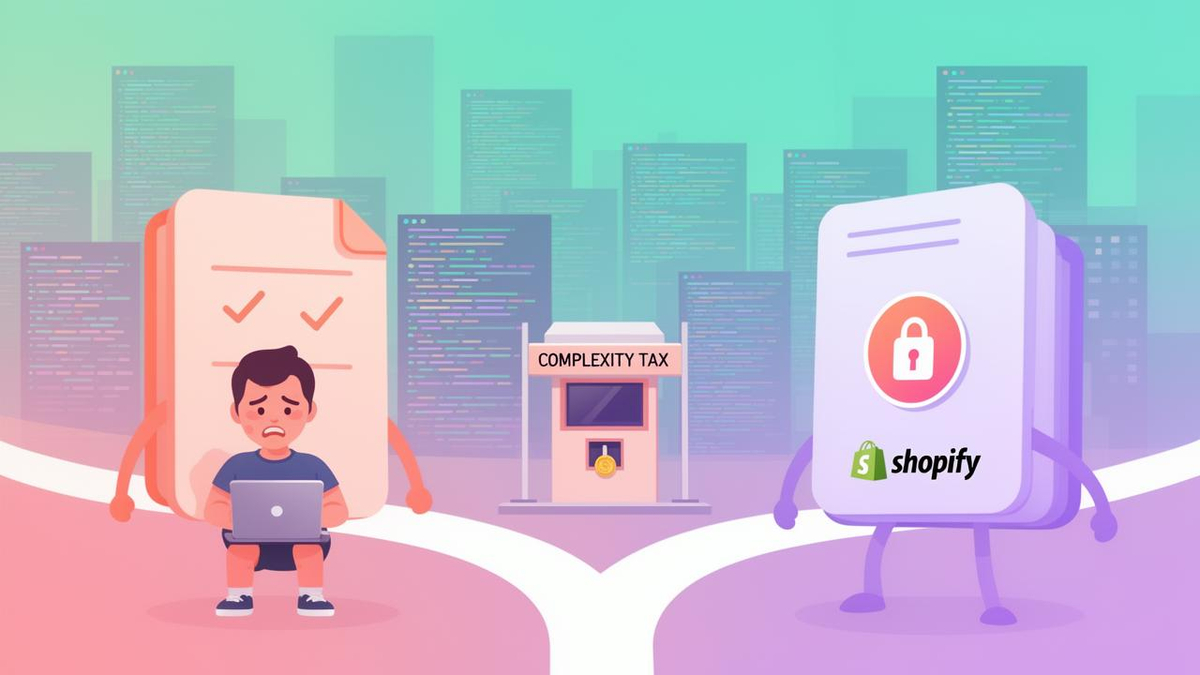
Shopify CEO Tobi Lütke publicly said he is considering banning Anthropic’s AI coding tool Claude Code across the company because it refuses to support AGENTS.md, an industry-standard format adopted by more than 60,000 open-source projects, insisting instead on its proprietary CLAUDE.md system. In a monorepo maintained by thousands of developers, the divergence between the two configuration systems means developers using different AI coding tools may receive different project rules and operational instructions—what Lütke called a “stupid complexity tax.” The developer community has been pressing Anthropic to support AGENTS.md for nearly a year; the relevant GitHub issue has garnered close to 5,000 upvotes but was closed. Thariq, a member of Anthropic’s Claude Code team, responded that the company is working to improve product customizability and explained the product logic behind sticking with its own system—different model families require different context configurations. However, the response failed to quell community frustration. Multiple developers argue this reflects a product-culture problem at Anthropic: a refusal to follow common industry conventions while shifting maintenance costs onto ordinary developers.
Key Elements

Shopify CEO Tobi Lütke has publicly said he is considering banning Anthropic’s AI coding tool Claude Code across the company, citing the tool’s refusal to support AGENTS.md—an industry-standard format adopted by more than 60,000 open-tatement resonated widely across the developer community and finally forced Anthropic, which had been silent for nearly a year, to respond
Lütke wrote on X: “I’m considering banning Claude Code at Shopify until they change their mind and are willing to read AGENTS.md, .agents/skills, etc.”
What looks like a minor dispute over how AI coding tools are configured quickly escalates into a platform-engineering problem inside a large development organization like Shopify. Shopify has thousands of developers jointly maintaining a massive monorepo, and they do not all use the same AI coding tools. Each agent needs to read project instructions from the relevant directory based on the code it is currently processing. If one tool fails to read the same instructions as the others, the agents used by developers may follow different rules.
The clash between two configuration systems
As AI coding agents enter the software development workflow, more and more code repositories are adding AI-specific instruction files. These files typically document project structure, coding standards, testing requirements, development processes, and callable skills, giving AI agents relatively stable project context before they process code.
AGENTS.md is emerging as one of the more common conventions. OpenAI introduced the format in August 2025 to provide project-level instructions to coding agents. By December of that year, more than 60,000 open-rom tools including Codex, Cursor, Gemini CLI, GitHub Copilot, Jules, and VS Code. OpenAI has since handed the format over to the Agentic AI Foundation under the Linux Foundation
Claude Code took a different path. It uses CLAUDE.md to store project instructions and can read CLAUDE.md files in different directories of a repository while processing code. It does not natively read AGENTS.md, even though developers have repeatedly asked Anthropic to add that capability.
Lütke elaborated on the problem in follow-up posts: “AGENTS.md and CLAUDE.md both apply recursively down the directory tree. With thousands of developers maintaining a monorepo, some directory will inevitably be missing one of the two files, and the result is that some developers end up using agents that are ‘missing a chunk of their brain.'”
He added: “We can fix this with automation, but it’s a stupid complexity tax that developers should not have to pay.”
Workarounds and developer frustration
Faced with this compatibility issue, the developer community quickly produced a batch of ready-made solutions. One of the most common approaches is to create a symlink in the project—for example, running ln -s AGENTS.md CLAUDE.md. Another approach leverages Claude Code’s own file-referencing capability: developers can write @AGENTS.md inside CLAUDE.md, allowing Claude Code to load the shared rules the team already maintains while preserving space for Claude-specific configuration in CLAUDE.md.
Developer Ian Nuttall even shared a fairly elaborate prompt that sets up an automated compatibility mechanism for Claude on a Mac: recursively find all AGENTS.md files, create CLAUDE.md symlinks pointing to them in the same directory; use fswatch to continuously monitor for new files; set up a launchd agent to run at startup; and add the generated CLAUDE.md files to a global Git ignore list to avoid accidental commits.
The solution appears to resolve the compatibility problem, but it perfectly illustrates the “complexity tax” Lütke described—just to get Claude Code to read AGENTS.md, which other mainstream tools already support natively, developers have to maintain lookup scripts, file monitoring, auto-start configuration, and Git configuration, and ensure the mechanism stays consistent across every team member’s machine.
For nearly a year, developers have been asking Anthropic to support AGENTS.md. The main feature request, filed in August 2025, has received close to 5,000 GitHub upvotes, making it one of the most strongly supported compatibility requests in the Claude Code community. Yet the related issues were closed one after another without adequately addressing community concerns. “Won’t fix” became Anthropic’s answer to thousands of developers.
Anthropic’s response and product logic
After Lütke went public, Thariq, a member of the Claude Code team, finally replied to the Shopify CEO. He said the team would continue to share progress as the relevant feature gets closer to release.
Thariq also explained Anthropic’s earlier product reasoning. The Claude Code team believes different model families have distinct behavioral characteristics, and system prompts significantly affect model performance. Claude models have specific preferences for how skills, system prompts, and CLAUDE.md are organized, and Claude Code configures different system prompts for different models.
This line of thinking echoes Anthropic’s recent discussions around “context engineering.” In July, Thariq shared context-engineering lessons from the Claude 5 generation of models, saying the team had removed roughly 80% of Claude Code’s system prompt in the latest models while summarizing how to write system prompts, skills, and CLAUDE.md.
Responding to Lütke’s compatibility request, Thariq acknowledged that maintaining multiple configuration systems creates extra work and said the team would continue to follow up. The current short-term solution still includes referencing other Markdown files from within CLAUDE.md—for example, loading existing content
However, the reply did not clarify whether Claude Code will eventually recognize AGENTS.md by default, as Codex, Cursor, and other tools already do.
Community pushback and “product culture” concerns
One developer immediately pushed back on Anthropic’s logic. He pointed out that he personally uses five models on a regular basis, and other contributors to his code repositories use even more. If every model requires a separately optimized instruction file, would a single project need to maintain 17 different AGENTS.md files—and continuously re-evaluate and rewrite them as models update every few weeks?
“No one is going to do that,” he argued. Mainstream harness developers can adapt to different models internally, just as Claude Code already does, but they should not shift that maintenance burden onto ordinary developers.
Multiple commenters similarly argued that this is purely a product-culture problem at Anthropic. By refusing to follow common industry conventions like AGENTS.md and insisting that CLAUDE.md retain special status, Anthropic conveys an attitude of “only we know the best approach”: OpenAI’s way is wrong, the open-s should receive instructions
A more reasonable approach would be for Claude Code to read AGENTS.md by default while keeping CLAUDE.md as a fallback entry point for cases requiring special adaptation. One commenter wrote: “I like a lot of Anthropic’s products, especially Fable. But I wish they would recognize that there’s a cultural problem here, and they’re gradually losing developers’ attention because of it.”
Shopify is not the only company encountering this issue. A 2026 study of 2,926 GitHub repositories found that context files have become the most common way for developers to provide instructions to coding agents, and AGENTS.md has been adopted by multiple tools. As enterprises bring more and more coding agents into the same repository, ensuring that all tools read the same instructions and follow the same rules will become a new responsibility for platform teams.
Once added, BigGo Finance appears first in Google Search Top Stories, so you get the broadest, most up-to-the-minute, and most comprehensive global financial news first.
