

Shopify Acquires Tailwind Labs, Ending Commercialization of Open-
Add to Google Preferred Sources
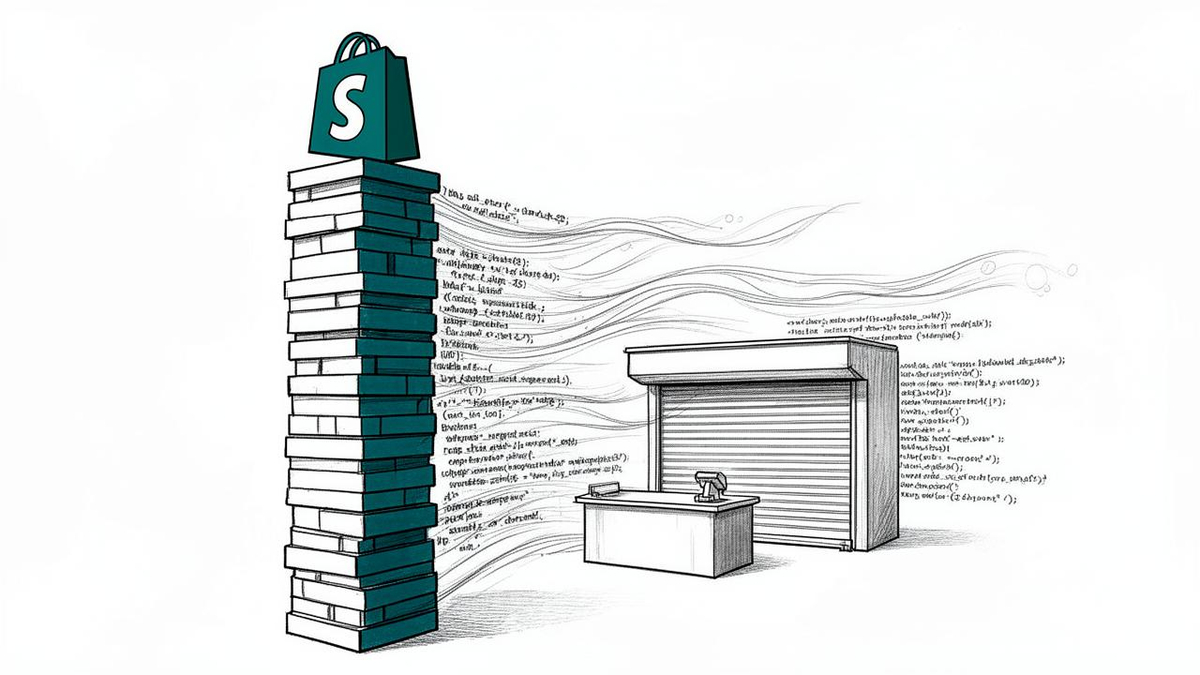
Shopify announced on September 9 that it has acquired Tailwind Labs, the company behind the Tailwind CSS framework, which sees approximately 110 million weekly installs via npm. Concurrent with the acquisition, Tailwind Labs announced it is immediately closing new user registration for Tailwind Plus and ui.sh, effectively terminating its paid template business. Founder Adam Wathan said the move is aimed at securing a stable, long-term steward for the open-source project. In January, the company had already laid off 75% of its engineering team due to the impact of AI, as AI coding tools can generate UI code that previously required paid purchases at near-zero cost, fundamentally dismantling the component library sales model. Tailwind CSS itself will continue under the MIT open-source license, with the team retained in its entirety.
Key Elements

Canadian e-commerce platform Shopify announced on September 9 that it has acquired Tailwind Labs, the company behind the open-al is that the acquired company simultaneously shut down the commercialization path of its paid products — Tailwind Plus and ui.sh will immediately stop accepting new user registrations. Existing customers can continue using the services, but they will no longer be sold
Tailwind founder Adam Wathan wrote in the announcement: “On the commercial side, we’re no longer trying to build a business around Tailwind. Existing customers will retain access to Tailwind Plus and ui.sh, but new user registration is closed effective immediately.”
This means Tailwind Labs’ business model of selling ready-made UI component libraries isn’t being converted to a free offering — it’s being terminated outright.
Tailwind CSS is currently one of the most-installed CSS frameworks in the world, with roughly 110 million weekly installsames, eliminating the tedious process of hand-writing CSS. Shopify itself was among the earliest companies to adopt Tailwind at scale, and the framework is already deeply embedded in its technology stack
Financial details of the acquisition were not disclosed. Wathan said joining Shopify is about “giving Tailwind a stable long-term home, ensuring the millions of people who depend on it continue to have it maintained.” He also noted that Shopify’s exploration of “agentic commerce” provides room for the future evolution of developer interfaces.
Commercial Struggles Amid the AI Onslaught
Behind this acquisition lies a quintessential story of an open-ial intelligence
Tailwind Labs’ primary revenueI and ui.sh — developers would pay hundreds of dollars for a large collection of ready-made, directly reusable UI code. However, the rise of AI coding tools has fundamentally upended this value chain
In January, Wathan publicly acknowledged on GitHub that AI had dealt a “brutal blow” to the business, and laid off 75% of the engineering team that same day. A widely cited comment in the community cut to the heart of the matter: “AI and Tailwind-based template systems have essentially stolen Tailwind’s lunch.”
One paying customer described their behavioral shift this way: “I bought Tailwind UI back in the day, and every time I built a product I’d browse through its components. In the past two years, I haven’t opened it once — AI handles it for me directly. When you think about how AI has changed this business model, it’s terrifying.”
When developers can have AI agents directly generate code that conforms to Tailwind’s specifications, the necessity of paying for pre-built templates is compressed to the breaking point. Tailwind taught the world to “use utility class names instead of hand-writing CSS,” and AI happens to be able to generate those class names on demand — the middle layer of “paying for templates” has had its value hollowed out.
A Long-Term Lifeline for an Open-
The framework itself is not dead. Tailwind CSS continues under the MIT license, the team is retained in full, and maintenance of the open-cial path of “selling templates to fund the framework.”
From this perspective, Shopify’s acquisition looks more like providing long-term security for a piece of critical infrastructure than a traditional technology acquisition. Wathan himself acknowledged that the core reason for joining Shopify is to ensure Tailwind’s sustainable maintenance.
Shopify confirmed that existing customers of Tailwind Plus and ui.sh will continue to receive service, but the company will focus resources on the development of Tailwind CSS itself.
The community response includes no shortage of sober, even slightly fatalistic voices. One developer commented: “A predictable move, and a good one. It buys Tailwind a few more years. But like all these sugar-daddy acquisitions, the next step is probably ‘Tailwind becomes independent again.'”
Implications for the Developer Tools Ecosystem
This acquisition reflects the deeper predicament facing open-alue can be replicated by AI at near-zero cost, the paid value-added layers built around that tool face systematic collapse
For the e-commerce and web development sectors, Shopify’s move further consolidates its positioning in the developer toolchain. Market sources indicate that large platforms are accelerating the integration of developer productivity tools, and enterprise customers evaluating technology options may increasingly favor frameworks backed by major companies that can seamlessly integrate with mainstream platforms.
Tailwind’s case also serves as a wake-up call for other open-onents” models: when AI can instantly generate spec-compliant code, the sales model for static code libraries will become untenable. Open-han continuing to rely on middle-layer value that AI is poised to replace
Note: Tailwind CSS weekly install figures are sourced from the project’s publicly available npm download statistics.
Once added, BigGo Finance appears first in Google Search Top Stories, so you get the broadest, most up-to-the-minute, and most comprehensive global financial news first.
