

AI is ending the era of scarce vulnerabilities, making powerful offensive capabilities abundant and forcing cybersecurity teams to move beyond reactive patching toward fundamentally safer software construction.
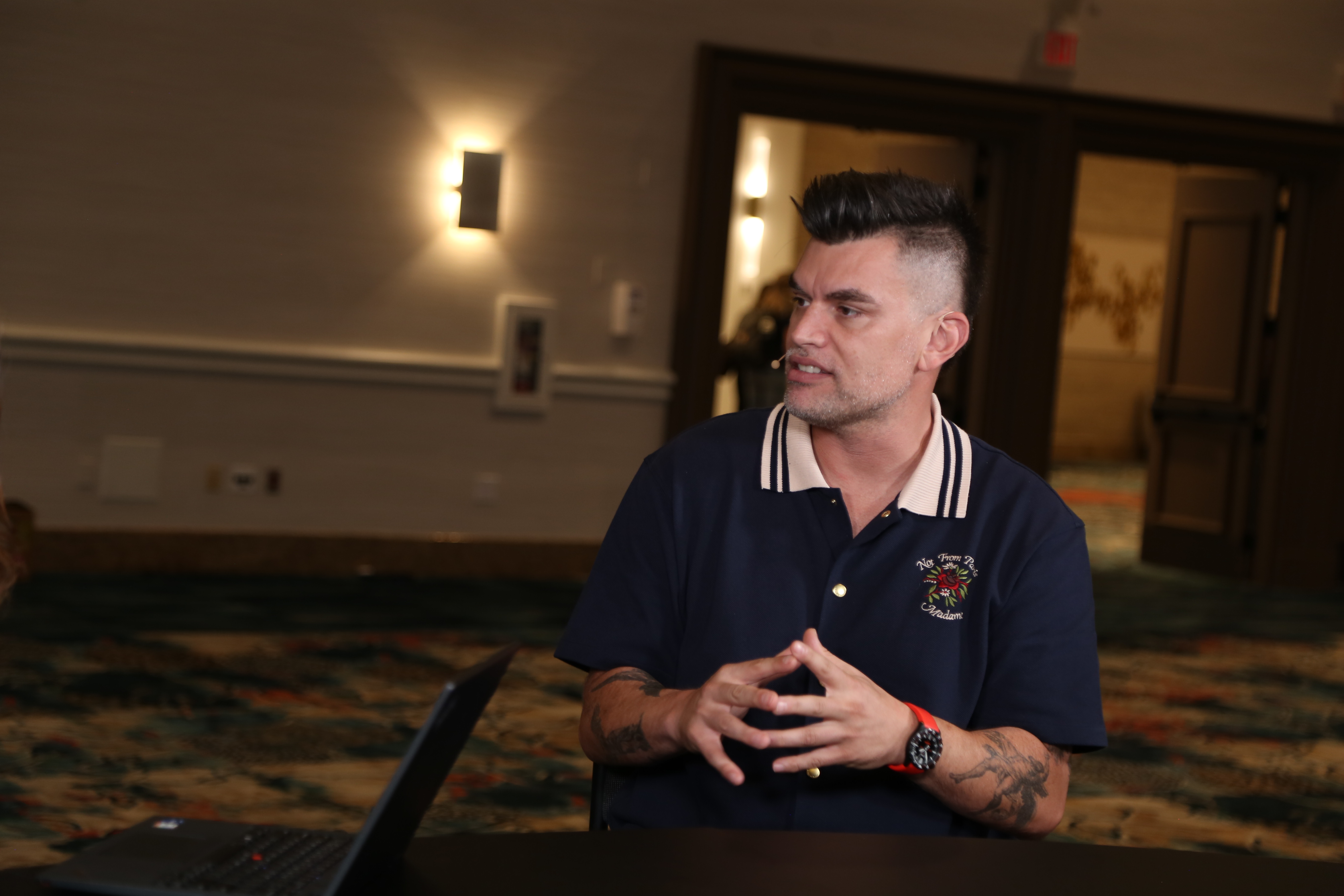
That reality was the core of a Black Hat USA keynote by David Weston (pictured), corporate vice president of AI security at Microsoft Corp., titled “The End of Rare: Defending When Offense Is Cheap.” Weston explained that traditional defenses have long rested on the economics of scarcity—expensive zero-days, strong security boundaries and the assumption that those walls would hold.
“We’ve baked this in,” Weston said. “We said we’re safe because this is rare and it costs a lot. Unfortunately, AI’s changed this. It’s no longer rare.”
Weston spoke with Krista Case at Black Hat USA, during an exclusive broadcast on theCUBE, SiliconANGLE Media’s livestreaming studio. They discussed why security teams must invest AI-driven productivity gains into safer software construction, memory-safe languages and formal verification rather than trying to outpace attackers with faster patches. (* Disclosure below.)
Changing the physics of safer software construction
Simply accelerating patches is still a reactive strategy that leaves attackers a window, Weston noted. Attackers benefit from asymmetry—they only have to be right once—and from agility, since they face none of the compliance or process constraints that slow defenders.
“What AI is doing is making everyone more productive, particularly engineers,” Weston said. “Let’s invest that productivity in changing the physics.”
That means prioritizing safety by construction, memory-safe languages such as Rust, and formal methods that turn program logic into mathematical representations that can be proven free of certain failure classes. Google’s results with Rust illustrate the potential. Roughly 75% of its vulnerabilities in 2019 were memory-safety issues. By 2025 that share had fallen below 20%, and across 5 million new lines of code written in safer languages, the company reported not a single new memory-safety issue.
“You’re seeing two of the most important software libraries on the planet having good experiences here and using agents to get there,” Weston said. “This is my call to action: everyone has to start experimenting with this in your codebase.”
Here’s the complete video interview, part of SiliconANGLE’s and theCUBE’s coverage of Black Hat USA 2026:
(* Disclosure: TheCUBE is a paid media partner for Black Hat USA. Sponsors of theCUBE’s event coverage do not have editorial control over content on theCUBE or SiliconANGLE.)
Photo: SiliconANGLE
A message from John Furrier, co-founder of SiliconANGLE:
Support our mission to keep content open and free by engaging with theCUBE community. Join theCUBE’s Alumni Trust Network, where technology leaders connect, share intelligence and create opportunities.
- 15M+ viewers of theCUBE videos, powering conversations across AI, cloud, cybersecurity and more
- 11.4k+ theCUBE alumni — Connect with more than 11,400 tech and business leaders shaping the future through a unique trusted-based network.
Are you AWS customer? Support SiliconANGLE Financially by buying your AWS services from our Marketplace portal page and links.
https://siliconangle.com/aws-marketplace/
About SiliconANGLE Media
SiliconANGLE Media is a recognized leader in digital media innovation, uniting breakthrough technology, strategic insights and real-time audience engagement. As the parent company of SiliconANGLE, theCUBE Network, theCUBE Research, CUBE365, theCUBE AI and theCUBE SuperStudios — with flagship locations in Silicon Valley and the New York Stock Exchange — SiliconANGLE Media operates at the intersection of media, technology and AI.
Founded by tech visionaries John Furrier and Dave Vellante, SiliconANGLE Media has built a dynamic ecosystem of industry-leading digital media brands that reach 15+ million elite tech professionals. Our new proprietary theCUBE AI Video Cloud is breaking ground in audience interaction, leveraging theCUBEai.com neural network to help technology companies make data-driven decisions and stay at the forefront of industry conversations.
