

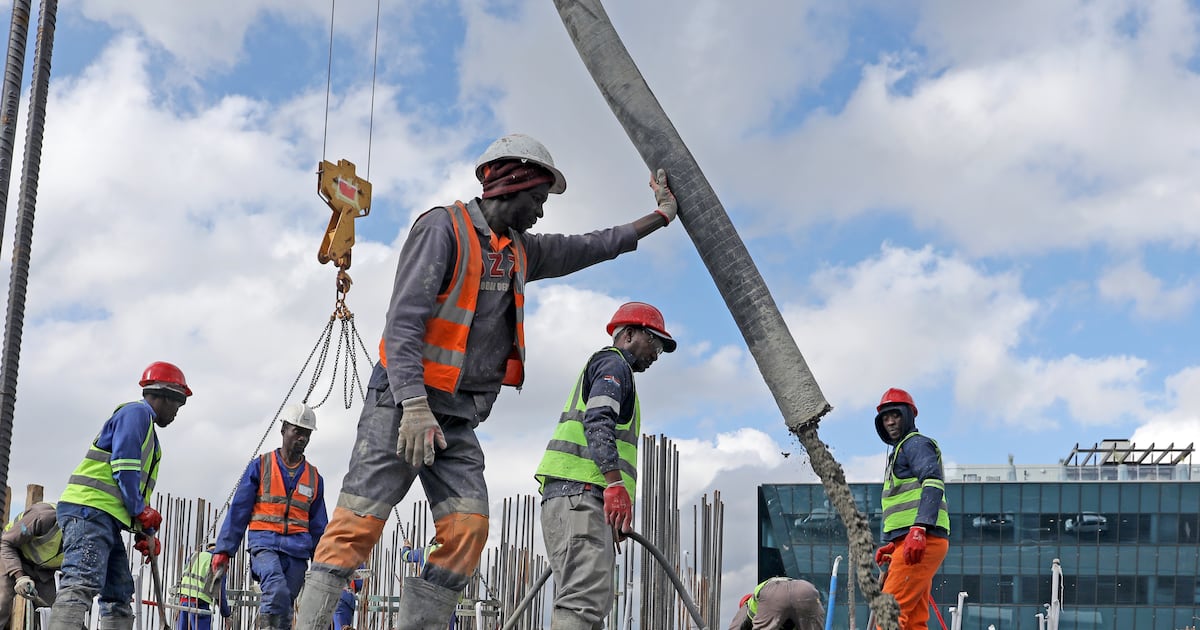
South Africa’s construction industry risks remaining trapped in a cycle of weak growth unless procurement reforms translate into a sustained pipeline of infrastructure projects, despite small and micro enterprises becoming the sector’s largest employers.
Stats SA data shows the industry’s contribution to GDP has almost halved over the past 17 years, from 4.2% in 2008 to 2.3% in 2025. During the same period, small and micro enterprises have come to account for more than half of employment in the sector, underscoring the growing role of emerging contractors amid subdued infrastructure activity.
Thethe Mokele, managing senior associate at Pinsent Masons, an international law firm specialising in infrastructure, construction and energy, said the figures reflect a prolonged slowdown in infrastructure investment rather than a stronger or more diversified industry.
“The figures are indicative of the slowed growth in the infrastructure sector generally, and the aim of many of the reforms that have been proposed is to move the industry towards long-term resilience as opposed to what some have described as crisis management,” Mokele said.
The data comes as the government seeks to accelerate infrastructure delivery while implementing the Public Procurement Act, which introduces a national electronic procurement platform intended to improve transparency, curb corruption and widen access to state contracts.
Mokele said the legislation could be particularly significant for smaller contractors that have historically struggled to compete for public sector work due to opaque procurement processes.
“The framework is intended to advance contractors who can provide goods or services but who would not ordinarily have had such an opportunity because of a lack of transparency in the bidding and procurement process, which has historically been riddled with corruption,” she said.
“The use of the more public e-procurement platform will assist in clarifying how appointments have been made.”
However, procurement reform alone is unlikely to resolve the industry’s structural challenges. Mokele said many smaller contractors remain unable to scale because they lack the financial and technical capacity needed to execute larger infrastructure projects.
Access to funding remains a major hurdle, with firms often unable to finance cash flow over lengthy project cycles or provide the guarantees required for large contracts. Skills shortages, particularly among engineers, project managers and skilled artisans, further limit their ability to compete.
Joint ventures between local and international contractors have, however, emerged as an effective way of addressing some of these constraints.
“We have seen these working effectively and a lot of the bids that are being submitted on the larger government projects have been by joint venture entities,” Mokele said.
Clinton Thomas, head of product at digital business lender Lula, said delayed access to tender finance remains one of the biggest obstacles facing small contractors. Speaking at the 14th Big 5 Construct South Africa conference last month, he said improving SMEs’ access to working capital will be critical if they are to benefit from the government’s planned infrastructure pipeline of more than R1-trillion over the next three years.
Mokele said projects led by state-owned entitieshave generally placed greater emphasis on localisation requirements, creating employment opportunities for surrounding communities.
“Where an SOE is the employer or owner of a project, there tends to be more insistence on compliance with local laws relating to the employment of labourers from the area and surrounding communities, which creates meaningful opportunities, at least during the duration of the project,” he said.
Looking ahead, Mokele said infrastructure investment remains one of South Africa’s strongest levers for stimulating economic growth and employment, with the government’s efforts to mobilise funding expected to revive stalled projects and unlock new opportunities.
However, he said the sector’s recovery will ultimately depend on implementation rather than policy.
Business Day
