

Princeton Critical Minerals (PCM) is expanding its revolutionary brine-based lithium production platform in the U.S. and South America. The Princeton University startup aims to accelerate and increase lithium production yields from brine sources as demand rises, driven by the growth of AI and robotics.
“Lithium demand has moved far beyond the demand for electric vehicle (EV) batteries,” said Sean Zheng, co-founder and CEO of PCM. “Battery storage, AI data centers, robotics, drones, and broader electrification are all converging on the same constrained critical mineral supply chain, lithium first and foremost.
“Energy storage is becoming foundational infrastructure for both the digital economy and energy security. Our novel technology system results in higher production, with lower cost in a shorter time.”
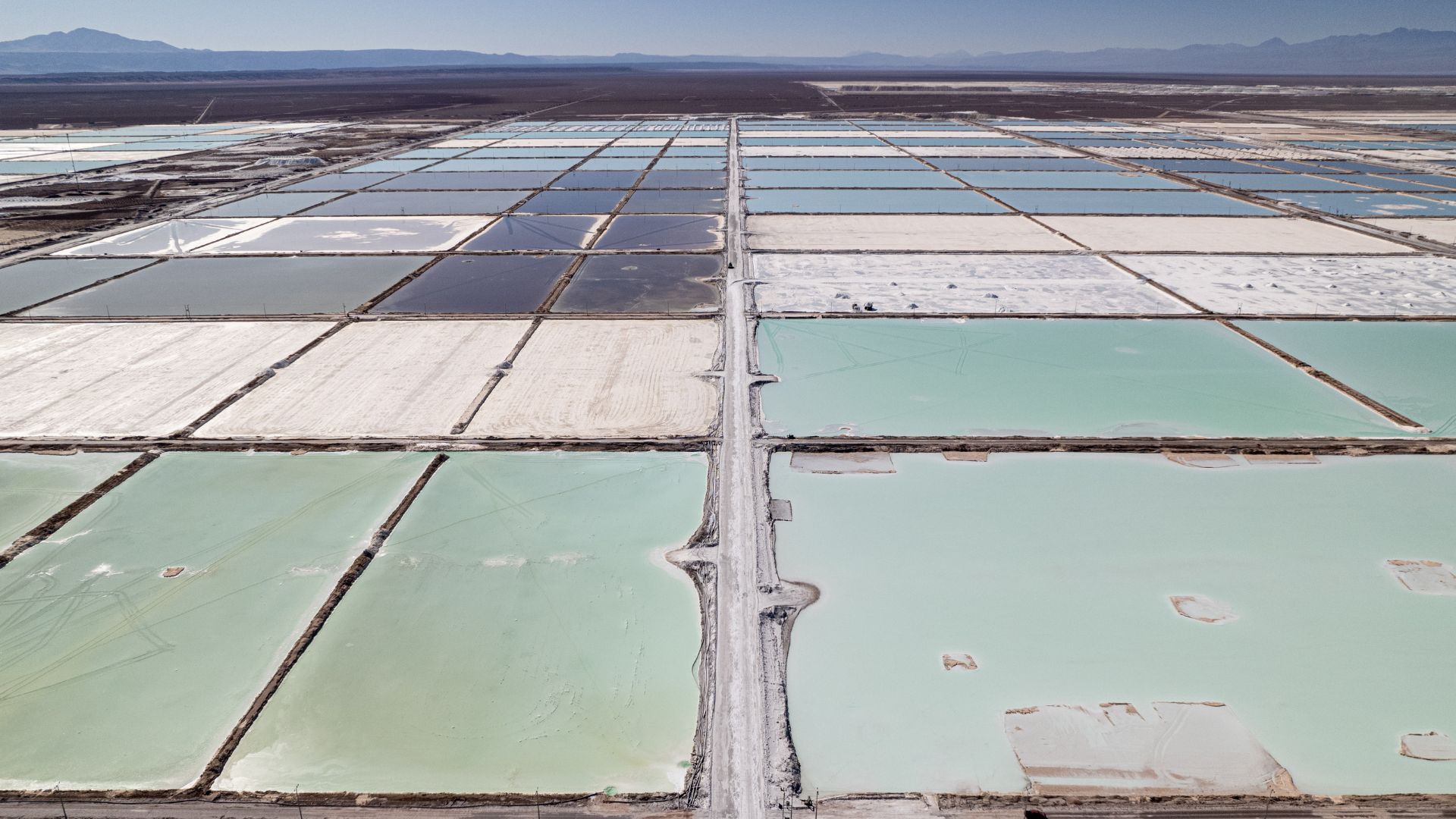
Its Lilypad technology has recently transitioned from the pilot phase to deployment in active production environments such as Chile, which holds some of the world’s largest lithium brine resources. The lithium extraction system is integrated directly into existing commercial evaporation ponds that process naturally occurring, mineral-rich underground water.
It “improves the efficiency and scalability of lithium production from brine resources, the mineral-rich, subterranean or industrial saltwater that holds over half the world’s lithium reserves and other critical minerals.”
More from Innovation
See All
Innovation3D printing gives laser waveguides a ceramic upgrade for higher power
InnovationUS Air Force signs decade-long deal to overhaul Rolls-Royce T56 military engines
InnovationAuriga Space’s Winnie Lai on the future of electromagnetic weapons
EnergyFood waste becomes membrane with 96.1% higher heat transfer, lasts 1,000 cycles
InnovationMicron bets $10B on US lab to develop memory beyond today’s computing chips
Innovating lithium production
Princeton Critical Minerals develops technologies that improve lithium production efficiency, recovery, and operational performance across global critical mineral supply chains. Based in Newark, New Jersey and launched from Princeton, the company supports the expansion of scalable and resilient mineral infrastructure needed for energy storage, electrification, and next-generation digital systems.
Expanding production capacity is one of the industry’s greatest challenges as demand for lithium continues to rise worldwide. Conventional brine operations require an update because they demand large land areas, long development timelines, and extensive permitting and infrastructure buildout.
Emerging direct lithium extraction technologies are still struggling with downstream concentration costs, high energy consumption, and scale-up complexity.
PCM is currently working to address the need to improve conventional and emerging production workflows. Its systems integrate with existing operations while supporting cheaper and more efficient enrichment, monitoring, and processing of brine resources across multiple geographies.
US deployment coming soon
Recently, the company deployed its revolutionary Lilypad technology in Chile and is preparing to launch two additional projects focused on evaporation enhancement and AI-powered process optimization, as well as expand into the U.S.
The company is currently testing two additional technologies in Chile focused on evaporation enhancement and AI-powered process optimization, further expanding its integrated lithium production platform. This will also increase production and keep costs down.
“Demand from customers, including the largest lithium producers, is growing, and the funds raised will be critical in rolling out further sales and deployment,” the company noted.
PCM raised $16 million in combined equity and non-dilutive funding to continue its efforts to support a rising industry that needs critical minerals for energy storage, electrification, and AI infrastructure.
That includes an $11 million Series A round led by SOSV, with participation from the Grantham Foundation for the Protection of the Environment, Prospect Innovation, ASTOR Management AG, and Black Forest Ventures, as well as a synergistic investment from the New Jersey Economic Development Authority through the New Jersey Innovation Evergreen Fund. The company also secured more than $5 million in grant funding from the National Science Foundation, ARPA-E, and the NJEDA, the press release concluded.
Originally from LA, Maria Mocerino has been published in Business Insider, The Irish Examiner, The Rogue Mag, Chacruna Institute for Psychedelic Plant Medicines, and now Interesting Engineering.
- 1US to study reliable power from floating nuclear power plants, nuclear-powered commercial ships
- 2100,000-ton nuclear carrier with strike group arrives in Middle East to relieve massive vessel
- 3Food waste becomes membrane with 96.1% higher heat transfer, lasts 1,000 cycles
- 4Three robotic arms 3D print nuclear vessel for America’s expanding reactor fleet
- 5Washington plant wins key certification to unlock mass silicon battery anode production
