

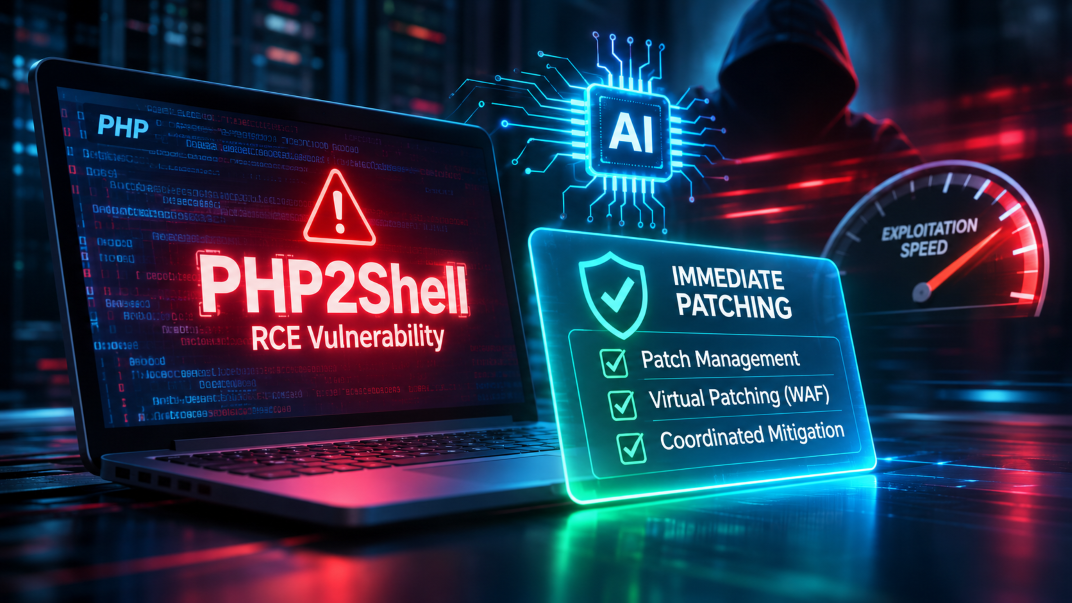
The PHP2Shell vulnerability has emerged as a major topic of discussion among cybersecurity influencers on the social media platform X since October 21, 2026. The conversation centers on two critical PHP core remote code execution (RCE) flaws that were rapidly weaponized, triggering a sharp increase in exploitation attempts within hours of their disclosure.
According to GlobalData, an intelligence and productivity platform, influencers have emphasized the role of AI-assisted security research in identifying the vulnerabilities. The incident illustrates how artificial intelligence is narrowing the time between vulnerability disclosure and widespread exploitation, increasing pressure on organizations to accelerate patch management and mitigation.
Smitarani Tripathy, Social Media Analyst at GlobalData, comments:
“Influencers largely see PHP2Shell as proof that cybersecurity is entering a phase, where speed matters as much as severity. Influencers stressed that the flaws reached back more than a decade yet became practical to exploit only once AI-assisted research demonstrated them.
“Influencers expect PHP2Shell to be a template rather than an exception, with more critical vulnerabilities on the way, since flaws that look impractical to exploit today may become easy targets as models advance. This is likely to push enterprises toward automated patching and virtual patching through web application firewalls and make coordinated pre-disclosure mitigation between cloud providers and open-source communities the norm. Organizations relying on slow patch cycles or unsupported PHP versions face rising risk.”
The findings suggest that traditional vulnerability management practices may struggle to keep pace with AI-assisted exploitation. Automated patching, virtual patching through web application firewalls (WAFs), and coordinated mitigation efforts between cloud providers and open- move more quickly to exploit newly disclosed vulnerabilities
GlobalData’s Social Media Analytics Platform captured several notable reactions from cybersecurity and technology industry leaders:
1. Guillermo Rauch, CEO at Vercel:
“It was inspiring to watch the behind-the-scenes of the industry coming together, weeks in advance, to protect the world’s infrastructure and mitigate php2shell. We deployed Vercel WAF mitigations that have already successfully prevented attempts on PHP origins. Assume more vulnerabilities are on the way. Flex the patch → redeploy muscle.”
2. George Kurtz, CEO at CrowdStrike:
“#PHP2Shell is a big one. Here are my takeaways. 1. These flaws reach back more than a decade. PHP’s maintainers identified one underlying problem in 2024, but its full impact wasn’t clear until AI-assisted research demonstrated its exploitability. What seems impractical to exploit today could easily be exploitable tomorrow as models advance….”
3. Mathew Price, Co-founder & CEO at Cloudfare:
“Some stats on #php2shell. In the 10 hours before it was publicly announced, across the @Cloudflare network we saw thousands of attempts to exploit it. That jumped to tens of thousands in the 45 minutes post announcement, hundreds of thousands within 2 hours, and millions now.”
4. Bipul Sinha, CEO of Rubrik:
“PREVENTION AT HUMAN SPEED IS NO MATCH FOR ATTACKS AT MACHINE SPEED When two critical flaws in PHP became public, attackers had days before patches could even be deployed. Teams did the right thing: they patched. But patched is not clean, and no organization can patch its way to safety in a world this fast. This isn’t really a story about PHP. It’s a story about speed…”
The industry reactions underscore the growing challenge of defending against vulnerabilities that can be exploited at machine speed. As AI-assisted research makes previously difficult-to-exploit flaws more accessible, organizations using unsupported PHP versions or relying on lengthy patch deployment cycles may face greater exposure. The PHP2Shell incident reinforces the importance of rapid vulnerability remediation, proactive threat detection, and coordinated security measures to reduce the window of opportunity for attackers.
GlobalData Plc (LSE) operates an intelligence platform that empowers leaders to act decisively in a world of complexity and change. By uniting proprietary data, human expertise, and purpose-built AI into a single, connected platform, we help organizations see what is coming, move faster, and lead with confidence. Our solutions are used by over 5,000 organizations across the world’s largest industries, providing tailored intelligence that supports strategic planning, innovation, risk management, and sustainable growth.
