


ChinaMacauMacau BusinessMAGMBOpinion
15 Aug 2026
OPINION – Rethinking leadership in an age of artificial intelligence
Macau Business Magazine | August 2026
Managing Director of The Platinum Limited
When intelligence scales: what WAIC 2026 means for Macau’s next-generation leaders
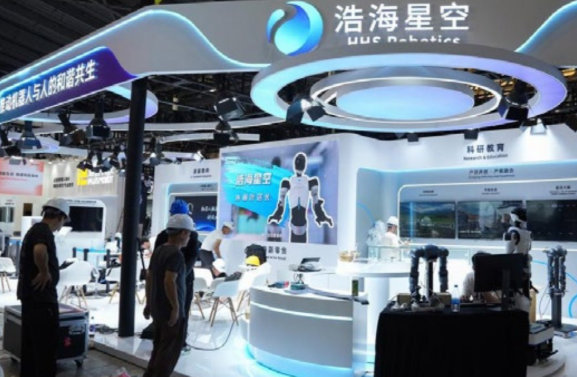
Artificial intelligence is advancing so quickly that traditional leadership models in tourism, hospitality, and gaming may no longer be sufficient. The question confronting executives today is not whether AI will reshape service industries, but whether leaders possess the philosophical grounding to guide that transformation responsibly. This tension was unmistakable at the World Artificial Intelligence Conference (WAIC) in Shanghai on 17 July 2026, where policymakers and technologists debated the future of intelligent systems and their societal impact. The event, reported to feature more than 1,100 exhibitors and hundreds of global product launches, signalled China’s determination to lead the next wave of AI innovation.
President Xi Jinping, in his keynote remarks, underscored this ambition. He argued that AI must be developed with “fairness, inclusiveness, and shared benefit,” a statement that raises a critical question for service-driven economies: can rapid technological adoption coexist with human-centred values? His message was clear: AI must serve national development and social stability, not merely commercial efficiency. For Macau, a city whose economic identity is intertwined with tourism, hospitality, and gaming, this principle carries strategic weight.
The WAIC highlighted China’s pivot from theoretical AI to embodied intelligence — robots capable of performing complex tasks, systems that learn autonomously, and infrastructure designed for massive computational scale. These innovations challenge Macau’s leaders to rethink how talent is cultivated. If AI can automate operational tasks, what becomes the core competency of tomorrow’s hospitality workforce? Should training focus on digital fluency, emotional intelligence, or ethical judgment? The answers will shape Macau’s competitiveness for decades.
China’s 15th Five-Year Plan (2026–2030) reinforces this urgency. It calls for “extraordinary measures” to accelerate technological self-reliance, deepen digital-real economy integration, and build a talent ecosystem capable of sustaining innovation. Macau’s Third Five-Year Plan mirrors these priorities, emphasising diversification, smart city development, and the elevation of service quality. Yet the question remains: can Macau transition from a gaming-centric model to a knowledge-driven tourism economy without redefining leadership philosophy?
The hospitality and gaming sectors have historically relied on operational discipline, guest-centric culture, and incremental innovation. AI disrupts this formula. Predictive analytics can anticipate guest behaviour; robotics can streamline back-of-house operations; intelligent systems can personalise experiences at scale. But technology alone cannot guarantee excellence. Leaders must articulate a philosophy that positions AI as an enabler of human potential rather than a substitute for human interaction.
This raises a deeper question: what does leadership mean in an era where machines increasingly make decisions? At WAIC, several speakers argued that the next generation of leaders must combine digital proficiency with humanistic grounding. They must be comfortable navigating ambiguity, questioning assumptions, and mentoring teams through technological disruption. In Macau, where service excellence is a cultural asset, this philosophical shift is not optional — it is existential.
Ultimately, WAIC 2026 served as a reminder that AI’s strategic value lies not only in its capabilities, but in the leadership frameworks guiding its deployment. Macau’s future will depend on leaders who can integrate innovation with ethics, efficiency with empathy, and technology with humanity.
Humanity at the centre: why AI governance will define Macau’s tourism future
If WAIC 2026 showcased the power of AI, the Vatican’s Magnifica Humanitas encyclical issued by Pope Leo XIV confronts its moral consequences. The document argues that artificial intelligence must be “disarmed” from logics of domination and exclusion, a warning that resonates strongly in sectors where human connection is the product. Hospitality, gaming, and tourism depend on trust, empathy, and cultural sensitivity. What happens when these industries adopt technologies capable of influencing behaviour, shaping perception, and automating judgment?
Pope Leo’s central message is stark: “Artificial intelligence needs to be disarmed.” His concern is not technological progress itself, but the concentration of power it enables. If AI systems amplify inequality, distort public discourse, or weaken critical thinking, they risk undermining the social fabric that tourism economies rely on. For Macau, a city navigating diversification and post-pandemic recovery, these risks are not theoretical — they are strategic.
The encyclical challenges leaders to ask uncomfortable questions. If AI can personalise guest experiences, can it also manipulate them? If AI can optimise workforce scheduling, can it also erode job security? If AI can enhance surveillance, can it also compromise privacy? These questions matter because Macau’s long-term success depends on public trust, regulatory stability, and a reputation for responsible governance.
China’s 15th Five-Year Plan provides a framework for addressing these concerns. It emphasises ethical governance, data security, and equitable access to digital services. Macau’s Third Five-Year Plan echoes these priorities, envisioning a “beautiful, smart Macau” where technology enhances quality of life and strengthens community cohesion. Yet plans alone cannot guarantee ethical outcomes. Leaders must cultivate a philosophy that places humanity at the centre of technological development.
In hospitality and gaming, this means designing AI systems that augment, not replace, human judgment. It means using automation to elevate service standards, not diminish human roles. It means ensuring transparency in how guest data is used, and fairness in how AI-driven decisions are made. The question is not whether AI can improve efficiency; it is whether efficiency should be the primary metric of progress.
Pope Leo’s reminder that “no one rebuilds alone” offers a strategic insight for Macau. The city’s transformation will require collaboration among government, operators, educators, and communities. AI governance must be inclusive, participatory, and aligned with cultural values. Macau’s unique blend of Chinese and Lusophone heritage positions it to champion a model of tourism development that integrates innovation with humanistic principles.
The global resurgence of philosophy highlighted recently by The Economist reflects a broader search for meaning in an age of intelligent machines. For Macau, this resurgence is an opportunity. By embracing a leadership philosophy that balances technological ambition with ethical responsibility, the city can shape a tourism and gaming sector that is not only competitive, but also deeply human.
Ultimately, both WAIC and Magnifica Humanitas point to a simple but demanding truth: the philosophical depth of leaders and talent matters more in an age of intelligent machines. Technology can accelerate efficiency, but it cannot replace human judgment, empathy, or ethical grounding. Macau must therefore cultivate these qualities deliberately, especially among younger generations. Only by strengthening the human side can AI serve the city’s long-term interests rather than define them.
Testing ground for global outreach
EU welcomes Israeli green light to extend Gaza border mission
Trump dismisses concerns over conditions on US aircraft carrier
Brussels records hottest day of the year
Construction workers strike gold at Belgian building site
Mpay scam emerges, 10 alleged victims so far
New residential mortgage loans in Macau rise 30.9 per cent in June
PayPal in talks with Stripe and private equity firm over sale: report
Mexico’s Indigenous chief justice hits back at discrimination
Venezuela frees more political prisoners amid post-Maduro talks
Zambia resumes vote count after pause over violence
Strong 7.7-magnitude quake strikes off Indonesia: USGS
All About Mak Mak
Going global: Macao and the future of travel at MITE
One city, a world of flavours
The Year of the Horse arrives in style with a dazzling Chinese New Year spectacle
Mainland Chinese brands are rapidly reshaping Macau’s retail landscape, marking a structural shift away from price-driven consumption toward premium lifestyle, design, and cultural identity. For the city’s integrated resorts, this influx offers a new lever to accelerate their non-gaming diversification strategies
Police in Macau have urged residents to heighten vigilance after fraudsters allegedly took advantage of e-wallet Mpay’s accounts to obtain MOP166,000 (US$ 20,557.7) in illegal gains.
As at end-June 2026, the outstanding value of RMLs fell by 0.5 per cent month-on-month and 5.0 per cent year-on-year to MOP 201.98 billion (US$25.18 billion). Of the total outstanding balance, the resident component made up 96.8 per cent.
H1 investment projects rise 7 per cent
Macau’s official business promoter has reported a year-over-year rise of 7 per cent in new enterprise investments in the first half of 2026.
