

Akhil Iyer on the business of dosa, building a food brand and keeping Bengaluru’s darshini culture alive
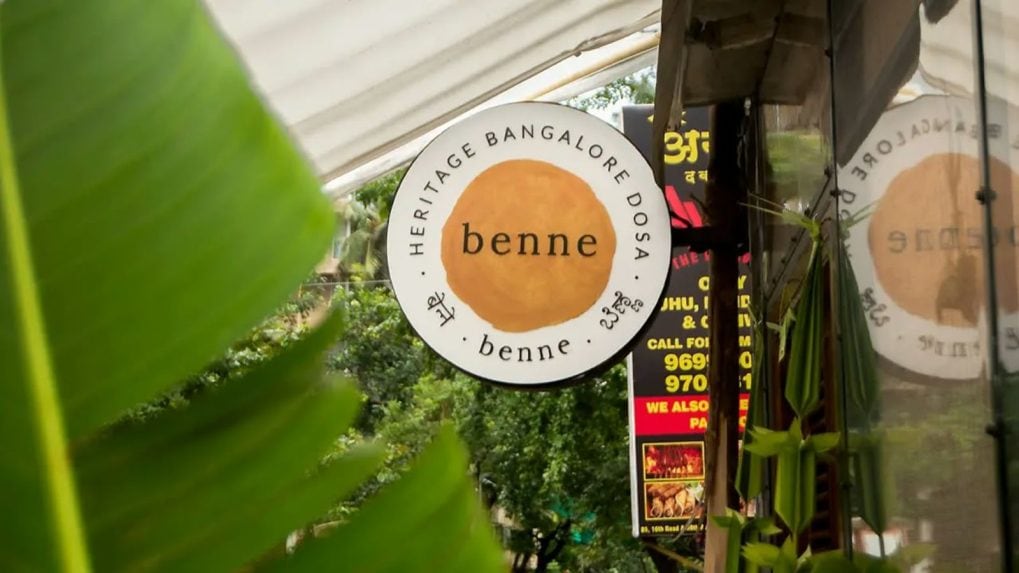
Akhil Iyer, co-founder of Benne, the Bengaluru-style benne dosa brand that has drawn long queues in Mumbai, says the business has grown by staying true to the food and dining experience that he and his wife, Shriya Narayan, missed after moving away from Bengaluru.
Speaking during a Storyboard18 Instagram Live, Iyer discussed the thinking behind Benne, the challenges of setting up a restaurant without prior food and beverage experience, and why he wants to preserve the spirit of Bengaluru’s traditional darshinis. He also explained the brand’s approach to pricing, seating, celebrity visits and menu expansion.
Iyer said the idea took shape over several years after he moved to Mumbai around 13 years ago. During difficult periods, he often missed his parents, who live in Bengaluru, and the benne dosa he had grown up eating. Finding that particular style of dosa in Mumbai proved difficult, prompting him to consider bringing the experience to the city.
Trending Topics
Uday ShankarOld Monk BanElon MuskCTV Ad ImpressionsRaj Nayak
After discussing the idea with friends for years, he eventually approached his wife, Shriya, about turning it into a business.
“Food is one of the most powerful forces in the world,” Iyer said, describing its ability to bring people together and offer comfort. He added that growing up in a family that valued eating together had shaped his relationship with food.
However, translating that emotional connection into a restaurant came with practical difficulties. Iyer said one of the biggest challenges was finding chefs capable of preparing the food he wanted to serve. The founders eventually had to learn the process themselves, conducting trials and building their understanding of the food from the ground up.
“It’s not that easy,” he said, challenging the assumption that opening a restaurant simply involves hiring chefs and leaving the kitchen to them.
Why Benne is holding on to the darshini model
Benne’s approach to its dining space is rooted in Bengaluru’s darshini culture, where customers share a common space rather than being separated by different levels of service or pricing.
“If you ask me actually I would have no seating in Benne,” Iyer said, explaining the original thinking behind the format. The brand subsequently introduced limited seating to accommodate elderly customers and expectant mothers.
He said the business does not want to charge customers different prices based on whether they have access to seating. Even as the brand considers future locations, maintaining that principle remains a preference.
“Community, love and home” were the three words Iyer chose to describe Benne, when asked to sum up the brand without using the words crisp, authentic or Bengaluru.
The same emphasis on preserving the original experience informs the menu. Iyer said the brand has deliberately kept its offerings limited rather than trying to cater to every possible preference.
Benne’s rotating Bengaluru specials are intended to introduce customers to dishes that may be less familiar outside Karnataka. The current offerings he mentioned included vegetarian donne pulao, Mangalorean buns and shavige baat, a preparation made with rice vermicelli. He also said the brand plans to bring back items such as kori rotti.
Iyer acknowledged that other businesses have begun exploring similar concepts, adding that Benne would need to remain focused on its own priorities as competition grows.
Word of mouth and the queues outside Benne
Despite the crowds at its outlets, Iyer said the response to Benne had exceeded his expectations. He described the queues as both encouraging and surprising, particularly because the founders had little experience in the restaurant industry.
He attributed the brand’s progress partly to its focus on the food and the experience it wants customers to have, while acknowledging the role of luck in the restaurant business.
“I think what we did differently was maybe just give it some amount of respect,” he said, explaining how the founders approached benne dosa as a dish deserving greater attention rather than treating it as merely a thin, crisp preparation served with accompaniments.
Iyer said the brand was not attempting to claim ownership of the dish or present it as a new invention. Instead, the founders wanted to recreate the traditional food they had missed and hoped customers would give it a chance.
Responding to people who question the queues for dosa, he drew a comparison with the willingness of customers to wait for other popular foods.
“All I would say is that if you’re ready to wait in line for a slice of pizza why not a dosa?” he said.
Iyer also recalled relying on friends from Bengaluru and Mumbai to help with service when the restaurant was short-staffed during its early days. He said their support was important in helping the business operate.
Seating, celebrity visits and customer experience
Iyer said the presence of celebrities at a restaurant can require a different approach to service, primarily because of the potential impact on other diners’ safety and comfort.
He explained that the brand must consider the effect a high-profile visitor could have on customers who are already eating at the restaurant. Security arrangements and the timing of visits can help prevent disruption.
He cited visits by Ranveer Singh and Deepika Padukone to the brand’s South Bombay location near Chowpatty as examples of occasions when celebrities had visited while other customers were dining.
Iyer said the priority was to ensure that celebrity visits did not compromise the experience or safety of other guests.
Why Benne does not serve sambar
The absence of sambar is among the questions Iyer said the brand receives most frequently. He explained that the Bengaluru darshinis where he and Shriya ate growing up served this style of dosa with chutneys instead.
According to Iyer, the founders wanted to reproduce the experience they remembered, including the accompaniments that traditionally went with the dish.
He also explained the decision to open in Bandra, saying the neighbourhood had personal significance because he lived there with his cousin when he first moved to Mumbai. From a business perspective, he saw it as a place where customers were willing to experiment with unfamiliar concepts.
Asked about the possibility of an initial public offering, Iyer said the brand was still young and focused on establishing itself rather than considering such plans.
“We’re still a very very small young brand that’s trying to find its feet,” he said, adding that it was too early to discuss an IPO.
For now, Iyer said the focus remained on the food, the customer experience and the reasons the founders started Benne in the first place. He also thanked customers who had supported the brand, including people who had engaged with it online without being able to visit its outlets.
He said the response had shown him that many people living outside Bengaluru shared the same longing for the food they had grown up eating.
Follow Storyboard18 on Google for the latest and breaking brand marketing and industry updates, along with in-depth coverage of digital news. Stay informed with the latest perspectives only on Storyboard18.
Tags
First Published onOctober 17, 2026, 14:31:01 IST
SPOTLIGHT

Special CoverageGen Z is rewriting the media-to-commerce funnel, forcing brands beyond traditional cohorts
The conversation highlighted a fundamental shift underway in the relationship between audiences, platforms and brands. Rather than treating Gen Z as a uniform consumer segment, marketers are increasingly having to account for individual behaviours, fragmented content consumption and a stronger expectation
SAC 2026: Swiggy, Nestlé, HDFC, Flipkart, Puma, Lahori Zeera shine | Why Piyush Pandey remains India’s creative North Star
Storyboard18 brings you top five news updates from the world of advertising, marketing, and business of brands.
