

Subjects
- Clinical trials
- Haematological cancer
A need for new trial designs in the era of targeted therapies
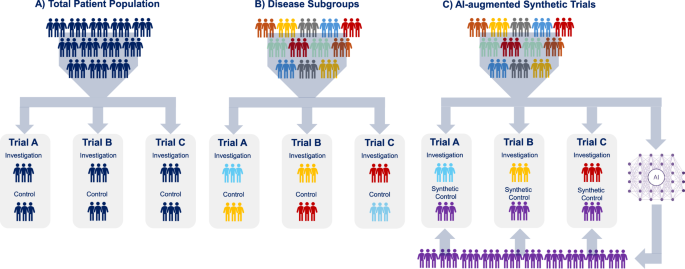
Developing new cancer drugs requires deep pockets, iron patience, and a level of frustration tolerance that matches the Greek mythos of Sisyphos: The budget needed to bring a single cancer drug to market is estimated to exceed a billion US dollars, spent over almost a decade in development time, and more often than not the undertaking still ends in failure [1,2,3,4]. One of the top reasons why cancer trials frequently falter is recruitment failure [5]. The situation will only worsen given the ongoing fragmentation of cancer entities into molecularly-defined subgroups addressed by targeted agents in the era of precision oncology. When multiple trials compete for the same shrinking pool of potentially eligible patients, the demand for individual control arms becomes a problem rather than a perk: a patient recruited into the control arm of one trial is a patient lost from the investigational arm of another. Trials begin to “cannibalize” each other, contributing to slower accrual, thereby increasing the likelihood of trial failure. Compounding this challenge, the therapeutic standard frequently changes during the course of a trial due to the approval of new treatments or changes in risk classification. Collectively, this slows the generation of evidence across the portfolio of trials, ultimately delaying or even denying patients access to potentially effective therapies (Fig. 1). So, if a standard-of-care control group for every trial remains a practical and regulatory necessity, can we create one instead of recruiting one?
Generative artificial intelligence enables the creation of synthetic patient cohorts
Generative artificial intelligence (AI) can now create synthetic data indistinguishable from real data, including text, images, audio, video, and tabular data. The underlying principle is a statistical mimicry of feature distributions in real data that are approximated by neural networks to create synthetic samples following the same distributions without being exact copies of their original training data. In cancer research, this includes the generation of medical images (e.g., histopathology or cytomorphology), text data from electronic health records, or tabular data including laboratory parameters, genetics, and outcomes. Importantly, this concept of synthetic data differs from digital twins: The latter constitute a digital replica of an individual patient to dynamically model trajectories given certain interventions. Synthetic cohort data reproduce feature distributions across a cohort, thereby capturing statistical properties and inter-feature relationships rather than producing a mirror image of a single patient. Arguably, synthetic patient data may therefore also provide a safeguard to patient privacy. Synthetic samples can hardly be traced back to the original patient data they have been created with (more on this later), thereby reducing barriers in health data access and sharing. While the concept of synthetic data generation has long existed, advances in AI architectures, software frameworks, and computing power have enabled widespread training and implementation of generative models. Frequently used model architectures include generative adversarial networks (GANs), variational autoencoders, diffusion models, and transformers.
In hematology, AI increasingly supports physicians in diagnosis and therapeutic decision-making [6]. We and others have demonstrated that synthetic data faithfully reproduce disease properties observed in real patient cohorts, can be used for translational research, and may potentially substitute or replace control cohorts in clinical trials. For instance, we trained GAN models to generate synthetic bone marrow smears that experts failed to distinguish from real samples and used these synthetic images to train highly accurate image classifiers for leukemia detection in microscopy [7]. Further, we generated synthetic patients trained on 1,606 acute myeloid leukemia (AML) patients from previous clinical trials of the German Study Alliance Leukemia, consisting of multimodal tabular data including clinical, laboratory, and genetic features. The resulting synthetic cohorts recapitulated real patient properties, disease biology, and survival dynamics [8]. More recently, we used synthetic AML patients to retrospectively replace the control cohort of the phase 2 trial SORAML [9] (which evaluated the addition of sorafenib to standard induction therapy), effectively reproducing original trial outcomes when comparing the original intervention to the synthetic control arm [10]. Similarly, Piciocchi et al. [11] generated synthetic AML patients based on a cohort of 500 patients from the GIMEMA AML1310 trial, reporting survival dynamics matching original trial outcomes. In myelodysplastic neoplasms (MDS), D’Amico et al. [12] created a large synthetic cohort of patients to investigate prognostically relevant features, which, in their analysis overlapped with the IPSS-M features [13], suggesting the IPSS-M could have also been discovered in a synthetically augmented cohort.
Pitfalls and the path forward for synthetic data in clinical trials
Despite their potential, synthetic patient data are no panacea, requiring clinicians and researchers to be aware of potential pitfalls and adhere to best practices for implementation (Fig. 2). First, data generation itself is locked in a conundrum: Synthetic data may enable privacy-compliant health data access and sharing as well as facilitate novel trial designs, yet to train a generative model, one needs a large, diverse, and representative training sample so that the model can infer accurate feature distributions and capture intricate relationships. Generative models cannot make up useful data from scratch. If one desires to generate synthetic data of a specific group of patients, yet one has no access to a sufficiently sized training cohort in the first place, no generative model will be able to create said group of patients from thin air. Hence, the first step is defining the relevant task to be addressed with synthetic patients and then identifying a group of patients that can actually be synthetically created. For clinical trials, this may best apply to patients receiving standard of care since plenty of patient records for training exist across healthcare systems, previous trials, and registries.
Second, generative models mirror feature distributions of their training data. Hence, they may also carry over or even amplify implicit biases, including local patient demographics, institutional preferences in treatment selection, or specific properties of subgroups if they are overrepresented. This is further complicated by inadvertently modeling confounding covariates or neglecting unknown or unknowable covariates modifying statistical properties. Training data should therefore come from multiple sources – ideally not only relying on patient data from previously conducted clinical trials but also include real-world registries [14, 15] – to ensure adequate sample size, representativeness, and generalizability [16]. All variables should be assessed for interference or redundancies prior to model training. The inclusion of minority groups is of particular importance, as otherwise generative models will not contribute to solving the equity problem in medicine but will quietly intensify it.
Third, by modeling the underlying distribution of features and creating synthetic patient samples that fit this distribution, synthetic data are not exact replicas of the training data patients. Yet, privacy preservation is not guaranteed by default. Sensitive information can still be exposed either through unintended model behavior or adversarial manipulation, such as membership inference or model inversion attacks [17, 18]. Safeguarding patients’ privacy should not be an afterthought, but privacy audits should rather guide the data generation process from inception. Crucially, one must account for a privacy-usability tradeoff: The more synthetic data differ from original data, the more privacy-compliant they become, yet the less useful they are for downstream tasks. In the absence of universally accepted thresholds for adequate privacy preservation, potential information leakage and downstream usability must be iteratively assessed throughout generation. Differential privacy budgets, real-to-synthetic distance metrics, and design safeguards combatting adversarial attacks help mitigate the risk of privacy breaches [19, 20].
Lastly, synthetic data are in a regulatory limbo. Regulatory agencies increasingly acknowledge the need for alternative control cohorts in settings where placebo control is not feasible, or recruitment is slowed by small or inaccessible patient populations, especially in rare cancers or molecular subgroups [21, 22]. However, currently no regulatory framework exists for synthetically controlled trials. Regulators will have to define appropriate quality measures, similar to existing frameworks such as the Food and Drug Administration’s “Good Machine Learning Practice for Medical Device Development”[23]. These should include transparency requirements on training cohort properties, potentially arising limitations and biases, disclosure of model architecture, metrics for fidelity and usability, as well as privacy preservation [24, 25]. Crucially, synthetic data generation allows a degree of customization, e.g., by generating large cohorts and selecting only those cases with the desired properties. In clinical trials, this may lead to a critical conflict of interest as entities with commercial or academic stakes in the outcome of a trial could potentially “cherry-pick” a synthetic control cohort to manufacture a desired result. Regulatory agencies should therefore provide a framework for synthetic data generation by independent third parties, with the resulting cohort withheld from investigators and sponsors until completion of intervention arm data collection.
In summary, synthetic data hold the potential to reduce barriers in data sharing and may enable novel trial designs, accelerate recruitment, reduce failure rates, and provide more patients with access to investigational therapies, particularly in the era of precision therapies in hematology. Yet, they are no silver bullet: Rigorous evaluation, quality assessment, privacy preservation, and regulatory guidance are needed before clinical implementation.
References
-
Brown DG, Wobst HJ, Kapoor A, Kenna LA, Southall NT. Clinical development times for innovative drugs. Nat Rev Drug Discov. 2022;21:793–4.
-
Mullard A. The high and redundant cost of failure in cancer drug development. Nat Rev Drug Discov. 2023;22:688–688.
-
Sertkaya A, Beleche T, Jessup A, Sommers BD. Costs of drug development and research and development intensity in the US, 2000-2018. JAMA Netw Open. 2024;7:e2415445.
-
Mulcahy A, Rennane S, Schwam D, Dickerson R, Baker L, Shetty K. Use of clinical trial characteristics to estimate costs of new drug development. JAMA Netw Open. 2025;8:e2453275.
-
Briel M, Olu KK, von Elm E, Kasenda B, Alturki R, Agarwal A, et al. A systematic review of discontinued trials suggested that most reasons for recruitment failure were preventable. J Clin Epidemiol. 2016;80:8–15.
-
Chen J, Gale RP. Physician-complementing artificial intelligence in haematology: ushering in a new era. Leukemia. 2026;40:465–7.
-
Eckardt J-N, Srivastava I, Wang Z, Winter S, Schmittmann T, Riechert S, et al. Synthetic bone marrow images augment real samples in developing acute myeloid leukemia microscopy classification models. npj Digit Med. 2025;8:173.
-
Eckardt J-N, Hahn W, Röllig C, Stasik S, Platzbecker U, Müller-Tidow C, et al. Mimicking clinical trials with synthetic acute myeloid leukemia patients using generative artificial intelligence. npj Digit Med. 2024;7:1–11.
-
Röllig C, Serve H, Hüttmann A, Noppeney R, Müller-Tidow C, Krug U, et al. Addition of sorafenib versus placebo to standard therapy in patients aged 60 years or younger with newly diagnosed acute myeloid leukaemia (SORAML): a multicentre, phase 2, randomised controlled trial. Lancet Oncol. 2015;16:1691–9.
-
Reddy KK, Hahn W, Winter S, Roellig C, Mueller-Tidow C, Serve H, et al. In silico trial simulation with artificial intelligence-generated synthetic control cohorts reproduces results of a randomized controlled trial. Acute Myeloid Leukemia. Preprint at https://doi.org/10.64898/2026.07.15.26358123 2026.
-
Piciocchi A, Cipriani M, Messina M, Marconi G, Arena V, Soddu S, et al. Unlocking the potential of synthetic patients for accelerating clinical trials: Results of the first GIMEMA experience on acute myeloid leukemia patients. EJHaem. 2024;5:353–9.
-
D’Amico S, Dall’Olio D, Sala C, Dall’Olio L, Sauta E, Zampini M, et al. Synthetic data generation by artificial intelligence to accelerate research and precision medicine in hematology. JCO Clin Cancer Inf. 2023;7:e2300021.
-
Bernard E, Tuechler H, Greenberg PL, Hasserjian RP, Arango Ossa JE, Nannya Y, et al. Molecular International Prognostic Scoring System for Myelodysplastic Syndromes. NEJM Evid. 2022;1:EVIDoa2200008.
-
Passamonti F, Corrao G, Castellani G, Mora B, Maggioni G, Della Porta MG, et al. Using real-world evidence in haematology. Best Pr Res Clin Haematol. 2024;37:101536.
-
Gale RP, Hochhaus A. Are real- world data real-world data? Leukemia. 2025;39:2311–2.
-
Passamonti F, Corrao G, Castellani G, Mora B, Maggioni G, Gale RP, et al. The future of research in hematology: integration of conventional studies with real-world data and artificial intelligence. Blood Rev. 2022;54:100914.
-
Hu H, Salcic Z, Sun L, Dobbie G, Yu PS, Zhang X. Membership inference attacks on machine learning: a survey. ACM Comput Surv. 2022;54:235:1–235:37.
-
Yang W, Wang S, Wu D, Cai T, Zhu Y, Wei S, et al. Deep learning model inversion attacks and defenses: a comprehensive survey. Artif Intell Rev. 2025;58:242.
-
Dwork, C. Differential Privacy. In: Bugliesi M, Preneel B, Sassone V, Wegener I (eds). Automata, Languages and Programming. Springer: Berlin, Heidelberg, 2006, pp 1–12.
-
Pilgram L, Dankar FK, Drechsler J, Elliot M, Domingo-Ferrer J, Francis P, et al. A consensus privacy metrics framework for synthetic data. Patterns. 2025;6:101320.
-
Serrano C, Rothschild S, Villacampa G, Heinrich MC, George S, Blay J-Y, et al. Rethinking placebos: embracing synthetic control arms in clinical trials for rare tumors. Nat Med. 2023;29:2689–92.
-
Farah E, Kenney M, Warkentin MT, Cheung WY, Brenner DR. Examining external control arms in oncology: A scoping review of applications to date. Cancer Med. 2024;13:e7447.
-
Food and Drug Administration. Good Machine Learning Practice for Medical Device Development: Guiding Principles. FDA 2025. https://www.fda.gov/medical-devices/software-medical-device-samd/good-machine-learning-practice-medical-device-development-guiding-principles (accessed 5 Feb2025).
-
van Breugel B, Liu T, Oglic D, van der Schaar M. Synthetic data in biomedicine91–1004
-
Eckardt J-N, Hahn W, Prelaj A, Bornhäuser M, Middeke JM, Kather JN. Artificial intelligence-generated synthetic data for cancer research and clinical trials. Nat Rev Cancer. 2026;26:351–63.
Funding
This study was supported by a grant from Deutsche Krebshilfe (German Cancer Aid, Project Number 70117128) to J-NE. Open Access funding enabled and organized by Projekt DEAL.
Authors and Affiliations
Contributions
J-NE, MB, and JMM conceptualized the manuscript. J-NE performed the literature search and wrote the initial draft. All authors edited the draft, approved the final version of the manuscript, and agreed to be accountable for all aspects of the work.
Ethics declarations
Competing interests
J-NE declares consulting services for AstraZeneca, Novartis, and Johnson & Johnson, holds shares in Cancilico, has received an institutional research grant from Novartis, and has received honoraria from Amgen, Astellas, AstraZeneca, Johnson & Johnson, Novartis, Pfizer, and Servier. MB has received lecture honoraria from Jazz Pharmaceuticals and MSD and has served on advisory boards for ActiTrexx and Jazz. JMM declares consulting services for Johnson & Johnson, Roche, Gilead, AbbVie, Jazz, Pfizer, Astellas, Novartis, AstraZeneca, Clycostem, holds shares in Cancilico and Synagen, has received institutional research grants from Johnson & Johnson, Jazz and Novartis; and has received honoraria from Novartis, Roche, Johnson & Johnson, AbbVie, Pfizer, Sanofi, Astellas and Beigene.
Additional information
Publisher’s note Springer Nature remains neutral with regard to jurisdictional claims in published maps and institutional affiliations.
Rights and permissions
Open Access This article is licensed under a Creative Commons Attribution 4.0 International License, which permits use, sharing, adaptation, distribution and reproduction in any medium or format, as long as you give appropriate credit to the original author(s) and the source, provide a link to the Creative Commons licence, and indicate if changes were made. The images or other third party material in this article are included in the article’s Creative Commons licence, unless indicated otherwise in a credit line to the material. If material is not included in the article’s Creative Commons licence and your intended use is not permitted by statutory regulation or exceeds the permitted use, you will need to obtain permission directly from the copyright holder. To view a copy of this licence, visit http://creativecommons.org/licenses/by/4.0/.
About this article
Cite this article
Eckardt, JN., Bornhäuser, M. & Middeke, J.M. Next-generation synthetic trials in hematology with generative artificial intelligence.
Leukemia (2026). https://doi.org/10.1038/s41375-026-03116-9
-
Version of record:19 August 2026
-
DOI
:https://doi.org/10.1038/s41375-026-03116-9
