

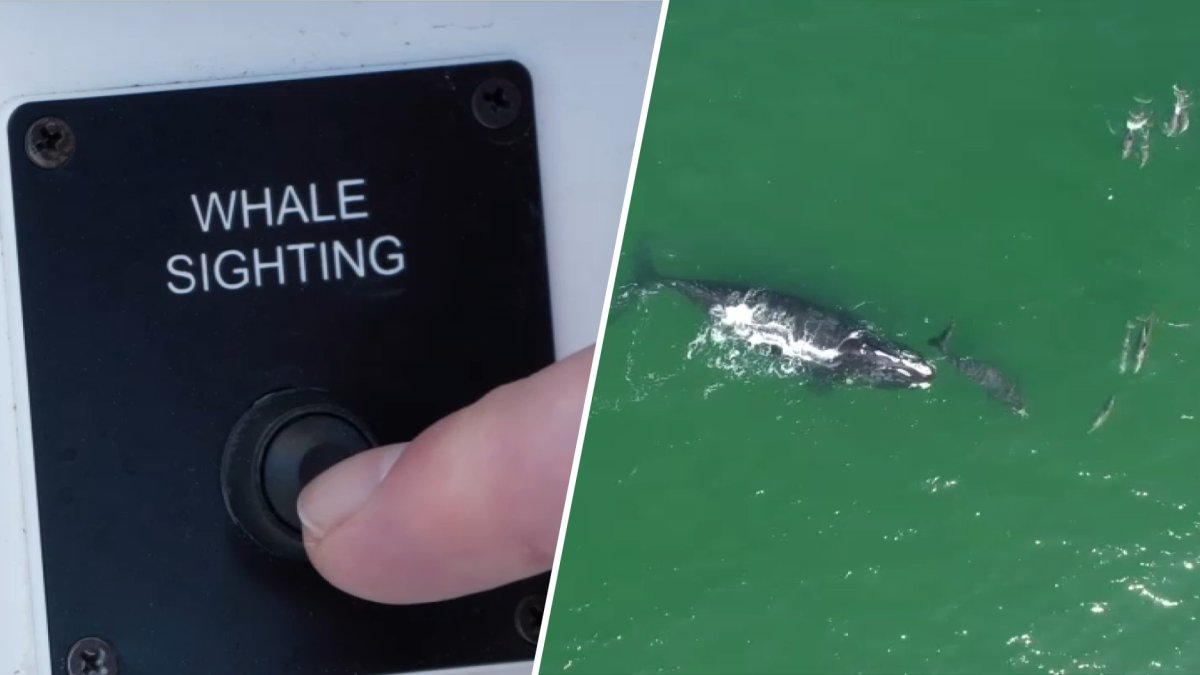

Researchers and the marine industry are using artificial intelligence to help protect one of the world’s most endangered marine mammals by giving boaters better information about where whales are — and where they’re likely to be.
With fewer than 400 North Atlantic right whales remaining in the wild, vessel strikes continue to be a major threat to the species.
“That is a concern that we as an industry are deeply committed to trying to address,” John Depersenaire of Viking Marine Group said.
One effort comes from WAVS, the Whale and Vessel Safety Task Force, which is developing a system that integrates AI with sensors, cameras, navigation systems and other equipment already found on many boats.
The goal is to detect whales and quickly send alerts to nearby vessels, similar to how navigation apps warn drivers about hazards on the road.
“Similar to your in-car navigation experience where a road hazard is detected and then you know a car three miles down the road coming up knows to slow down,” Todd Tally of Atlantic Marine Electronics said. “We’re looking to bring that to boating.”
Depersenaire said once whale sighting information is validated, it can be shared with boats that don’t have their own whale detection systems.
weather forecast6 hours ago
Damp start to Saturday
Philadelphia3 hours ago
Suspect wanted after smashing car into police vehicles in North Philly: Police
“Once that information goes in and it’s validated, it can then be pushed back out to boats that may not have the capabilities or the systems on board to do their own detection,” Depersenaire said.
Meanwhile, researchers at Rutgers University have developed an AI-powered system designed to predict where whales are likely to be.
The system combines whale calls detected by underwater gliders with ocean and environmental data to generate evolving probability maps showing where encounters with marine mammals are most likely.
“This geographical map basically shows you what is the likelihood of encountering a marine mammal at a specific location at a particular time, given the state of the ocean,” Ahmed Aziz Ezzat of the Rutgers University School of Engineering said.
Experts say that information could help recreational boaters and ship captains plan routes that avoid areas and times with a higher risk of whale encounters.
“The ocean is a very dynamic place. It changes very dynamically from hour to hour and from day to day. And this is where AI can really help,” Ezzat said.
Tally explained that the next step is creating a network that allows those whale notifications to be shared among boaters.
“The developmental work we’re putting in place now is to be able to pass those notifications back and forth between users,” Tally said.
The marine industry’s WAVS task force is working to standardize and deploy its whale awareness tools by the end of the year.
This story was originally reported for broadcast by NBC Philadelphia. AI tools helped convert the story to a digital article, and an NBC Philadelphia journalist edited the article for publication.
