

When the COVID-19 pandemic struck the world in 2020, it also disrupted global supply chains and created a shortage of everything from retail products and agriculture to medicine.
Soon after, “there was a renewed interest from (U.S. leaders) to figure out, ‘How do we protect that and not have that happen again?’” said Katie Pettinger, the program director for the National Science Foundation’s Directorate for Technology, Innovation and Partnerships (TIP).
One answer: Regional Innovation Engines, a designation through the NSF that offers up to $160 million over a decade to support geographically based innovation ecosystems.
Now, Nebraska is in line to get some of that money as part of the NSF RuralSTAMINA Biomanufacturing Engine, a joint collaboration between Iowa and Nebraska institutions. The collaboration is focused on boosting biomanufacturing, or making higher-value products out of agricultural material like corn.
Led by Iowa State University, the University of Nebraska-Lincoln is a core partner in RuralSTAMINA along with about 70 different public and private organizations across both states.
“NSF is investing in place-based innovation,” said Kevin Moore, the CEO of the RuralSTAMINA Engine. “For us, that’s all 99 counties in Iowa and 93 counties in Nebraska. All the while making sure that we have a ready workforce.”
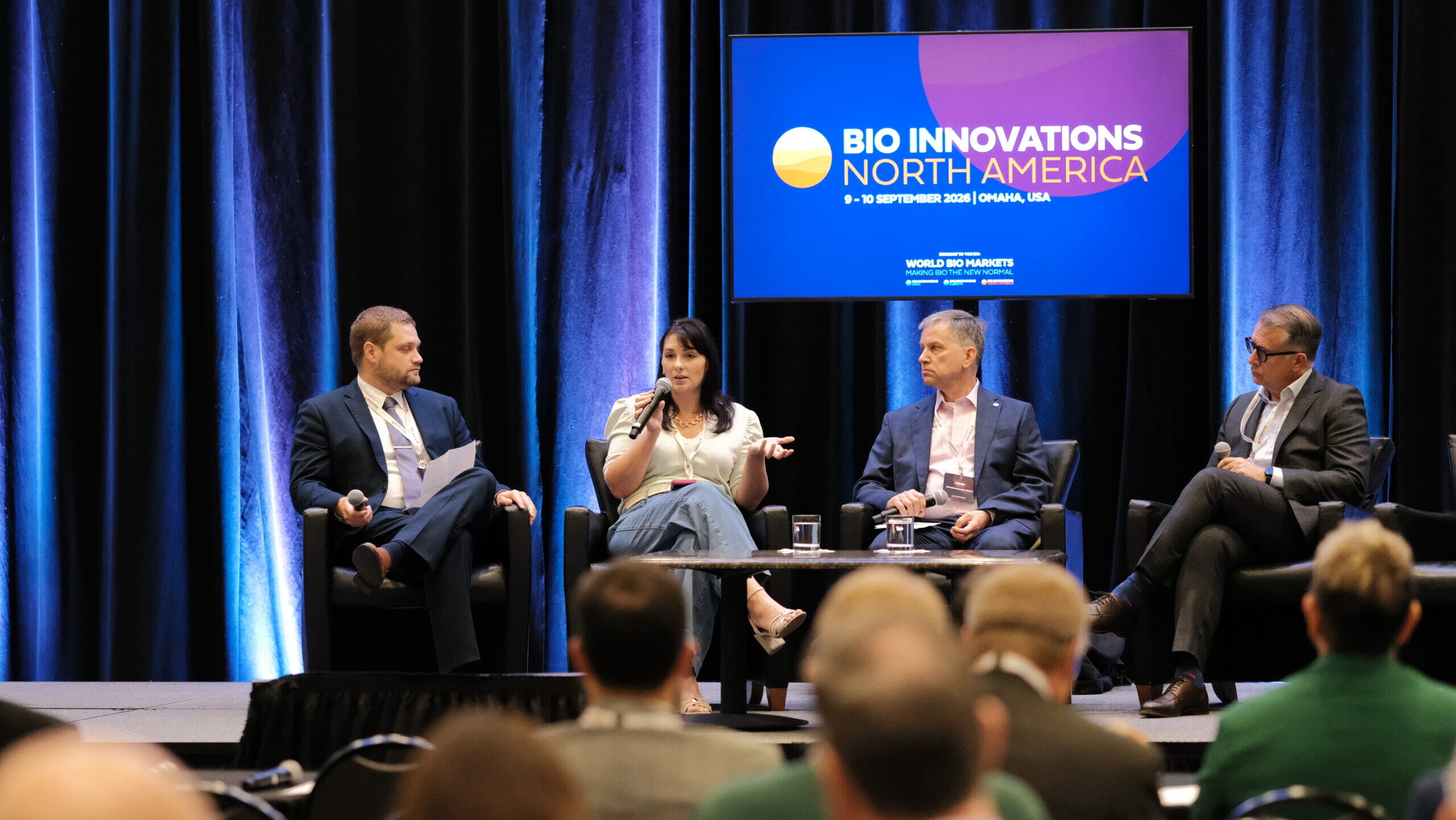
Pettinger and Moore spoke about RuralSTAMINA on a panel at the Bio Innovations North America conference in Omaha on Sept. 10. It’s still early days for the engine, having been awarded its first $15 million NSF award in July.
But the engine is moving quickly, in part so it can show success to the NSF and unlock more funding. Two university faculty in Nebraska and Iowa, three startups (including Nebraska’s Bluestem Biosciences) and two companies have received funding already through RuralSTAMINA.
“More than just an efficient distributor of funding from NSF … we aim to build a network that is more powerful and more impactful than just the dollars,” Moore said.
Invest Nebraska, the state-affiliated nonprofit venture capital organization, is contracted with RuralSTAMINA to administer grants.
“This has been quite the journey working with Iowa in the sense of, you know, historically, as most Midwest states, they tend to compete for economic development and compete for everything else,” said Dan Hoffman, CEO of Invest Nebraska and another panelist at the Bio Innovations conference. “I’m very, very optimistic what this is going to look like 10 years from now.”
NSF engines are meant to do a combination of traditional science and research funding alongside support for commercialization and economic development. That includes helping more startups be successful here instead of on the coasts.
In a decade, there’s a vision of Nebraska and Iowa as biomanufacturing powerhouses, creating industrial chemicals and pharmaceuticals with a strong workforce and a local supply chain.
“You can come up with all the amazing theoretical biomanufacturing processes that you want, but until you actually build that ecosystem, you’re still sort of in danger (of global supply shocks),” Pettinger said. “There’s this increasingly important competition over where technologies are developed, where they’re manufactured, where supply chains are located, where companies grow and then of course where the associated jobs and expertise accumulate.”
Moore said RuralSTAMINA wants to bring more venture and risk capital to the region while also helping university faculty become entrepreneurs. About half of the engine’s current funding is to work with community colleges on workforce development.
As more infrastructure is built out, Moore hopes Iowa and Nebraska will become a key destination for biomanufacturing startups and companies to move here.
“You know that you’re going to come here eventually because this is where the feedstock is,” he said. “You have a real opportunity to tap into this network … You will save time, you will save money and will gain learnings by establishing a presence here and connecting with this great group.”
