

Abstract
China’s e-commerce landscape is characterized by massive promotional festivals that inundate consumers with options, creating a paradox where greater choice often yields lower satisfaction. While “promotion information overload” is pervasive, the psychological mechanisms driving it—and the specific remedies to counteract it—remain insufficiently explored. Grounded in cognitive load theory and self-construal theory, this study investigates how promotion information overload compromises online shopping satisfaction through the mediating role of cognitive load. Furthermore, it examines the moderating roles of list reference and self-construal in navigating these complex promotional environments. Data were collected across three experiments involving 729 Chinese university students (N1 = 169, N2 = 209, N3 = 351), a demographic central to the digital marketplace. The results empirically demonstrate that promotion information overload erodes online shopping satisfaction by inducing excessive cognitive load. Crucially, however, the provision of list reference functions as a heuristic scaffold, effectively buffering the adverse impact of high cognitive load. This protective effect is further nuanced by individual disposition: a three-way interaction reveals that consumers with an interdependent self-construal are significantly more responsive to these external cues than their independent counterparts. These findings suggest that for Chinese university students, leveraging social-proof heuristics offers a viable strategy to mitigate the complexity of modern promotional environments, providing actionable insights for platform design.
Introduction
Recent findings from Accenture’s 19th Annual Holiday Shopping Survey emphasize that an excessive volume of product options now overwhelms 76% of consumers. While shoppers are increasingly driven by a desire for value amidst rising costs, the dense environment of competing promotions has made effective decision-making nearly impossible. This information saturation often proves counterproductive for retailers, as 85% of individuals admit to abandoning their shopping carts when faced with the frustration of choice overload (Standish et al., 2025).
These findings highlight a pervasive paradox within the digital marketplace. While promotions traditionally serve as a cornerstone of marketing management designed to stimulate consumer enthusiasm and facilitate brand conversion, the rapid expansion of information in the e-commerce era has complicated this dynamic (Adriatico et al., 2022; Kusi et al., 2022; Zhang et al., 2022; Yin and Hwang, 2024). In stark contrast to the physical constraints of brick-and-mortar retail, the digital landscape—epitomized by high-intensity events like Tmall’s Double 11 and Black Friday—submerges consumers in a relentless tide of promotional stimuli (Zhou and Tong, 2022; Zhang and Yeap, 2025). However, as the survey data suggests, this wealth of information does not necessarily optimize decision-making; rather, it often exceeds the consumer’s processing threshold, triggering “promotion information overload” (Jacoby et al., 1974; Adriatico et al., 2022; Wang et al., 2025). This specific form of cognitive strain breeds a decision-making environment fraught with uncertainty, which not only stifles efficiency but also triggers a palpable erosion of online consumer satisfaction—a key indicator of post-decisional emotion (Kohli et al., 2004; Mutum et al., 2014). Despite the evident severity of this issue, empirical research explicitly examining how such overload erodes online shopping satisfaction remains limited (Kusi et al., 2022; Zhang et al., 2024; Cao et al., 2025; Huang and Suo, 2025).
While a vast body of literature has documented the adverse impact of information overload on consumer behavior—primarily focusing on high-level outcomes like decision deferral, choice paralysis, and diminished purchase intent—the underlying psychological mechanisms remain less clear. Specifically, the question of how the structural complexity of modern promotions erodes a consumer’s internal state in real-time represents a “black box” that warrants rigorous empirical scrutiny. To bridge this gap, the present study leverages cognitive load theory as a robust framework to unravel the cognitive underpinnings of this phenomenon. Cognitive load theory posits that human working memory is inherently limited, comprising three distinct types of load: intrinsic, extraneous, and germane. When the cumulative demand of these loads exceeds an individual’s cognitive threshold, processing efficiency inevitably declines (Sweller, 1988; Albers et al., 2023; Martínez-Molés et al., 2024). As the density of promotional information intensifies and purchasing tasks grow increasingly labyrinthine, cognitive resources are disproportionately siphoned off to decode complex stimuli, thereby escalating extraneous cognitive load. This depletion leaves consumers with insufficient germane resources to critically assess product utility or derive pleasure from the shopping experience (Hatzithomas et al., 2024; Wang et al., 2024a; Huang and Suo, 2025). Such resource exhaustion imposes a taxing cognitive burden that compromises decision fluency, rendering individuals more prone to overlooking essential non-promotional cues and diminishing the intrinsic joy of consumption (Sternberg, 2008; Wang et al., 2026). Specifically, this study contends that promotion information overload—manifested through an excessive volume of choices and intricate discount mechanisms—breaches an individual’s processing threshold. This surge in cognitive load subsequently precipitates a decline in online shopping satisfaction as the psychological costs of navigating the promotional landscape outweigh the perceived rewards (Hatzithomas et al., 2024; Ali, 2025).
Prior research has identified various boundary conditions for mitigating the adverse effects of information overload, primarily focusing on individual traits—such as consumer processing styles, need for cognition, professional expertise, and cognitive maturity—as well as brand-related factors like brand intimacy and channel consistency (Ketron et al., 2016; Ali, 2025; Ying et al., 2025; Wang et al., 2026). However, limited attention has been paid to how the restructuring of the consumption environment through heuristic tools can alleviate the erosion of satisfaction caused by cognitive strain. Although evidence suggests that consumers under cognitive pressure often turn to online reviews or peripheral cues related to streamers, these sources tend to be fragmented and information-dense, potentially inducing secondary cognitive overload rather than fundamentally simplifying the decision structure (Cao et al., 2025; Park et al., 2025; Wang et al., 2025). To address this gap, this study introduces list reference (providing real-time, dynamic product ratings) as a critical moderator between cognitive load and satisfaction. Drawing on cognitive load theory, the list reference functions as a “pre-processed” heuristic scaffold that directly resolves the issue of resource mismatch in promotional environments. The presence of such references enables consumers to employ “fast and frugal” strategies for effective cognitive offloading (Athi Karthick et al., 2025). This structural simplification effectively strips away the extraneous load inherent in complex promotions, serving as a vital buffer that preserves consumer satisfaction amidst cognitive depletion (Zhang et al., 2022; Yin and Hwang, 2024).
However, the efficacy of list reference as a heuristic tool is far from uniform; instead, it is deeply filtered by an individual’s self-construal. Self-construal theory elucidates how individuals define their relationship with the social collective, a trait that dictates consumer receptivity toward external heuristic cues (Gardner et al., 1999; Gudykunst and Lee, 2003; Pusaksrikit and Kang, 2016). For consumers with an interdependent self-construal, list reference serves not only as a cognitive tool but also as a potent form of social proof. This group places a high premium on social connectivity and collective wisdom, making them more inclined to engage in “cognitive offloading” by delegating the taxing burden of choice to the consensus of the majority. In this context, list reference interacts positively with the interdependent orientation to maximize the mitigation of the negative impact of cognitive load on consumption satisfaction (Wang et al., 2024b; Shi and Cui, 2025). In contrast, consumers with an independent self-construal prioritize personal agency and uniqueness. Even when facing intense cognitive load, they may resist external aids such as list reference, choosing instead to persist with self-directed processing. Consequently, the buffering effect of list reference on the relationship between cognitive load and satisfaction is markedly attenuated among independent individuals (Fan et al., 2022; Zafrani et al., 2023). By integrating this interactive perspective, this study more precisely defines how consumers with different traits employ heuristic strategies to cope with cognitive strain in complex promotional environments.
Second, by identifying cognitive load as the key intermediary mechanism underlying the impact of promotion information overload on shopping satisfaction, this research offers a new theoretical lens—cognitive load theory—to understand the “paradox of choice” in digital marketing (Mutum et al., 2014; Wang et al., 2024a). This perspective elucidates the allocation logic of cognitive resources, demonstrating that satisfaction erosion is not merely an emotional reaction but a structural result of promotional stimuli excessively occupying mental bandwidth, which leaves consumers with insufficient germane resources to effectively assess product utility or derive enjoyment (Sternberg, 2008; Hatzithomas et al., 2024).
Third, despite the documented severity of overload, most studies pay scant attention to how the restructuring of the consumption environment can provide cognitive relief (Cao et al., 2025). By incorporating the moderating roles of list reference and self-construal, the present research not only unpacks the boundary conditions of promotion information overload but also offers a “heuristic scaffold” framework. This explores how structural aids facilitate cognitive offloading, and how this effect is further nuanced by whether a consumer prioritizes social proof (interdependent) or personal agency (independent) (Gardner et al., 1999; Shi and Cui, 2025).
Literature review
Cognitive load theory
Cognitive load theory, originally formulated by cognitive psychologist Sweller based on resource-limited and schema theories, conceptualizes cognitive load as the total psychological and cognitive resources an individual expends to analyze and process information (Sweller, 1988; Albers et al., 2023; Martínez-Molés et al., 2024). The theory emphasizes that, due to the brain’s finite capacity, individuals’ cognitive resources and processing abilities are inherently limited. During a task, multiple cognitive activities may compete for these resources, following a “constant total, zero-sum trade-offs” principle (Sternberg, 2008; Wang et al., 2024a). When the cumulative demand of these tasks surpasses an individual’s processing threshold, efficiency declines, impairing both decisional fluency and subjective experience (Ali, 2025; Wang et al., 2026).
In online shopping decision-making, the surge in product information, promotional rules’ complexity, and interface intricacies heighten cognitive load (Martínez-Molés et al., 2024). During large-scale promotional events, moderate promotional information boosts transparency and benefits (Zhang et al., 2022; Zhou and Tong, 2022); however, excessive promotional stimuli escalate consumers’ discount “expectation thresholds” for potential savings, necessitating a cognitively taxing process of cross-store, brand, and model triangulation to secure optimal utility (Hatzithomas et al., 2024; Wang et al., 2024b). This resource exhaustion leaves consumers with insufficient germane resources to critically assess utility or derive pleasure, transforming a potentially enlivening experience into one of psychological strain (Huang and Suo, 2025; Wang et al., 2026).
Self-construal theory
Self-construal refers to how individuals perceive the self in relation to their social environment, with its essence lying in understanding the self’s position relative to others (Markus and Kitayama, 1991; Bakir et al., 2020). Markus and Kitayama (1991) identified two main types: independent and interdependent. Those with independent self-construal view themselves as autonomous beings with unique traits and attributes, while interdependent individuals define the self through social relationships, duties, and roles (Mao et al., 2016; Wu et al., 2020). In decision-making, independents prioritize personal preferences, whereas interdependents emphasize relational harmony and group cohesion, making them more sensitive to environmental cues (Lewis et al., 2008; Zafrani et al., 2023).
Consumer activities provide a key means for building self-concepts and identities (Chang and Feng, 2016; Hu and Krishen, 2019; Loureiro et al., 2024). Recent scholarship has expanded the investigation of self-construal’s impact beyond traditional domains into the realms of AI-driven recommendations, livestream commerce, and complex promotional environments (Loureiro et al., 2024; Park et al., 2025; Zhang and Yeap, 2025). Specifically, self-construal functions as a critical psychological filter that dictates how individuals process dense product information and navigate cognitive strain (Shi and Cui, 2025). This trait not only shapes brand attitudes and evaluations but also determines a consumer’s receptivity toward external heuristic scaffolds and their subsequent emotional resilience.
Promotion information overload and consumers’ online shopping satisfaction
Confronted with expansive choice arrays, individuals often exhibit heightened dissatisfaction with their selections due to amplified uncertainty perceptions (Dorn et al., 2016; Adriatico et al., 2022; Standish et al., 2025). A surfeit of product information inflates the temporal and effortful costs of purchasing, making choices more arduous and triggering negative affective responses (Zhu and Xie, 2013; Kusi et al., 2022; Wang et al., 2025). Amid promotional enticements’ allure and such information’s labyrinthine complexity, decision-makers may face a disorienting “dazzling array” that obscures clarity and yields suboptimal outcomes (Yin and Hwang, 2024; Zhang and Yeap, 2025). Accordingly, we advance the following hypothesis:
Hypothesis 1: Promotion information overload exerts a deleterious effect on consumers’ online shopping satisfaction; specifically, higher levels of overload precipitate diminished shopping experiences, evinced by inferior outcome satisfaction.
The mediating role of cognitive load
While digital environments offer vast informational resources that grant consumers unprecedented autonomy and selectivity, the structural mismatch between the sheer volume of product data and finite human cognitive capacity frequently triggers profound promotion information overload (Shankar et al., 2006; Athi Karthick et al., 2025; Huang and Suo, 2025). At its core, online shopping is an intensive form of human-computer interaction; as decisional demands escalate, so too do the requirements for visual scanning, comparative evaluation, and information retention, all of which drive up cognitive costs (Martínez-Molés et al., 2024). During large-scale promotional events, the sudden surge in product assortments and the labyrinthine nature of discount structures force consumers to meticulously decode both activity-specific and item-level details, rendering these decisions far more complex than routine transactions (Wang et al., 2024b).
Cognitive load theory posits that human mental resources are finite and operate under a “constant total, zero-sum trade-offs” principle (Sweller, 1988; Sternberg, 2008). In the context of promotion information overload, a consumer’s mental bandwidth is siphoned off by excessive marketing stimuli; this competition for resources, governed by “zero-sum” logic, accelerates the depletion of cognitive resources. This exhaustion leaves individuals with insufficient capacity to derive hedonic pleasure or critically assess product utility (Ali, 2025; Wang et al., 2026). Consequently, when caught in the information flood generated by promotion information overload, the widening gap between promotional abundance and cognitive thresholds hinders optimal decision-making and erodes the overall shopping experience (Hatzithomas et al., 2024). Based on this, we propose:
Hypothesis 2: Cognitive load mediates the association between promotion information overload and consumers’ online shopping satisfaction.
The moderating role of list reference
Promotion information overload exemplifies a classic setting of decisional ambiguity, where cognitive limits hinder information assimilation; yet, heuristic processing offers a simple path for conserving resources and speeding decisions (Payne et al., 1993; Athi Karthick et al., 2025). Incorporating external cues fits availability heuristics, where social signals allow individuals to draw task-relevant insights from collective wisdom, thereby reducing uncertainty and facilitating more effective choices (Yin and Hwang, 2024). While prior research on external cues has focused extensively on online reviews and celebrity endorsements, scholars emphasize that these sources often impose high secondary cognitive costs. Specifically, the opacity of source credibility and the qualitative fragmentation of reviews necessitate significant evaluative effort, while endorsements—often filtered through parasocial lenses—may offer questionable reliability in high-complexity environments (Cao et al., 2025; Park et al., 2025; Wang et al., 2025).
The pursuit of concise, coherent, and clear informational aids reflects the “fast and frugal” heuristic model. Ranking lists, as readily available references in digital shopping contexts, leverage algorithmic computations to produce stable, ordinal rankings that are presented intuitively to minimize cognitive exertion. We propose, therefore, that list reference functions as a heuristic scaffold that streamlines task completion during overload, thereby boosting decisional satisfaction. Under promotion information overload, the resulting resource depletion compels a strategic reliance on such intuitive heuristics. In environments of promotional excess, platform-driven information curation can mitigate the negative repercussions of overload by enabling cognitive offloading (Athi Karthick et al., 2025). As a top-down structural aid, these heuristics conserve limited mental bandwidth, promoting both decisional speed and accuracy (Zhang et al., 2022). Thus, amid cognitive scarcity, list reference—acting as prominent social anchors—reduces contextual ambiguity and buffers the deleterious impact of high cognitive load on consumer satisfaction. Accordingly, we hypothesize:
Hypothesis 3: List reference moderates the latter segment of the mediated pathway (promotion information overload → cognitive load → online shopping satisfaction); specifically, its presence attenuates the negative repercussions of heightened cognitive load on satisfaction.
The moderating role of self-construal
Purchase behaviors and decision tendencies vary by self-construal type: independent individuals prioritize internal drives and often exhibit resistance to social influence, whereas interdependent individuals are more attuned to social norms and display a greater propensity for conformity (Ma et al., 2014; Loureiro et al., 2024). Compared to their interdependent counterparts, independent individuals often demonstrate proactive information-seeking behaviors but may engage in shallower processing when faced with dense stimuli (Fong and Burton, 2008). Consequently, the efficacy of list reference as an external scaffold must be examined through the lens of self-construal. We argue that ranking lists, derived from aggregated consumer evaluations, encapsulate collective wisdom. Interdependent individuals, who inherently value consensus and social harmony, are likely to adopt such guidance more readily to mitigate decision costs (Zafrani et al., 2023; Shi and Cui, 2025). This inclination stems from an emphasis on inclusivity and social connectivity, which contrasts sharply with the independent focus on self-reliance and personal agency (Sun et al., 2009; Millan and Reynolds, 2014).
For interdependent consumers, list reference facilitates a seamless process of cognitive offloading, effectively buffering the strain of promotion information overload by aligning with their social orientation (Wang et al., 2024b). In contrast, independent consumers—driven by a need for uniqueness and autonomy—may perceive such collective-based aids as an encroachment on their decisional independence. Even under high cognitive load, they may resist these scaffolds to maintain a sense of personal control, thereby attenuating the buffering effect of list reference on satisfaction (Fan et al., 2022; Loureiro et al., 2024). By accounting for these divergent psychological filters, we propose that the compensatory power of heuristic tools is contingent upon the consumer’s self-concept. Accordingly, we posit:
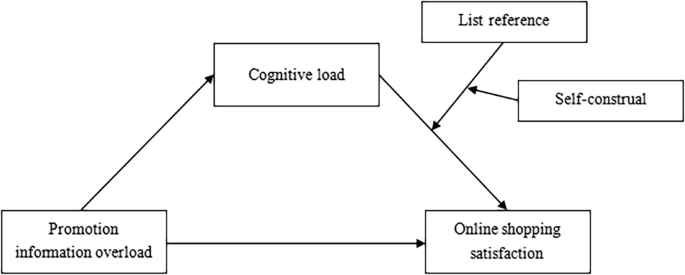
Hypothesis 4: Consumers’ self-construal moderates the interplay between cognitive load and list reference in their impact on online shopping satisfaction, evincing a three-way interaction. In synthesis, the overarching conceptual framework of this inquiry is delineated in Fig. 1.
Pre-experiment
Prior research on information overload has predominantly focused on search goods, such as washing machines, cameras, and mobile phones (Diehl and Poynor, 2010). However, high-involvement appliances like washing machines represent a negligible share of the university student market. To ensure the experimental stimuli possessed ecological validity, we conducted a pre-experiment to identify the product categories that university students actually anticipate purchasing during the “Double 11” shopping festival (Figs. 2 and 3).
Method
Participants
We recruited 71 undergraduate students from a comprehensive university in Guangdong Province to participate in the pre-experiment. Participants who completed the survey and passed the attention checks were compensated approximately $1.00. The sample consisted of 20 males (28.17%) and 51 females (71.83%), with an average age of 21.82 years (SD = 1.05).
Procedure
The survey consisted of two sections. The first section assessed participants’ engagement with major online shopping festivals. Items included prior experience with large-scale promotions, perceived complexity of promotional rules (specifically during past Double 11 events), and purchase intent across specific categories (e.g., mobile phones, cameras, computers, washing machines).
The second section measured familiarity with specific promotional mechanics. We compiled a list of 12 common promotional tactics used by major e-commerce platforms like Tmall and JD.com, including merchant-specific coupons, platform-wide coupons, and limited-time offers. Participants rated their familiarity with each tactic based on their recent shopping experiences using a 5-point Likert scale ranging from 1 (very unfamiliar) to 5 (very familiar). The survey concluded by collecting demographic data, such as gender, age, and years of online shopping experience.
Results
The pre-experiment indicated that a significant majority of consumers (69.01%) perceive the rules of major sales events, such as Double 11 and 618, to be complex. Regarding product selection, 66.20% of participants expressed a willingness to purchase a mobile phone during the Double 11 festival, with the preferred price range falling between ¥2000 and ¥3000. Consequently, we selected a “mobile phone” as the target product for the experimental task and standardized the final price at ¥2488. Consequently, strategies with familiarity scores below 3.0 were excluded. We retained the remaining 11 common promotional tactics (see Table 1) to induce promotion information overload in the subsequent experiments.
Experiment 1
Experiment 1 utilized a between-subjects experimental design with a single-factor, two-level manipulation. The independent variable was promotion information overload (overload vs. non-overload condition), and the dependent variable was online shopping satisfaction. The main goal was to empirically test Hypothesis 1 and Hypothesis 2.
Method
Participants
The sample comprised 172 students from a comprehensive university in Guangdong Province. Participants who completed all items and passed the attention check received full compensation (approximately $1.50). Three cases were excised due to premature attrition or evident disengagement, yielding 169 valid responses: 55 males (32.54%) and 114 females (67.46%), with a mean age of M = 23.44 (SD = 5.39) years. Participants were randomly assigned to either the promotional information overload condition or the non-overload condition to perform a simulated online mobile phone purchase task. To isolate promotional effects, the scenario held the product model constant, requiring participants to compare only vendors. Stimuli utilized standardized specifications and images; however, extraneous cues—such as brand logos, store ratings, and sales volume—were removed to ensure participants focused exclusively on the promotional incentives.
The experiment began with the following scenario instructions:
“Imagine you are participating in a major “Double 11” e-commerce sales event with the intention of purchasing a specific mobile phone. Six different online stores are selling this model at a baseline price of ¥3688. However, each store offers distinct promotional activities. Please carefully examine and compare the promotional information from each vendor before selecting a store for your purchase.”
In the Information Overload condition, participants were presented with five offers per store, comprising three “direct reduction” and two “complex calculation” incentives (e.g., tiered allowances) to replicate the structural complexity of recent Double 11 festivals; conversely, the Non-Overload condition simulated the simplified strategies of early campaigns (circa 2009) by limiting options to just two “direct reduction” incentives per store. After thoroughly evaluating and comparing the promotional incentives across the different vendors, participants made their purchase decision.
Following the purchase decision, participants completed a manipulation check for information overload, followed by assessments of cognitive load and decision satisfaction. The session concluded with the collection of demographic data (e.g., gender, income, and shopping experience).
Measures
The effectiveness of the manipulation was assessed using items adapted from the information overload scale developed by Chen et al. (2009). This inquiry operationalized three items attuned to “perceived product quantity surfeit” (e.g., The mobile phone selection task provided so much promotional information that I found it burdensome to process all of it.”) and contextualized them accordingly. Responses were elicited on a 5-point Likert scale (1 = “strongly disagree”; 5 = “strongly agree”). The composite mean score indexed overload magnitude, with elevated values denoting intensified perceptions (a = 0.70).
Cognitive load was measured using the scale developed by Paas and Van Merriënboer (1994), which evaluates two dimensions: mental exertion (“How demanding did you perceive the online shopping task?”) and subjective task arduousness (“How much mental effort did you expend in consummating the online shopping task?”). Two items were rated on a 9-point Likert scale (1 = “not at all”; 9 = “extremely”). Higher aggregates signified augmented load.
(3) Online shopping satisfaction
Outcome satisfaction was assessed with three items adapted from Oliver’s (2014) satisfaction metric (e.g., “ I am very satisfied with the product I purchased.”). A 5-point Likert scale was employed (1 = “very dissatisfied”; 5 = “very satisfied”). The mean score served as the satisfaction index, wherein augmented values connoted heightened approbation (a = 0.86).
Results
Manipulation check
An independent-samples t-test evinced that the overload cohort (M_overload = 4.10, SD = 0.59) reported markedly elevated overload perceptions relative to the non-overload counterpart (M_non-overload = 3.61, SD = 0.77), t = 4.67, p < 0.001. This attests to the manipulation’s fidelity.
Correlation analysis
Correlational outputs, arrayed in Table 2, disclosed a robust positive linkage between promotion information overload and cognitive load, alongside commensurate negative associations with consumer satisfaction.
Cognitive load and online shopping satisfaction
Independent-samples t-tests disclosed that the overload group evinced substantially augmented cognitive load (M_overload = 6.48, SD = 1.07) than the non-overload group (M_non-overload = 4.76, SD = 1.61), t = 8.13, p < 0.001. Reciprocally, overload participants manifested attenuated satisfaction (M_overload = 3.55, SD = 0.59) compared to non-overload counterparts (M_non-overload = 3.82, SD = 0.77), t = -2.33, p = 0.021.
Test of the mediating effect of cognitive load
Online shopping satisfaction was regressed on promotion information overload, with cognitive load as mediator and demographics (gender, age, education, income, shopping experience, promotional involvement) as covariates. Employing Hayes’s bootstrapping procedure (Model 4; 5000 resamples, 95% CI), the mediated pathway yielded a CI of [−0.53, −0.20], excluding zero—denoting a significant indirect effect of −0.33 (Hayes, 2013). The direct path CI encompassed zero ([−0.17, 0.36]), implying nonsignificance. Thus, cognitive load fully mediated the overload-satisfaction nexus, corroborating Hypothesis 1 and Hypothesis 2.
Experiment 2
A follow-up survey of Experiment 1 participants identified “buyer reviews and ratings” (91.10%) and “product sales volume” (81.70%) as the dominant external cues consulted during major sales events, whereas reliance on advertisements or influencer endorsements was negligible (<30.00%). Based on these findings, we selected “buyer ratings” as the basis for the ranking list manipulation in the subsequent study.
Experiment 2 employed a 2 (promotional information overload: overload vs. non-overload) × 2 (list reference: present vs. absent) between-subjects design, with online shopping satisfaction as the dependent variable. This design was specifically constructed to test Hypothesis 3 regarding the moderating effect of list reference on consumer decision-making.
Method
Participants
The sample consisted of 210 students from a comprehensive university in Guangdong Province, China. Participants received full compensation for completing all items and the attention check (approximately $1.50). One participant was excluded for evident disengagement, yielding 209 valid cases: 66 males (31.58%) and 143 females (68.42%), with a mean age of M = 23.00 (SD = 5.14) years. Participants were randomly assigned to a 2 (promotional information overload: overload vs. non-overload) × 2 (list reference: present vs. absent) between-subjects design. The procedure replicated Study 1, requiring participants to compare six vendors offering the same mobile phone with distinct promotional incentives. The key variation occurred in the list reference conditions, where a ranking based on buyer ratings was displayed alongside the offers; conversely, the no list conditions presented the promotional information in isolation.
Following the purchase decision, participants completed manipulation checks for both overload and list presence, followed by assessments of cognitive load and satisfaction (addressing both the shopping process and the outcome). The session concluded with the collection of demographic data.
Measures
- (1)
The measures were identical to those used in Experiment 1 (a = 0.78).
- (2)
The list reference stimuli were modeled after Tmall’s Double 11 “Top-Rated Rankings,” displaying vendors ranked by quantitative buyer ratings. To validate this manipulation, participants assessed the statement, “During the purchasing process, the website provided me with a list of top-rated merchants”, rated on a 5-point Likert scale (1 = “strongly disagree”; 5 = “strongly agree”). Augmented scores connoted efficacious priming.
- (3)
The measures were identical to those used in Experiment 1.
- (4)
The measures were identical to those used in Experiment 1 (a = 0.86).
Results
Manipulation check
Independent-samples t-tests substantiated that the overload cohort (M_overload = 4.06, SD = 0.61) evinced pronounced overload perceptions relative to the non-overload group (M_non-overload = 3.32, SD = 0.88), t = 7.01, p < 0.001—affirming the manipulation’s integrity. Likewise, list reference participants registered superior priming scores (M_present = 3.87, SD = 0.96) vis-à-vis the absent condition (M_absent = 1.89, SD = 1.06), t = 14.22, p < 0.001, corroborating efficacy.
Correlation analysis
Testing the moderating effect of list reference
Regressing online shopping satisfaction on promotion information overload (independent variable), with cognitive load as mediator, list reference as moderator, and demographics (gender, age, education, income, shopping experience, promotional involvement) as covariates, we invoked Hayes’s (2013) bootstrapping regimen (Model 14; 5000 resamples, 95% CI). The moderated pathway CI spanned [0.02, 0.29], excluding zero—denoting a substantive moderation wherein list reference attenuates the mediated influence of overload via load on satisfaction. The direct effect CI ([−0.43, 0.01]) bracketed zero, implying nonsignificance and full mediation by load.
Stratified indirect effects evinced attenuation in the list reference condition (−0.12; 95% CI [−0.26, −0.01]) vs. amplification sans reference (−0.31; 95% CI [−0.51, −0.16]). Thus, the list reference qualifies the distal segment (cognitive load → satisfaction) of the mediated trajectory, as schematized in Fig. 4. Hypothesis 3 is thereby upheld.
Experiment 3
This experiment employed a 2 (list reference: present vs. absent) × 2 (self-construal: independent vs. interdependent) between-subjects design. The dependent variable was consumers’ online shopping satisfaction. The primary aim was to test Hypothesis 4, which states that self-construal moderates the interaction between cognitive load and list reference on satisfaction. To enhance ecological validity relative to real-world online shopping scenarios, all participants were exposed to overload priming materials.
Method
Participants
The cohort encompassed 392 students from a comprehensive university in Guangdong Province, China. Participants who complete all items and pass the attention check receive full compensation (approximately $1.50). Forty-one cases were culled for apparent disengagement, yielding 351 valid responses: 234 males (66.67%) and 117 females (33.33%), with a mean age of M = 18.71 (SD = 0.81) years. Participants were randomly assigned to one of four conditions (list reference–independent self-construal; list reference–interdependent self-construal; non-list reference–independent self-construal; and non- list reference–interdependent self-construal). They completed orientation-specific priming and validation tasks prior to a simulated smartphone shopping exercise. In the list reference conditions, a vendor-ranked leaderboard followed the presentation of options; other procedures mirrored those in Experiment 2.
Measures
- (1)
Manipulation of self-construal
Drawing on priming protocols from Zhu et al. (2020), directives for the independent (vs. interdependent) condition instructed: “Reflect on your own expectations” (“Reflect on your family or friends’ expectations of you”). Participants were allotted two minutes for contemplation, followed by transcription of reflections to induce the respective orientations.
- (2)
Fidelity was ascertained per Kühnen et al. (2001)yself” and “of my friends/family,” rated on a 7-point Likert scale (1 = “not at all”; 7 = “entirely”)
- (3)
Promotion information overload, cognitive load, online shopping satisfaction, and list reference
These instruments recapitulated Experiment 1 and Experiment 2.
Results
Manipulation check
Independent-samples t-tests confirmed that list reference participants evinced superior priming indices (M_present = 3.38, SD = 0.85) relative to the absent condition (M_absent = 2.33, SD = 0.97), t = 10.77, p < 0.001—attesting to manipulation salience. Concurrently, independent self-construal scores predominated in the independent cohort (M_independent = 5.24) over the interdependent counterpart (M_interdependent = 3.16), t = -11.70, p < 0.001; reciprocally, interdependent indices were accentuated in the interdependent group (M_interdependent = 4.37) vs. independent (M_independent = 3.65), t = 4.28, p < 0.001, vindicating the induction’s robustness.
Correlation analysis
The intercorrelations, shown in Table 4, revealed a significant positive correlation between promotion information overload and cognitive load. Both antecedents were negatively correlated with satisfaction.
Test of the moderating effect of self-construal
Satisfaction was regressed on overload (independent variable), load as mediator, list reference as first-stage moderator, self-construal as second-stage moderator, and demographics (gender, age, income, experience, involvement) as covariates. Hayes’s (2013) bootstrapping (Model 18; 5000 resamples, 95% CI) yielded a list reference moderation CI of [−0.22, 0.08] (bracketing zero; nonsignificant) and self-construal CI of [−0.19, 0.10] (likewise; nonsignificant). Pivotal, however, was the three-way interaction CI [0.05, 0.64] (excluding zero), signifying self-construal’s substantive moderation of the load–list reference interaction on satisfaction.
The direct overload–satisfaction path registered −0.34 (95% CI [−0.51, −0.17]; excluding zero), implying partial mediation by cognitive load. Thus, Hypothesis 4 is affirmed.
Discussion
Centered on the pervasive phenomenon of promotion information overload within China’s large-scale e-commerce festivals, this research integrates cognitive load theory and self-construal theory to unravel the mechanisms driving consumer dissatisfaction. Adopting a heuristic decision-making lens, the study elucidates how promotional saturation erodes online shopping satisfaction and identifies the boundary conditions that modulate this effect. Through three experiments situated within a Double 11 e-commerce paradigm, Experiment 1 interrogated the direct influence of overload on satisfaction, alongside cognitive load’s mediating role therein. Experiment 2 incorporated an extrinsic referential cue—list reference—to probe its moderation of the cognitive load–satisfaction linkage. Experiment 3 factored in dispositional variance via self-construal, discerning how divergent orientations modulate strategic reliance on lists, thereby delineating the contextual potency of load’s mediation. Synthesizing these endeavors, promotion information overload deleteriously impinges on satisfaction, with load serving as mediator; concurrently, list reference qualifies this mediated trajectory, while the triad of load, list reference, and self-construal interactively shapes satisfaction.
These revelations demystify the “black box” interposed between overload and satisfaction, proffering a viable heuristic stratagem—leveraging “external brains” (referential cues) such as lists—to ameliorate decisional quandaries under high cognitive load, particularly for interdependent consumers. In ambiguous milieus, such scaffolds attenuate the load’s erosive sequelae on experiential approbation.
Theoretical implications
This study advances the marketing and consumer behavior literature in several distinct ways. First, it shifts the theoretical focus from generic choice overload to the structural burden of “promotion-specific” information overload. While extensive research has examined the impact of product variety and website complexity (e.g., Adriatico et al., 2022; Wang et al., 2025), our findings offer a more nuanced perspective on high-intensity e-commerce environments. By conceptualizing promotion-induced overload as a primary driver of extraneous cognitive load, we demonstrate that consumer fatigue stems not merely from the quantity of choices but from the intricate discount mechanisms and redundant promotional stimuli that characterize modern shopping festivals (Kusi et al., 2022; Yin and Hwang, 2024).
Second, this research clarifies the mechanisms underlying the “paradox of choice” by identifying cognitive load as the central psychological process. Unlike prior studies that frequently characterize dissatisfaction as a direct affective reaction (Dorn et al., 2016), we establish that the erosion of satisfaction is a structural consequence of mental resource depletion. Our findings elucidate the allocation logic of cognitive resources: when promotional stimuli monopolize mental bandwidth, consumers are left with insufficient “germane resources” to effectively assess product utility or derive genuine enjoyment from the experience (Sternberg, 2008; Hatzithomas et al., 2024).
Third, we introduce a “heuristic scaffold” framework that bridges individual traits with environmental design. While existing literature predominantly focuses on internal traits such as “need for cognition” (Ketron et al., 2016; Ali, 2025), we demonstrate that external aids—specifically list references—function as “pre-processed” heuristics that facilitate effective cognitive offloading (Athi Karthick et al., 2025). Furthermore, our observation of a three-way interaction reveals that the efficacy of these scaffolds is contingent upon an individual’s social orientation (interdependent vs. independent self-construal). This finding moves the field toward a more personalized understanding of how consumers navigate cognitive strain in complex digital marketplaces (Gardner et al., 1999; Shi and Cui, 2025).
Practical implications
The findings offer actionable strategies for e-commerce practitioners to mitigate the adverse effects of information saturation. First, given that promotion-specific overload depletes vital cognitive resources, platforms must streamline campaign structures to minimize the cognitive burden on users. Instead of necessitating complex cross-store calculations, interfaces should prioritize the presentation of the “final price” as the primary focal point. Automating the application of eligible coupons allows consumers to allocate their limited cognitive capacity toward evaluating core product utility rather than deciphering complex promotional rules.
Second, platforms should also deploy decision aids that facilitate cognitive offloading through the use of heuristic scaffolds. During high-intensity events such as “Double 11”, dynamic, algorithmically driven rankings—such as “top-rated value” or “real-time sales leaderboards”—should be prominently displayed. These tools transform fragmented promotional data into intuitive ordinal information, thereby reducing extraneous cognitive load and preserving processing fluency.
Furthermore, marketers should implement targeted interventions tailored to consumer self-construal. For interdependent consumers, platforms should emphasize social-proof cues, such as “community choice lists”, to align with their preference for collective wisdom. Conversely, for independent consumers, strategies should support personal agency by providing customizable comparison matrices that enable autonomous evaluation without perceived social pressure.
Limitations and future research directions
While this study provides robust empirical evidence regarding the mechanisms of promoting information overload, several limitations warrant discussion and delineate fruitful avenues for future inquiry. First, although the simulated smartphone shopping scenario on desktop computers aimed for experimental realism while controlling for extrinsic distractions, the digital marketplace involves increasingly complex, multi-channel environments that are difficult to fully replicate in a lab setting. Future studies should leverage big data analytics or immersive technologies, such as Virtual Reality (VR) combined with eye-tracking, to capture real-time cognitive shifts during decision-making (Martínez-Molés et al., 2024).
Second, the external validity of our findings is constrained by the demographic composition of the sample. Although university students represent a core segment of the e-commerce market, their status as “digital natives” implies a higher baseline of cognitive fluidity and familiarity with complex digital interfaces compared to the general population. Consequently, this demographic likely possesses a higher threshold for information saturation. The deleterious effects of promotion information overload on satisfaction could be significantly more pronounced among older cohorts or “digital immigrants” who possess fewer cognitive resources for processing high-density stimuli. Future research should extend this paradigm to diverse populations to verify whether the buffering effect of list reference remains robust across varying levels of digital literacy, particularly given that information fatigue has become a critical barrier in live streaming commerce (Zhang and Yeap, 2025). Additionally, research could explore how “cognitive aging” interacts with the “seduction and strain” inherent in rich channel environments (Wang et al., 2026).
Third, this study focused exclusively on mobile phones—a high-involvement product category selected via pre-testing. While this choice ensured experimental control, it introduces a boundary condition regarding product type. High-involvement purchases naturally elicit a higher willingness to invest “germane resources” in information processing. In contrast, for low-involvement products or fast-moving consumer goods, consumers often employ heuristic processing as a default strategy. The cognitive threshold for abandoning a cart may be significantly lower for low-stakes products. Future scholarship should examine the “load–satisfaction” mechanism across a broader spectrum of product categories, such as comparing the impact of information overload in the agri-food sector vs. the high-tech sector (Ying et al., 2025). Furthermore, researchers should investigate how product evaluability moderates the effectiveness of list reference, distinguishing between search goods (where specifications matter) and experience goods (where sensory appeal dominates) (Wang et al., 2025).
Finally, while our manipulation of list reference proved effective, the current study treated these heuristic scaffolds as static informational cues. In real-world environments, rankings are often dynamic, personalized, and algorithm-driven. We did not explore the potential “boomerang effect”—namely, whether consumers might perceive algorithmically generated lists as manipulative or biased, potentially triggering reactance or “algorithm aversion” rather than relief. Future studies should investigate the role of trust and perceived transparency in decision aids, and extending choice overload research to promotion-specific overload is a logical next step (Chen et al., 2022; Kim et al., 2023). Specifically, scholars could examine how the “source credibility” of AI recommendations balances against cognitive load, and how trust mitigates the negative effects of social overload in these contexts (Zhang et al., 2022; Park et al., 2025).
Conclusion
Data availability
The datasets generated and analyzed during the current study are available from the corresponding author on reasonable request.
References
-
Adriatico JM, Cruz A, Tiong RC, Racho-Sabugo CR (2022) An analysis on the impact of choice overload to consumer decision paralysis. J Econ Finance Account Stud 4(1):55–75. https://doi.org/10.32996/jefas.2022.4.1.4
-
Albers F, Trypke M, Stebner F, Wirth J, Plass JL (2023) Different types of redundancy and their effect on learning and cognitive load. Br J Educ Psychol 93:339–352. https://doi.org/10.1111/bjep.12592
-
Ali SMS (2025) Cognitive biases in digital decision making: how consumers navigate information overload (consumer behavior). Adv Consum Res 2:168–177
-
Athi Karthick V, Majumdar A, Bose I (2025) Problem of plenty? Understanding the impact of choice and information overload on Airbnb bookings. Inf Syst Front 27:1693–1718. https://doi.org/10.1007/s10796-024-10548-0
-
Bakir A, Gentina E, de Araújo Gil L (2020) What shapes adolescents’ attitudes toward luxury brands? The role of self-worth, self-construal, gender and national culture. J Retail Consum Serv 57:102208. https://doi.org/10.1016/j.jretconser.2019.102208
-
Cao J, Zhong L, Zhang G, Liu D, Lyu Y, Qiu X (2025) Deciphering the persuasive power of information overload in live commerce: a tactics approach to consumer decision-making. Acta Psychologica 260: 105767. https://doi.org/10.1016/j.actpsy.2025.105767
-
Chang CT, Feng CC (2016) Bygone eras vs. the good Ol’days: how consumption context and self-construal influence nostalgic appeal selection. Int J Advert 35(3):589–615. https://doi.org/10.1080/02650487.2015.1071084
-
Chen S, Qiu H, Zhao S, Han Y, He W, Siponen M, Xiao H (2022) When more is less: the other side of artificial intelligence recommendation. J Manag Sci Eng 7(2):213–232. https://doi.org/10.1016/j.jmse.2021.08.001
-
Chen YC, Shang RA, Kao CY (2009) The effects of information overload on consumers’ subjective state towards buying decision in the internet shopping environment. Electron Commer Res Appl 8(1):48–58. https://doi.org/10.1016/j.elerap.2008.09.001
-
Diehl K, Poynor C (2010) Great expectations?! Assortment size, expectations, and satisfaction. J Mark Res 47(2):312–322. https://doi.org/10.1509/jmkr.47.2.312
-
Dorn M, Messner C, Wänke M (2016) Partitioning the choice task makes Starbucks coffee taste better. J Mark Behav 1(3-4):363–384. https://doi.org/10.1561/107.00000023
-
Fan A, Lu Z, Mao ZE (2022) To talk or to touch: Unraveling consumer responses to two types of hotel in-room technology. Int J Hospit Manag 101: 103112. https://doi.org/10.1016/j.ijhm.2021.103112
-
Fong J, Burton S (2008) A cross-cultural comparison of electronic word-of-mouth and country-of-origin effects. J Bus Res 61(3):233–242. https://doi.org/10.1016/j.jbusres.2007.06.015
-
Gardner WL, Gabriel S, Lee AY (1999) I” value freedom, but “we” value relationships: Self-construal priming mirrors cultural differences in judgment. Psychol Sci 10(4):321–326. https://doi.org/10.1111/1467-9280.00162
-
Gudykunst WB, Lee CM (2003) Assessing the validity of self construal scales: a response to Levine et al. Hum Commun Res 29(2):253–274. https://doi.org/10.1111/j.1468-2958.2003.tb00838.x
-
Hatzithomas L, Theodorakioglou F, Margariti K, Boutsouki C (2024) Cross-media advertising strategies and brand attitude: the role of cognitive load. Int J Advert 43(4):603–636. https://doi.org/10.1080/02650487.2023.2249342
-
Hayes AF (2013) Introduction to mediation, moderation, and conditional process analysis: a regression-based approach. Guilford Press. https://doi.org/10.1111/jedm.12050
-
Huang Y, Suo L (2025) The impact of consumer confusion on chinese consumers’ delayed choices in online shopping: the mediating role of negative emotions. Community Soc Dev J 26(1):1–15. https://doi.org/10.57260/csdj.2025.271971
-
Hu HF, Krishen AS (2019) When is enough, enough? Investigating product reviews and information overload from a consumer empowerment perspective. J Bus Res 100:27–37. https://doi.org/10.1016/j.jbusres.2019.03.011
-
Jacoby J, Speller DE, Berning CK (1974) Brand choice behavior as a function of information load: replication and extension. J Consum Res 1(1):33–42. https://doi.org/10.1086/208579
-
Ketron S, Spears N, Dai B (2016) Overcoming information overload in retail environments: imagination and sales promotion in a wine context. J Retail Consum Serv 33:23–32. https://doi.org/10.1016/j.jretconser.2016.07.017
-
Kim J, Kim JH, Kim C, Park J (2023) Decisions with ChatGPT: reexamining choice overload in ChatGPT recommendations. J Retailing Consum Serv 75: 103494. https://doi.org/10.1016/j.jretconser.2023.103494
-
Kohli R, Devaraj S, Mahmood MA (2004) Understanding determinants of online consumer satisfaction: a decision process perspective. J Manage Inf Syst 21(1):115–136. https://doi.org/10.1080/07421222.2004.11045796
-
Kusi G, Appiah G, Rumki MZA, Quarcoo FH, Otchere E, Fu G (2022) The role of information overload on consumers’ online shopping behavior. J Bus Manag Stud 4(4):162–178. https://doi.org/10.32996/jbms
-
Kühnen U, Hannover B, Schubert B (2001) The semantic-procedural interface model of the self: the role of self-knowledge for context-dependent versus context-independent modes of thinking. J Pers Soc Psychol 80(3):397–409. https://doi.org/10.1037/0022-3514.80.3.397
-
Lewis RS, Goto SG, Kong LL (2008) Culture and context: East Asian American and European American differences in P3 event-related potentials and self-construal. Pers Soc Psychol Bull 34(5):623–634. https://doi.org/10.1177/0146167207313731
-
Loureiro SMC, Jiménez-Barreto J, Bilro RG, Romero J (2024) Me and my AI: exploring the effects of consumer self-construal and AI-based experience on avoiding similarity and willingness to pay. Psychol Mark 41(1):151–167. https://doi.org/10.1002/mar.21913
-
Mao H, Li X, Desai KK, Jain SP (2016) Self-construal and feature centrality. Mark Lett 27(4):781–789. https://doi.org/10.1007/s11002-015-9380-z
-
Markus HR, Kitayama S (1991) Culture and the self: implications for cognition, emotion, and motivation. Psychol Rev 98(2):224–253. https://doi.org/10.1037/0033-295X.98.2.224
-
Martínez-Molés V, Pérez-Cabañero C, Cervera-Taulet A (2024) Examining presence in immersive virtual reality and website interfaces through the cognitive fit and cognitive load theories. Int J Contemp Hospit Manag 36(11):3930–3949. https://doi.org/10.1108/IJCHM-09-2023-1512
-
Ma ZF, Yang ZY, Mourali M (2014) Consumer adoption of new products: independent versus interdependent self-perspectives. J Mark 78(2):101–117. https://doi.org/10.1509/jm.12.0051
-
Millan E, Reynolds J (2014) Self-construals, symbolic and hedonic preferences, and actual purchase behavior. J Retail Consum Serv 21(4):550–560. https://doi.org/10.1016/j.jretconser.2014.03.012
-
Mutum D, Ghazali EM, Nguyen B, Arnott D (2014) Online loyalty and its interaction with switching barriers. J Retail Consum Serv 21(6):942–949. https://doi.org/10.1016/j.jretconser.2014.08.012
-
Oliver RL (2014) Satisfaction: a Behavioral Perspective on the Consumer. 2nd edn. Routledge
-
Paas FGWC, Van Merriënboer JJG (1994) Instructional control of cognitive load in the training of complex cognitive tasks. Educ Psychol Rev 6:351–371. https://doi.org/10.1007/BF02213420
-
Park JE, Fan A, So KKF (2025) Enhancing the effectiveness of generative AI travel recommendations: balancing1401822. https://doi.org/10.1177/10963480251401822
-
Payne JW, Bettman JR, Johnson EJ (1993) The adaptive decision maker. Cambridge University Press
-
Pusaksrikit T, Kang J (2016) The impact of self-construal and ethnicity on self-gifting behaviors. J Consum Psychol 26(4):524–534. https://doi.org/10.1016/j.jcps.2016.02.001
-
Shankar A, Cherrier H, Canniford R (2006) Consumer empowerment: a Foucauldian interpretation. Eur J Mark 40(9-10):1013–1030. https://doi.org/10.1108/03090560610680989
-
Shi LH, Cui AP (2025) The impact of self-construals on bicultural consumers’ counterfeit postpurchase regret. Eur J Mark 59(11):2557–2584. https://doi.org/10.1108/EJM-07-2024-0562
-
Standish J, Wright O, Weiss E, El-Warraky N (2025) Holiday Shopping 2025. Accenture. Available at: https://www.accenture.com/us-en/insights/consulting/consumer-holiday-research
-
Sternberg R (2008) Cognitive psychology. 4th edn. Cengage Learning
-
Sun T, Tai Z, Tsai KC (2009) The role of interdependent self-construal in consumers’ susceptibility to retail salespersons’ influence: a hierarchical approach. J Retail Consum Serv 16(5):360–366. https://doi.org/10.1016/j.jretconser.2009.04.002
-
Sweller J (1988) Cognitive load during problem solving: effects on learning. Cogn Sci 12(2):257–285. https://doi.org/10.1016/0364-0213(88)90023-7
-
Wang L, Wang S, Han B, Wang CL (2025) Mitigating the negative effect of overchoice on purchase decision: the role of product evaluability. Psychol Mark. https://doi.org/10.1002/mar.22241
-
Wang W, Hua H, Wang H, Zeng L (2026) The seduction and the strain: how rich channel environments enliven and overwhelm consumers. J Retail Consum Serv 89: 104585. https://doi.org/10.1016/j.jretconser.2025.104585
-
Wang X, Zhang Z, Jiang Q (2024a) The effectiveness of human vs. AI voice-over in short video advertisements: A cognitive load theory perspective. J Retail Consum Serv 81: 104005. https://doi.org/10.1016/j.jretconser.2024.104005
-
Wang Y, Guo R, Yang S (2024b) Original or discounted amount? The mechanism of impact of group-buying bill amount display and peer presence on consumer repurchase intention in restaurants. J Hospit Tour Manag 60:82–93. https://doi.org/10.1016/j.jhtm.2024.06.011
-
Wu EC, Moore SG, Fitzsimons GJ (2020) Wine for the table: self-construal, group size, and choice for self and others. J Consum Res 46(6):1125. https://doi.org/10.1093/jcr/ucaa004
-
Yin J, Hwang YH (2024) Unpacking the complexities of information overload in early-stage online booking: The moderating effects of information presentation and regulatory focus. Inf Dev. 02666669241247190. https://doi.org/10.1177/02666669241247190
-
Ying B, Duan Y, Zheng S, Zheng X (2025) Impact of information overload on consumer decision-making in the agri-food sector: a stimulus-organism-response theory perspective. J Consum Aff 59(4):e70031. https://doi.org/10.1111/joca.70031
-
Zafrani O, White TB, Riemer H (2023) When your favorites disappoint: Self-construal influences response to disappointing brand experiences. Curr Psychol 42:8747–8758. https://doi.org/10.1007/s12144-021-02109-4
-
Zhang C, Pan S, Zhao Y (2024) More is not always better: Examining the drivers of livestream sales from an information overload perspective. J Retailing Consum Serv 77: 103651. https://doi.org/10.1016/j.jretconser.2023.103651
-
Zhang C, Wang X, Zhao C, Ren Y, Zhang T, Peng Z, Fan X, Ma X, Li Q (2022) Promotionlens: inspecting promotion strategies of online e-commerce:767–777. https://doi.org/10.1109/TVCG.2022.3209440
-
Zhang L, Yeap JAL (2025) When more is less: information overload and fatigue in live streaming commerce. Span J Mark-ESIC. 1–22. https://doi.org/10.1108/SJME-11-2024-0312
-
Zhou R, Tong L (2022) A study on the influencing factors of consumers’ purchase intention during livestreaming e-commerce: the mediating effect of emotion. Front Psychol 13: 903023. https://doi.org/10.3389/fpsyg.2022.903023
-
Zhu DQ, Xie XF (2013) Which one is better, maximizing or satisficing?. Adv Psychol Sci 21(2):309–316. https://doi.org/10.3724/SP.J.1042.2013.00309
-
Zhu ZZ, Liu F, HA Chen (2020) Ability or passion? The effect of advertising appeals on consumer brand identification and purchase intention. Acta Psychol Sin 52(3):357–370. https://doi.org/10.3724/SP.J.1041.2020.00357
Acknowledgements
The authors would like to thank all participants for their collaboration. This research was supported by the National Natural Science Foundation of China (Nos. 71971099; 72401102; 72471065), Research Startup Grant for Talent Introduction (2022RC004), and the funding of Guangdong Basic Education Development Research Base (2022WZJD011).
Authors and Affiliations
Contributions
WZ developed the research concept, designed the study, collected, analyzed, and interpreted the data, and wrote the main manuscript text together with ZH. ZH also contributed to data collection, analysis, and manuscript writing. AL supervised the research and reviewed and edited the manuscript. NL and HS critically reviewed and revised the manuscript. YL contributed to the study design. All authors read and approved the final version of the manuscript for publication.
Ethics declarations
Competing interests
The authors declare no competing interests.
Ethical approval
The ethics committee of Jinan University approved the study protocol (approval granted on 11 May 2022). Participants signed an informed consent form prior to commencing the research. The study’s objectives, along with assurances of confidentiality and anonymity, were clearly described, and volunteers were granted full autonomy to complete the questionnaire. All personal data collected during the project adhered to relevant legal and regulatory guidelines. All procedures involving human participants in this study were conducted in accordance with the ethical standards of the institutional research committee and the 1964 Helsinki Declaration and its later amendments or comparable ethical standards.
Informed consent
Written informed consent was obtained from all participants between October 2023 and April 2024. They were fully informed of the study’s objectives, procedures, and other relevant details; assured that participation was voluntary and that they could withdraw at any time without adverse consequences; and notified of the confidentiality protections in place. The research methods posed no foreseeable risks to participants.
Additional information
Publisher’s note Springer Nature remains neutral with regard to jurisdictional claims in published maps and institutional affiliations.
Rights and permissions
Open Access This article is licensed under a Creative Commons Attribution-NonCommercial-NoDerivatives 4.0 International License, which permits any non-commercial use, sharing, distribution and reproduction in any medium or format, as long as you give appropriate credit to the original author(s) and the source, provide a link to the Creative Commons licence, and indicate if you modified the licensed material. You do not have permission under this licence to share adapted material derived from this article or parts of it. The images or other third party material in this article are included in the article’s Creative Commons licence, unless indicated otherwise in a credit line to the material. If material is not included in the article’s Creative Commons licence and your intended use is not permitted by statutory regulation or exceeds the permitted use, you will need to obtain permission directly from the copyright holder. To view a copy of this licence, visit http://creativecommons.org/licenses/by-nc-nd/4.0/.
About this article
Cite this article
Zhou, W., Li, A., Hong, Z. et al. More promotion, less satisfaction in online shopping: evidence from Chinese university students.
Humanit Soc Sci Commun13, 925 (2026). https://doi.org/10.1057/s41599-026-07248-2
-
Version of record:19 June 2026
-
DOI
:https://doi.org/10.1057/s41599-026-07248-2
