

Lubricants to future mobility: How Gulf Oil is reinventing marketing for the AI and EV era
For decades, the lubricant category ran on product performance and distribution muscle. A quality product backed by wide distribution was largely all it took to hold ground. But consumer expectations, digital behaviour, and the arrival of electric vehicles are now changing that faster than most companies anticipated.
Gulf Oil India is one of the companies navigating this shift. Across premium segments, mechanic engagement, AI-led content, and the EV ecosystem, the company is looking at how marketing can take on a more meaningful role in driving growth, both on the consumer and industrial side.
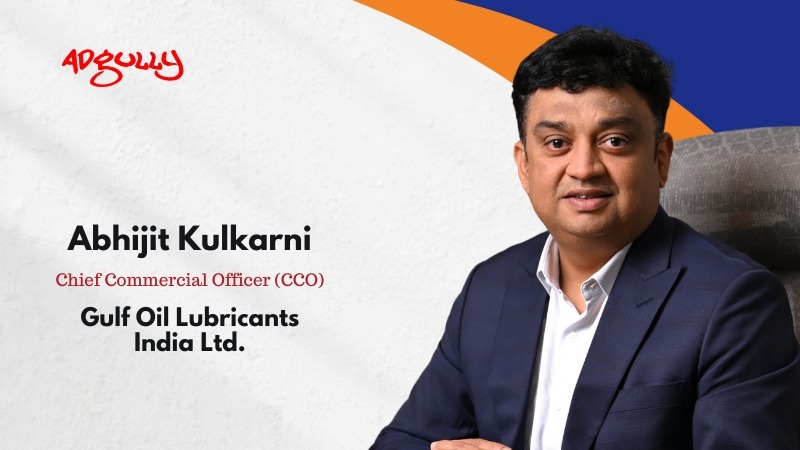
In conversation with Adgully,Abhijit Kulkarni, Chief Commercial Officer at Gulf Oil India, speaks about how the company is approaching brand relevance in a category that never had to think too hard about it, what digital and data are revealing about how lubricant buyers actually behave today, and how Gulf is positioning itself for the next phase of mobility in India.
From your perspective as Chief Commercial Officer at Gulf Oil, where does Gulf Oil’s biggest marketing opportunity lie today? Is it expanding in a mature category, moving towards premium offerings, or preparing the brand for the evolving mobility landscape?
If you look at Gulf’s trajectory over the last 10 to 15 years, the company has grown two to three times faster than the industry, growing from a ₹300 crore business to a ₹4,000 crore business within 15 years. It has been an outstanding journey. We are probably the most balanced lubricant player in India in terms of our B2C and B2B mix, with roughly 45% of our business coming from B2C and 55% from B2B. That puts us in a strong position. Marketing, however, plays very different roles in B2C and B2B businesses. Historically, Gulf has grown as a sales-driven organisation with very strong OEM partnerships, and marketing has traditionally played more of a support role. What we want to do now is change that. We want marketing to take a leading role in our growth and become the key driver for both businesses.
Within that, however, the marketing approach in B2B and B2C needs to differ. In B2B, this is largely corporation-to-corporation selling, so mass advertising is not the focus. There, marketing becomes a strategic enabler and a sales enabler. We have identified three key pillars for B2B marketing: brand positioning and communication, sector development and value-added services. Brand positioning includes campaigns such as the one we recently launched. Sector development focuses on industries such as steel, cement, infrastructure and mining, helping us understand customer needs and offer relevant solutions. Value-added services are equally important because B2B is not just about selling products but about offering solutions, taking a consultative approach and ensuring customers see us as true partners. So, marketing in B2B is not about making leaflets or supporting sales requests. It is about taking the lead in driving the agenda and enabling growth.
On the B2C side, we have built a very strong master brand. Gulf is the second most recognised brand in the industry after the market leader. Our bigger challenge now is converting awareness into purchase. Awareness is already strong, but the conversion funnel is shorter compared to competitors. Marketing, therefore, has to focus on improving consumer and mechanic conversion. You will see more category-focused marketing, stronger engagement with mechanics, who we consider a very important quasi-consumer, along with a greater focus on premiumisation and digitalisation. To sum it up, marketing in a future-ready organisation should sit at the forefront as a strategic growth driver. That’s how we want to position marketing within the Gulf, and we have already started making some bold moves in that direction.
The ‘Dream Beyond, Do Beyond’ campaign that was recently in the news has been developed using AI at a time when brands are still experimenting with the technology. What strategic role did AI play beyond production efficiency? And how did you see AI reshaping creativity and storytelling for a legacy category like lubricants?
We wanted to position ourselves as somebody who can go beyond the normal and go out of the way to help our customers fulfil their dreams. That’s the big idea. The range of industries we cater to moves from large customers like JSW and Tata, which are heavy industries, to small SMEs, perhaps a knitting factory in an industrial area with five or six machines. So you have an entire range, but the role Gulf Oil plays remains the same. That’s the DNA we wanted to portray.
To capture this entire range, if we had done actual shooting, it would have taken a lot of time and probably cost ten times what it eventually did. The role AI played, and this was our first real experience with it, was in helping us crunch both timelines and budgets by recreating some of those environments. In fact, around 60-70% of those shots are AI-created, almost 70%. Imagine going to a truck factory or a steel plant for a shoot; it would have been really difficult. I believe the output has been really good. It looks very real and doesn’t look like one of those animated things.
That was really the first major use case for us in communication and marketing. Having said that, as an organisation, we are already on the journey of digitalisation and integrating AI into our day-to-day decision-making, whether through dashboards, analytics, demand prediction or fine-tuning product formulations. For marketing specifically, this was probably one of the biggest uses of AI so far in terms of communication. But even on a day-to-day basis, if I am a brand manager and want to write a concept, I can simply give a prompt and generate multiple ideas. The time required has reduced significantly, though it also depends on how you use it.
I believe the best use of AI is as a stimulator. It stimulates ideas and becomes a sparring partner for brainstorming. Our marketing team is extensively using AI for day-to-day tasks that were previously done manually. But we are not saying humans can or should be replaced. It is more about enhancing human capability. That has been our approach.
Lubricants have traditionally been marketed on performance, mileage, and engine protection. With campaigns like ‘Dream Beyond, Do Beyond’, are you consciously trying to shift Gulf Oil from a product-led narrative to a more emotion-driven, aspiration-led brand?
Particularly, this was our first attempt at crafting a new positioning for our B2B business. While there is a core Gulf Oil identity that remains the same, the expression of our B2B and B2C businesses is going to be slightly different while staying rooted in the same idea.
The reason we decided to move towards a more emotional and humanised approach was because of the nature of the B2B audience. In B2B, you’re talking to R&D professionals, plant managers, purchase managers and decision-makers. Most of the big global brands we compete with tend to talk about product technology, global R&D and technical superiority.
But at the end of the day, lubricant products are largely specification-driven. If a particular machine requires a particular specification, then my product specifications are as good as those of three other competitors. The products and offerings have therefore reached a stable state in many ways. That led us to ask ourselves what the real differentiator was. When we spoke to our customers, we realised that while we deliver the best quality products and solutions, our real edge lies in how we engage with customers.
The Gulf sales team is one of the strongest and largest B2B sales teams in the industry. We have specialised teams for infrastructure, mining, direct and indirect channels and multiple verticals. Our customer engagement has been exceptional, and I can say that confidently.
As part of developing this campaign, we spoke to almost 50 to 60 customers across industries. What came through consistently was that Gulf is the company that goes out of its way to help customers. They told us, “Gulf ke log, kaam ke log”. That was the sentiment that emerged.
That’s a very human emotion. From an advertising perspective, we also asked ourselves why B2B communication always has to focus only on products and technology. While we sell to corporations, we ultimately engage with people, and people are emotional. Emotional appeal remains the strongest appeal.
Even if I am speaking to a purchase manager or an R&D professional, at the end of the day they are still human beings. It also aligned very well with the aspirations of our customers. As India grows and takes on larger infrastructure projects and bigger ambitions, people increasingly want to achieve things that may have seemed impossible fifteen years ago.
This is where Gulf comes into play as a partner that helps customers achieve those dreams. Often, ambitions are larger than available resources, and that’s where we are willing to go beyond expectations and support them.
That’s why we consciously decided to make our B2B communication more human and emotional. It’s unique because very rarely do you find this kind of communication in B2B. The language, tonality and mood are closer to B2C communication, and that was a conscious choice.
MS Dhoni has been one of Gulf Oil’s longest-standing brand ambassadors. In an era where consumers are becoming sceptical of celebrity endorsements, how do you ensure that Dhoni remains a strategic brand asset rather than just a familiar face in advertising?
There is a bit of scepticism and cynicism around celebrity endorsements in general today. But it also depends on the celebrity themselves. This is now our tenth or eleventh year of association with him, making it one of our longest-standing partnerships.
Dhoni, and I can say this confidently, remains one of the most popular and not just popular in terms of reach, but one of the most loved celebrities in the country. That comes from his genuineness, his work ethic and what he has done for the country. He is one of those few icons who have stayed away from controversies. He remains low-key when he is not playing, comes from a humble background and has a challenger mindset. Actions speak louder than words; that’s the philosophy he represents.
What we have done is recognise that there is a strong match between what Gulf stands for and what Dhoni stands for. Gulf is also a challenger brand. We come from humble beginnings compared to some of our illustrious multinational competitors. We, too, have grown from small beginnings and built the business through resilience and consistency, while staying true to a few core strengths. In that sense, it is a very natural partnership.
When there is a genuine alignment between what the brand stands for and what the brand ambassador stands for, the association doesn’t feel forced or cynical. From above-the-line advertising to one-on-one customer interactions, we have partnered with him in multiple ways to elevate the brand, and I think it has worked really well.
The Unstoppables brought together Dhoni, Hardik Pandya, and Smriti Mandhana – three personalities with very different audience profiles. Was the campaign designed as a segmentation exercise to target distinct consumer cohorts, and what insights did it reveal about evolving lubricant consumers in India?
The campaign marked the beginning of our category-led approach. At that point, rather than creating separate campaigns for passenger cars, SUVs, motorcycles and scooters, we chose to bring them together under one umbrella. We wanted to subtly communicate that we have different offerings for different categories while keeping them under a common brand narrative.
The three personalities also fitted naturally into those segments; Dhoni on a bike, Smriti on a scooter and Hardik on an SUV. So, it was the beginning of what I would call our category approach, while still sitting under the larger master brand idea of ‘Together We Are Unstoppable’.
As for what the campaign revealed about evolving lubricant consumers in India, honestly, not much. It was more of an emotional campaign, centred around how Gulf helps consumers overcome obstacles and how together we are unstoppable. It wasn’t specifically designed to address any particular consumer trend. That’s exactly what we want to do in future campaigns because consumer trends differ significantly across categories such as SUVs, motorcycles and scooters. Going forward, we want to focus more deeply on category-specific insights and tailor our communication accordingly.
India’s premium motorcycle segment is growing rapidly, with riders becoming more knowledgeable and brand-conscious. How is Gulf Oil adapting its marketing and product strategy to engage consumers who often research extensively before making purchase decisions?
The premium motorcycle segment is growing rapidly, and consumers today are becoming increasingly involved in the maintenance and performance of their motorcycles. For the lubricant industry, that’s a positive development because higher involvement allows brands to move beyond commoditisation and create stronger differentiation.
Over the last one-and-a-half years, we have looked at all aspects of the marketing mix, starting with product, promotion, pricing and packaging. One of our key initiatives has been the relaunch of our premium fully synthetic range, Gulf Syntrac, alongside a refreshed packaging identity and a stronger premium offering.
From a distribution perspective, we have focused on priority markets while also strengthening mechanic engagement programmes, given the important role mechanics continue to play in purchase decisions. On the communication side, we have invested significantly in digital marketing and influencer-led campaigns. We also have a platform called Ride with Gulf, which allows us to engage directly with consumers and become a part of their conversations.
We work closely with biking communities through our partnership with India Bike Week and through our own property called ‘Chai Pakoda Ride’, where we interact directly with riders and communicate our brand story. In addition, we launched a programme called Empower, focused on mechanic engagement and advocacy building through our Empower Rangers initiative.
Overall, it is a 360-degree approach towards building our premium range and engaging these premium consumers.
The automotive aftermarket is becoming increasingly digitised. How is Gulf Oil leveraging digital touchpoints, data, and technology to influence consumer decisions across workshops, garages, mechanics, and direct-to-consumer channels?
There are multiple dimensions to this because in the automotive aftermarket, the dealer, the mechanic and the consumer all play an important role in the purchase journey. For us, it’s important to engage effectively with all three.
At the distribution level, digitisation has given us far greater visibility into secondary sales and dealer engagement. The bigger transformation, however, has happened within the mechanic ecosystem. Every product carries a QR code that allows mechanics to scan and participate in incentive programmes, giving us the ability to influence tertiary sales directly, something very few industries can do.
The platform also allows us to run highly localised and targeted campaigns, tailoring communication and offers to specific markets and mechanic segments. Digital has also made marketing investments significantly more measurable, allowing us to directly connect programmes with market outcomes and ROI.
On the consumer side, digital today accounts for almost 60% of our above-the-line marketing spends because it allows us to reach very specific cohorts rather than relying on broad-based media.
For example, if we want to engage premium motorcycling enthusiasts, we can design campaigns specifically for that audience through digital targeting and community-led engagement.
We are also exploring ways to help garages and workshop partners strengthen customer relationships and drive repeat footfalls through more direct consumer engagement initiatives.
With consumer attention spread across short-form video, creator platforms, communities, and commerce ecosystems, how has Gulf Oil’s media mix evolved over the last few years, and where are you seeing the strongest marketing ROI today?
I’ll answer these as two separate questions: one around the media landscape and the other around marketing ROI.
As I mentioned earlier, digital today accounts for almost 60-65% of our above-the-line communication spend. The reason is simple: when I’m marketing a tractor oil or a premium motorcycle lubricant, I don’t necessarily need to put it on television and accept a large amount of spillover. Digital allows us to target very specific cohorts.
Today, almost every campaign we create has a digital-first communication layer built into it, whether that’s short-form video content or influencer-led engagement. Influencer marketing, in particular, has become an integral part of our campaign strategy.
If I compare it to the past, advertising would traditionally have been 70-80% television and traditional media. Today, that mix has shifted significantly towards digital.
On ROI, some campaigns are easier to measure directly than others. For us, BTL continues to be a significant investment because large-scale ATL campaigns often come with considerable spillover.
Mechanic engagement programmes and mechanic scanning initiatives give us very strong visibility into marketing effectiveness because we can directly correlate investments with tertiary sales impact. Those campaigns are, therefore, easier to measure from an ROI perspective.
For ATL campaigns, we continue to track traditional brand metrics such as awareness and consideration. Since awareness levels for Gulf are already very strong and almost comparable with the market leader, our focus now is increasingly on improving consideration scores, where we see the biggest opportunity as a challenger brand.
As EV adoption rises, mobility behaviour changes, and younger consumers engage differently with automotive brands, what do you believe will define successful automotive and lubricant marketing over the next five years, and how is Gulf Oil preparing for that future today?
To begin with, there was a lot of concern a few years ago that EV adoption would fundamentally disrupt the lubricant industry. Gulf was one of the first companies to partner with research agencies to study the long-term outlook for the category, and our view was that the fundamentals of the Indian market remained extremely strong.
Vehicle ownership in India is still relatively low compared to many developing markets. Motorcycle ownership, for example, remains significantly below markets such as Thailand and Vietnam, while car ownership penetration is still in the low double digits. Even with increasing EV adoption, the overall vehicle parc in India is expected to continue expanding significantly over the next decade. As a result, we believe the lubricant industry will continue to grow at around 4-5% annually, with premiumisation potentially driving even higher value growth.
Industrial lubrication is another important factor because the industrial business is expected to grow even faster than automotive lubricants in India. Having said that, EV adoption is very much a reality and not something the industry can ignore. For two-wheelers, EV penetration is already beginning to scale, and for passenger vehicles, the adoption curve will continue to accelerate as charging infrastructure improves. Once those infrastructure barriers are reduced, adoption could increase much faster.
While lubricants will continue to remain our core business for the foreseeable future, we are actively preparing for the transition in several ways. The first is by working closely with OEMs and developing EV fluids, where we already have a complete portfolio ready for the market. Secondly, Gulf is actively participating in the EV ecosystem through its investment in Tirex, an EV charging company in which we hold a majority stake. We have also invested in ElectreeFi, which develops software and consumer interfaces for EV charging infrastructure.
While we continue to grow our lubricants business, we also want to actively participate in the broader EV ecosystem and future mobility landscape. We are also exploring opportunities to leverage our large workshop partner network as potential charging locations in the future. I can confidently say that Gulf is among the few lubricant companies in India that are actively participating in the EV journey rather than simply reacting to it.
Show More
exclusives02-Jul-2026Chief Commercial Officer at Gulf Oil IndiaAbhijit Kulkarni
