

Strong Early Results Ambitions and Milestones for 2030 Beyond Valuations: Real Economic Transformation Nurturing Unicorns Step by Step A Shared Vision for Growth
ByMark LimPublished 41 minutes ago•3 min read

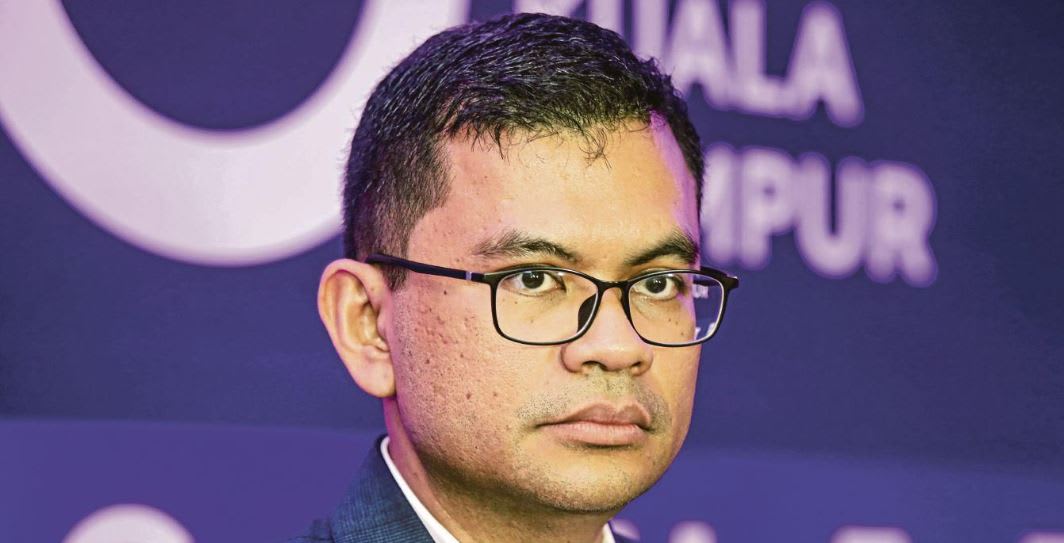
The Malaysian startup ecosystem has achieved a significant financial milestone, generating total sales proceeds of RM202.64 billion since the inception of the KL20 initiative in 2024. The figure, announced today by Economy Minister Akmal Nasrullah Mohd Nasir, underscores the rapid commercialization of homegrown innovation and marks a decisive shift in the nation’s economic trajectory.
Speaking during the “From Action Plan to Activation” fireside chat at the KL20 2026 conference, Akmal Nasrullah revealed that approximately RM50 billion in capital has flowed into the sector over the past two years alone. This influx of funding has catalyzed a robust multiplier effect, yielding more than four ringgit in revenue for every one ringgit invested—a testament to the growing maturity and market readiness of Malaysian startups.
Early Traction Signals Confidence and Structural Change
The substantial return on investment highlights not just financial success but also a deepening confidence among both domestic and international investors in Malaysia’s potential as a regional tech hub. Akmal Nasrullah emphasized that these figures are the result of deliberate, coordinated policy interventions designed to bridge the gap between ideation and commercial viability.
“This is why we are seeing positive developments in efforts to develop the startup ecosystem,” Akmal Nasrullah stated. “Investors are putting their capital behind Malaysian ideas, and those ideas are turning into products, services, and businesses that generate real value for their founders, their employees, and the nation as a whole.”
The momentum is not confined to Kuala Lumpur’s city center. Startups operating in emerging technologies, digital platforms, fintech, healthtech, and creative industries across various urban centers and regional hubs have contributed to this aggregate performance. This geographic dispersion suggests that the benefits of the digital economy are beginning to ripple beyond the capital, fostering innovation in secondary cities and rural areas alike.
Ambitious Milestones for the Decade Ahead
Building on this encouraging foundation, the government has outlined a clear and aggressive roadmap for the next phase of growth, with concrete targets set for 2030. These milestones are designed to guide the ecosystem’s expansion and ensure sustained momentum:
-
Capital Inflow: Attracting an additional RM700 million in fresh venture capital investment to fuel early-stage and growth-stage companies.
-
Ecosystem Growth: Expanding the pool of active, registered startups to between 2,000 and 3,500 companies, up from current levels.
-
Unicorn Creation: Nurturing five locally grown unicorn enterprises startups valued at US$1 billion or more to join the ranks of global tech leaders.
Akmal Nasrullah clarified that these metrics are not merely statistical goals but indicators of broader national progress. “We are not merely setting a target of producing unicorn companies,” he explained. “We are seeking to transform the economic structure, particularly by creating high-value jobs and increasing the startup sector’s contribution to the national GDP.”
The ultimate aspiration is to build Malaysian brands and solutions that achieve global recognition. “The aspiration to produce local companies with global recognition will remain a priority,” the minister added, signaling a move away from purely domestic-focused business models toward export-oriented, scalable tech enterprises.
A Whole-of-Nation Approach to Nurturing Success
Achieving these ambitions requires more than just capital injection; it demands a holistic support system that addresses the unique challenges faced by entrepreneurs at every stage of their journey. Akmal Nasrullah confirmed that relevant government agencies, including MDEC, Cradle Fund, and MRANTI, are actively collaborating to identify and assist promising ventures from their earliest conceptual days through to scaling and international expansion.
“This is an ongoing process requiring cooperation among agencies to support startups from their early stages until they are capable of achieving unicorn status,” he said. He noted that no single programme or intervention can guarantee success. Instead, it is the combination of sustained mentoring, accessible funding, streamlined regulatory frameworks, and strategic market linkages that enables enterprises to thrive.
The framework is also designed to be inclusive, ensuring that founders from diverse backgrounds, genders, and regions have equitable pathways to participate and grow. By lowering barriers to entry and providing targeted support for underrepresented groups, the KL20 initiative aims to democratize access to the digital economy.
From Blueprint to a Transforming Economy
Two years into its implementation, KL20 has moved decisively from planning to action. The figures announced today, RM50 billion invested, yielding RM202.64 billion in sales, represent more than a financial milestone. They signal a fundamental shift in how Malaysia creates value: moving away from a reliance on traditional, low-margin sectors toward a future driven by creativity, technology, and high-value entrepreneurship.
As the initiative advances, the focus will remain fixed on sustainable and inclusive growth. The government aims to ensure that as the startup ecosystem flourishes, its benefits are widely shared, creating opportunities for workers, suppliers, and communities across the country. For Malaysia, the KL20 initiative is not just about building better apps or platforms; it is about building a more resilient, innovative, and prosperous economy for the decades to come.
About the Creator
Mark Lim
Hi I am mark an automotive student and a car, tech and food enthusiast ! Im gonna try and post daily & hope you enjoy what I write and do share my page with people you know. I would gladly appreciate it! Cheers
