

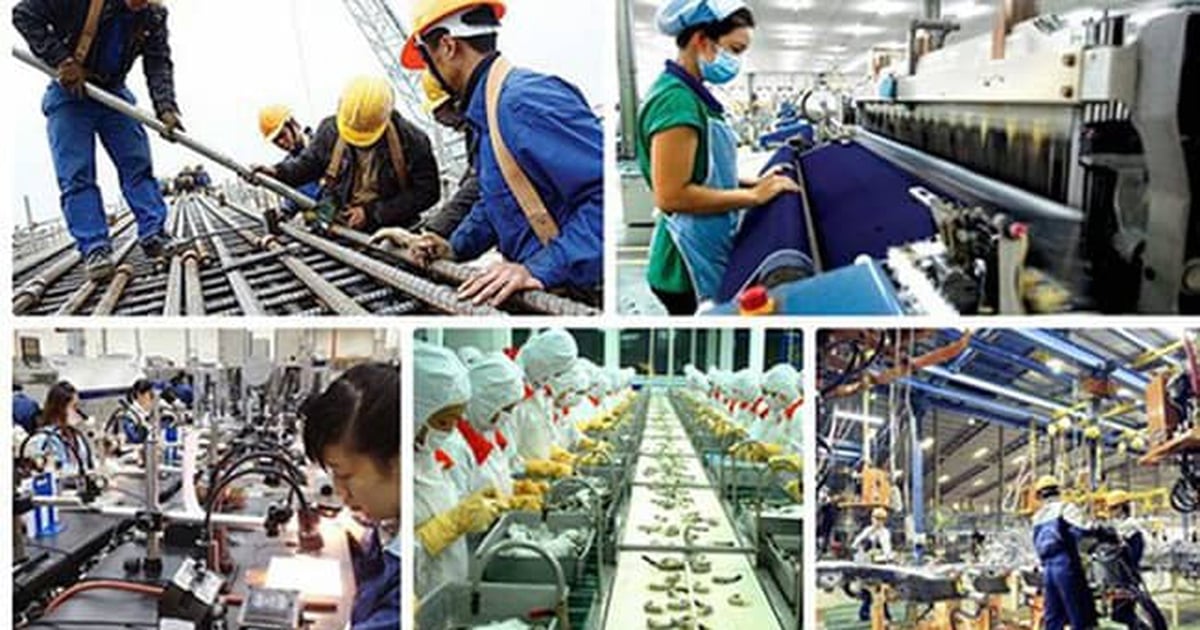
(Chinhphu.vn) – Deputy Prime Minister Pham Thi Thanh Tra has just signed Decision No. 1685/QD-TTg dated August 30, 2026, on the promulgation of the Plan for implementing Conclusion No. 62-KL/TW dated June 29, 2026, of the Party Central Committee on improving national labor productivity associated with the development of a synchronous, modern, and efficient labor market in the new period.

Cổng Thông tin điện tử Chính phủ•30/08/2026
The plan aims to thoroughly understand and seriously, synchronously, and effectively implement the contents outlined in Conclusion No. 62-KL/TW, creating a clear transformation in the awareness and actions of Party committees, Party organizations, government agencies, and socio- political organizations regarding the role, position, and importance of improving national labor productivity in conjunction with the development of a synchronous, modern, and efficient labor market in the new period.
Identifying key content, priority tasks, main solutions, and appropriate roadmaps, while emphasizing the proactive role of ministries, agencies, and localities in improving labor productivity and developing the labor market, will contribute to realizing the “double-digit” growth target and enhancing national capacity in the new development phase.
8 tasks and solutions
The plan outlines eight tasks and solutions, including:
1. Focus on thoroughly understanding and creating a high level of consensus in awareness and action regarding improving labor productivity in conjunction with labor market development.
2. Improve the institutional framework for developing a comprehensive, modern, and efficient labor market, linked to increased labor productivity.
3. Implement synchronized and effective solutions to create jobs with high labor productivity.
4. Improve the quality of the workforce to meet the human resource needs of the market in the new phase.
5. Strongly promote science , technology, innovation, and digital transformation to create momentum for increased labor productivity.
6. Focus on training high-quality human resources to meet the demands of the labor market.
7. Promote sustainable job development, with a focus on ensuring social security.
8. Focus on developing a comprehensive, modern, flexible, and efficient labor market, linked to improving labor productivity.
Promoting the movement of labor from low-productivity sectors to high-productivity sectors.
Specifically, regarding the tasks and solutions for the synchronized and effective implementation of solutions to create high-productivity jobs, the Ministry of Finance will take the lead, in coordination with the Ministry of Construction , the Ministry of Science and Technology, relevant ministries and agencies, and localities:
(i) Urgently review and organize national master plans, regional plans, provincial plans, urban and rural plans in a way that is linked to population distribution, requires improving the quality of human resources, and creates high-productivity jobs to form and develop economic corridors, dynamic regions, and growth poles, contributing to increased labor productivity and promoting rapid and sustainable national development;
(ii) Promptly finalize mechanisms and policies to attract investment, prioritizing projects that utilize advanced and high technologies, have high added value, modern management, efficient resource utilization, and create many high-quality, high-productivity, and high-income jobs;
(iii) Review and assess the role of enterprises in improving labor productivity; based on this, develop mechanisms and policies to encourage enterprises to invest in technological innovation, improve production processes, enhance management capacity, develop human resources, and create jobs with high labor productivity;
(iv) Research, develop, and implement programs and policies to promote the transition of the informal to the formal economy (Complete mechanisms and policies in 2027; organize regular reviews and planning for implementation).
The Ministry of Agriculture and Environment , in coordination with the Ministry of Interior and other ministries and agencies, shall: (i) Review and develop policies to encourage the development of high-productivity jobs in the agricultural sector, linked with promoting mechanization, digital transformation, and the application of high technology in production; (ii) Organize training and skill development for agricultural and rural workers linked to the development of cooperative economics and cooperatives, promoting the shift of unskilled labor to skilled labor with technical expertise, and from informal to formal employment (Review report in 2026, regular implementation).
The Ministry of Science and Technology, in coordination with the Ministry of Finance and other ministries and research institutions, will organize activities to link foreign-invested enterprises with domestic enterprises, promote technology and knowledge transfer, enhance management capacity, innovation capacity, and the application of international standards, increase the localization rate, and expand the participation of domestic enterprises in global supply chains and value chains (cooperation, linkage, and exchange activities will be carried out regularly).
The Ministry of Interior will lead and coordinate with other ministries and agencies to research, develop policies, and implement activities to support employment, vocational skills development, wages, and social insurance, promoting the shift of labor from low-productivity to high-productivity sectors (policies to be revised, supplemented, and promulgated by 2027 and implemented regularly).
Training and development to create a team of “professional farmers” and “digital farmers”.
Another task and solution of the Plan is to improve the quality of the workforce to meet the human resource needs of the market in the new phase.
Specifically, the Ministry of Education and Training will take the lead and coordinate with relevant ministries and agencies:
(i) Urgently research and innovate the content, programs and methods of training in an open, flexible, modern direction, linked to the actual needs of the labor market, the requirements of technological innovation and the human resource needs of enterprises;
(ii) Promptly finalize the mechanism and implement and expand the dual vocational training model, practical training facilities, training based on orders, and training linked to job positions; strengthen the participation of enterprises in developing programs, organizing training, evaluating and employing workers after training;
(iii) Develop and implement training, retraining, and skills enhancement programs in digital skills, artificial intelligence skills, green skills, vocational skills, and support for career transition for workers, especially those in industries and occupations strongly impacted by technological innovation, automation, and digital transformation;
(iv) Focus on reviewing and improving policies to encourage businesses to participate in education, training, and vocational education activities (Complete policies in 2027 and organize regular implementation).
The Ministry of Science and Technology will lead and coordinate with other ministries and research agencies to develop unique, superior mechanisms and policies, as well as a controlled testing mechanism (sandbox), to attract, utilize, and promote high-quality experts, scientists, and human resources in science, technology, innovation, and digital transformation, both domestically and internationally (policies will be revised, supplemented, and promulgated by 2027 and implemented regularly).
The Ministry of Agriculture and Environment, in coordination with other ministries, agencies, and localities, will lead the development of professional skills in the agricultural sector; provide training and education to form a team of “professional farmers” and “digital farmers” with skills in applying science and technology, digital transformation, and green transformation; organize production according to the circular economy model; use and operate modern agricultural machinery and equipment; organize production and business along the value chain, adapt to climate change, and meet the requirements of developing an ecological and modern agricultural system.
The Ministry of Finance will lead and coordinate with other ministries and agencies to research and develop superior mechanisms and policies offering financial, tax, and investment fund incentives to support businesses and experts, aiming to attract high-quality human resources, experts, and foreign scientists to work, research, and innovate in Vietnam (to finalize regulations before the fourth quarter of 2027 and implement them regularly).
The Ministry of Home Affairs, in coordination with the Ministry of Education and Training, the Ministry of Science and Technology, and other relevant ministries and agencies, shall: (i) Review and improve regulations on salaries, income, and work permits to attract foreign experts and scientists to work in Vietnam; (ii) Review and improve policies to encourage businesses to train, retrain, and develop skills for workers; (iii) Improve regulations on the recognition, assessment, and standardization of vocational skills according to national, regional, and international standards (completing regulations before the second quarter of 2027 and organizing regular implementation).
There is a strong shift
from prioritizing academic qualifications to valuing professional skills, practical abilities, adaptability, and job performance.
Regarding tasks and solutions focused on training high-quality human resources to meet the requirements of the labor market, the Ministry of Education and Training, in coordination with relevant ministries and sectors, will: (i) Review, develop, and organize the implementation of strategies, programs, and projects for national human resource development, focusing on high-quality human resources, technical human resources, digital human resources, and human resources serving strategic, important, and key sectors and fields, including the defense and security industry;
(ii) Develop a lifelong learning system, creating conditions for workers to regularly learn, retrain, and upgrade their skills; promote a strong shift from valuing academic degrees to valuing vocational skills, practical abilities, adaptability, and work efficiency;
(iii) Innovate training models; strengthen the linkages between general education, vocational education and higher education; develop training programs for practical engineers, high-skilled technical personnel and new industries and professions arising from digital transformation, green transformation, population aging and technological innovation;
(iv) Promote career guidance and vocational training after lower secondary education; research and implement a model of vocational training after lower secondary education (9+ vocational secondary education) according to international standards and the needs of the labor market, integrating general education and vocational education; ensure that learners both complete the secondary education program and achieve vocational qualifications, ensuring the possibility of articulation and creating conditions for learners to enter the labor market early;
(v) Develop models and ecosystems for training high-quality human resources linked to key industries, high-tech zones, innovation centers, key economic regions and strategic locations, with an emphasis on promoting the role of businesses, encouraging businesses to participate in and invest in training and developing high-quality human resources, contributing to creating sustainable jobs and improving labor productivity;
(vi) Strengthen international cooperation in training, research, expert exchange, technology transfer, and recognition of diplomas and certificates; selectively adopt advanced training models; focus on training high-quality human resources for key industries and fields, in accordance with Vietnam’s conditions.
The Ministry of Agriculture and Environment, in coordination with the Ministry of Education and Training and other relevant ministries and agencies, shall: (i) Review and forecast the demand for high-quality human resources and technical personnel for key agricultural sectors; (ii) Organize training and development of high-quality human resources to serve mechanization, digital transformation, and the application of high technology in agriculture; improve the capacity to operate, exploit, use, and master modern agricultural machinery and equipment, automation systems, and intelligent control systems.
The Ministry of Industry and Trade, in coordination with the Ministry of Education and Training, the Ministry of Home Affairs, and other relevant ministries and agencies, shall: (i) Review and forecast the demand for high-quality human resources and technical personnel in industrial and commercial sectors, linked to industry development requirements and enterprise needs; (ii) Strengthen linkages between enterprises, industry associations, and educational and training institutions based on demand, linked to technological innovation, digital transformation, and green transformation.
[Image] Overview of the “Together We Move Forward with Vietnam” event in Hanoi.
Trending by Category
5 key points to know about gender equality in education and training.
Bộ Khoa học và Công nghệ4 giờ trước
Under the banner of the Party, upholding national independence and building the future of Vietnam.
Ủy ban Trung ương Mặt trận Tổ quốc Việt Nam5 giờ trước
Most Read
Actress Lee Yong Joo from ‘Princess Hours’ has passed away.
Báo Tuổi Trẻmột giờ trước
The beauty of Bao Ngoc and 9 other beauties who made it straight to the top 40 at Miss World 2026.
Madam Pang and Thailand send a message to Vietnam in the FIFA ASEAN Cup.
The iPhone 18 Pro pre-order schedule is expected to change unexpectedly.
Apple announces a special event on September 9th, featuring the highly anticipated new iPhone.
Đài Phát thanh và Truyền hình Thành phố Hồ Chí Minh2 giờ trước
A miracle amidst devastating floods in Nepal.
Báo Đà Nẵng2 giờ trước
Google Trends
Ammunition depot explodes near Kyiv; Ukraine attacks Russian oil refinery and air base.
Messi scores a spectacular poker (four goals), Inter Miami secures an incredible victory.
Báo Dân trí6 giờ trước
Iran says its nuclear weapons are to ‘counter the madness of Israel’.
Báo Tuổi Trẻ6 giờ trước
Messi, 39, scored a superb poker (four goals), confirming his superstar status.
From the 2045 vision to a new development architecture.
Multimedia
Phu Binh lanterns “change their look,” racing to preserve the craft in the age of industrialization.
