

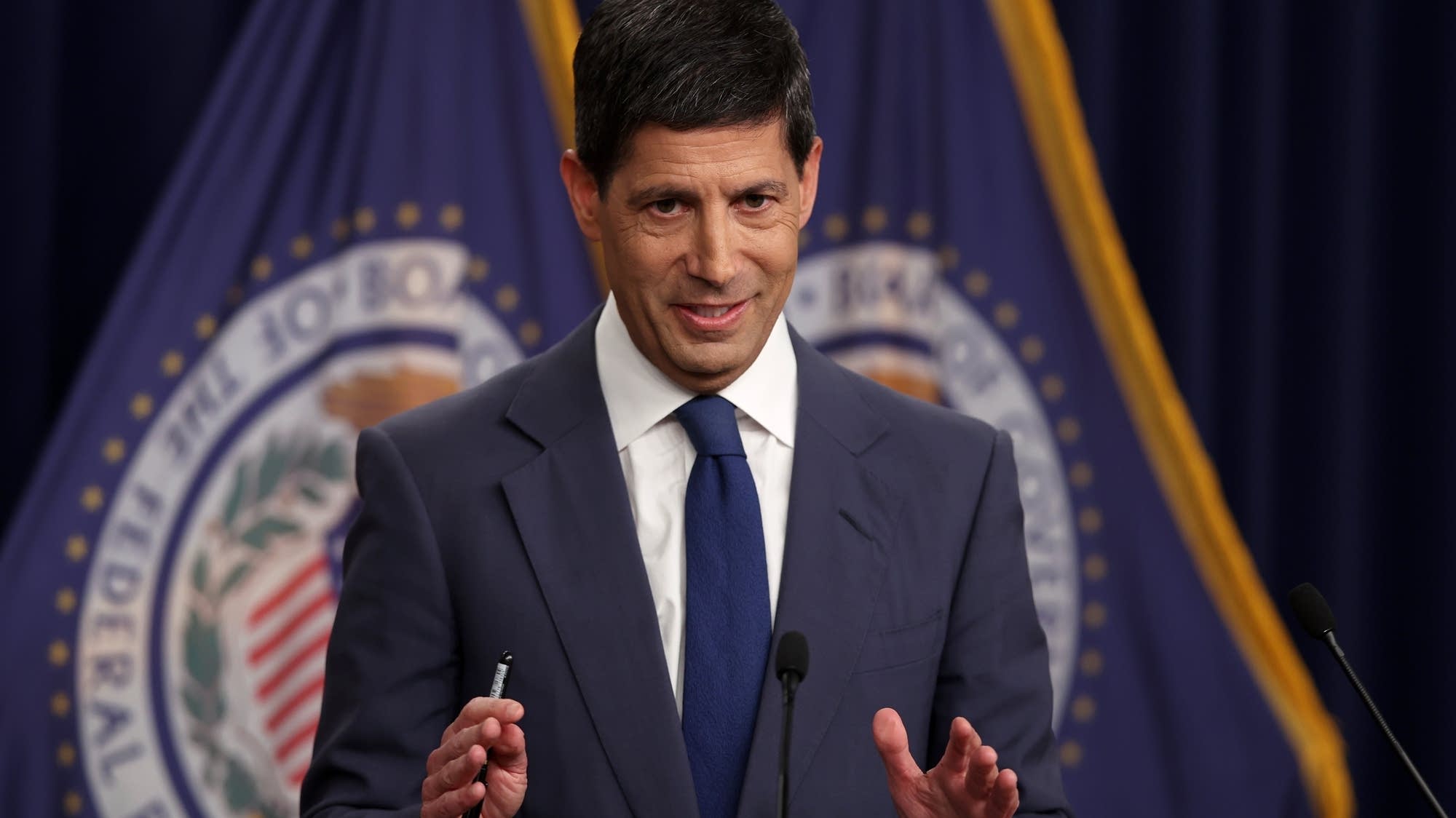
The number of policymaking meetings could decline from eight to six under new Fed Chair Kevin Warsh.
Since the early 1980s, the Federal Reserve has met about eight times a year to decide interest rates. That number could now be reduced under new Federal Reserve Chair Kevin Warsh.
Warsh has suggested six policymaking meetings a year, although Fed policymakers would still meet two more times to discuss economic issues, people familiar with the matter told Bloomberg.
TheFederal Open Market Committee, the division of the Fed responsible for setting monetary policy, is legally required to meet four times a year, so Warsh is allowed to reduce the number of meetings.
Warsh has suggested he wants markets to be less influenced by what investors think the Fed is going to do. That may be part of the reason why he wants fewer meetings, although Warsh hasn’t communicated his rationale for this proposal, said Andrew Jalil, an economics professor at Occidental College.
At a post-Fed meeting press conference, Warsh discussed the Fed’s decision to pull back on forward guidance (a tool used to communicate with the public about future monetary policy) and how markets have behaved as a result.
“We’re trying not to interfere with that market signal. That’s part of the reason why we’ve been somewhat spare in our words when we pulled back from forward guidance. So they’re reacting to events, I would say, much more directly over the 42 days since we last met. This is a good thing,” Warsh said.
Six meetings a year would be a small change, adding about two more weeks between meetings, but the shift “would reflect a big departure” from the norms established by the Fed in recent decades, said Jalil.
The Fed wasn’t always as communicative with the public as it was under recent Fed chairs.
In the 1980s and 1990s, the Fed took steps to become more transparent, like releasing the meeting schedule ahead of time, said Gary Richardson, an economics professor at the University of California, Irvine. Transparency increasedeven further under Fed Chair Ben Bernanke, who held the first post-FOMC press conference in 2011. (Bernanke served as chair from 2006 to 2014.)
Central bankers had to come to understand that transparency and explaining your policies can help stabilize inflation expectations, Richardson said.
Inflation expectations alone can influence prices. If consumers think inflation is going to be higher in the future, they might frontload their purchases, which could in turn put upward pressure on prices,said Joanne Hsu, the director of the University of Michigan Consumer Sentiment Index, in a Marketplace interview earlier this year.
Fewer meetings means that <a href="https://bitcomme.com/how-embedded-ai-is-changing-financial-reporting-risk/” title=”How embedded AI is changing financial reporting risk”>financial markets could put greater weight on each of those meetings as a result, Jalil said.
“If they’re more likely to be surprised by something, it could paradoxically move financial markets even more than would have been the case otherwise,” Jalil said.
The markets could also try harder to read between the lines.
“Financial markets care enormously about what the Federal Reserve is going to do. So, if the Federal Reserve does move away from providing clear forward guidance, if it moves away from transparency and clarity, it could lead to financial markets trying to do more of that work on their own, trying to guess more where they think the Fed is going,” Jalil said.
We’ve already seen that happen. A couple of months ago, markets had priced in at least one-quarter point rate hike for the year.
Those in favor of fewer meetings might say that it would give policymakers more time to reflect on economic developments, Jalil said. But it could also make the Fed less “nimble,” even though the central bank has the option to convene an emergency meeting, Jalil added.
“If they were to do that, that could also alarm financial markets, like, ”Wow, maybe there’s something we didn’t know. Maybe there’s a reason for this emergency meeting. Is there something we need to be concerned about?'” Jalil said. “So the Fed is probably reluctant to do that.”
