

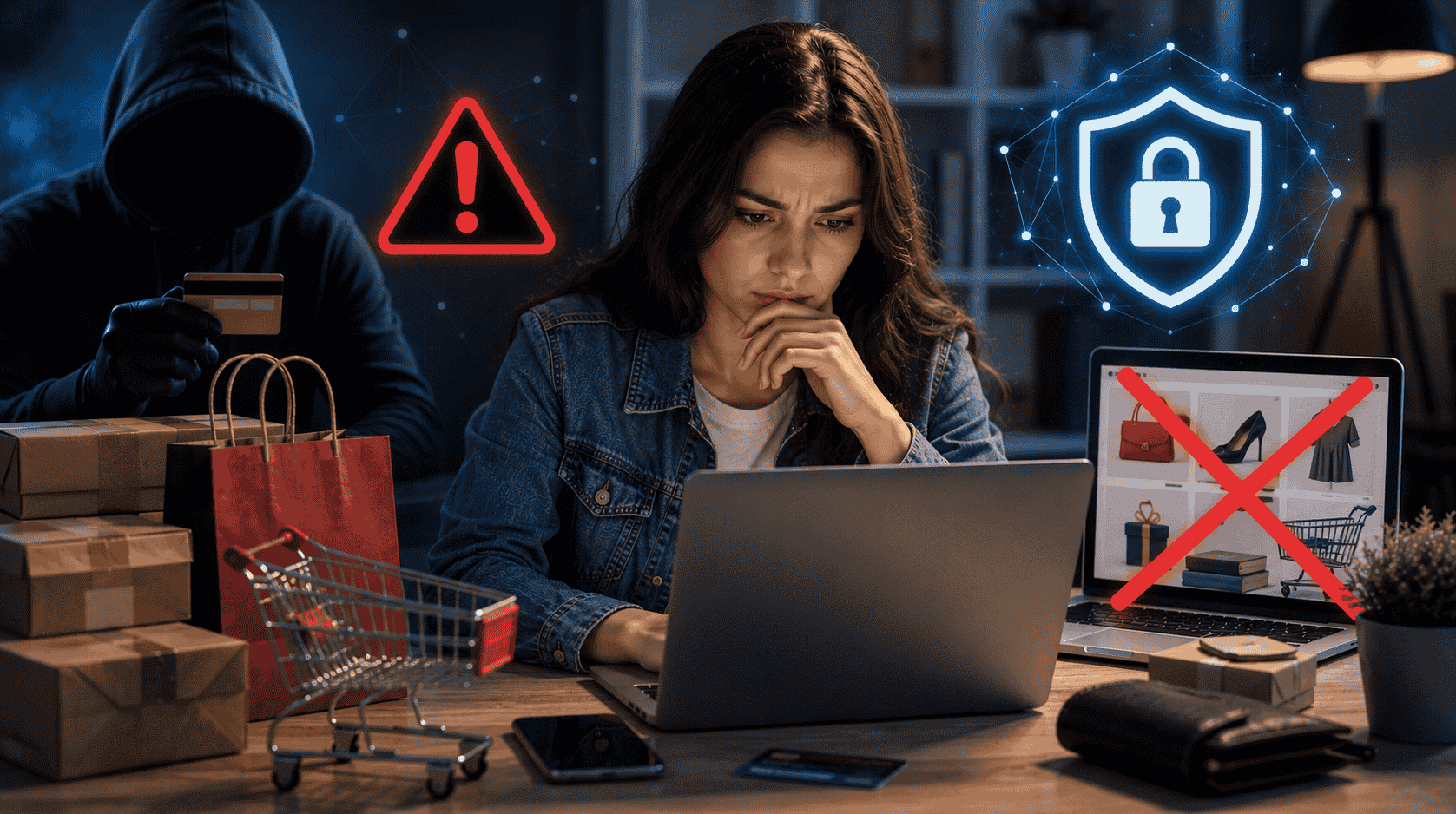
Online shopping fraud is on the rise — a few simple habits can help you spot fake brands and shop safely.
Online shopping fraud costs consumers billions of dollars each year. It doesn’t happen because shoppers are careless — it happens because scammers have grown smarter, faster and far more convincing.
Fake brands keep getting harder to spot. One wrong click on a convincing storefront can hand your money or card details to a scammer, and most people don’t realize it until the damage is done.
The best defense is caution. This article covers five smart ways to spot and stop online fraud before a scammer can trap you.
Your subscription could not be saved. Please try again.
Your subscription has been successful.
Five smart ways to protect yourself from online shopping scams
The methods below are practical, reliable steps you can use to guard against fake brands and online shopping fraud.
1. Check the website before you trust it
Scam websites have become more sophisticated, and some now look more polished than the legitimate stores they imitate. With help from AI tools, scammers copy logos, layouts and even customer reviews from real brands.
Before you enter your card details, check the domain name carefully. Fake sites often use slight misspellings such as “amaz0n” or “niike-store.”
Look for a padlock icon in the address bar, which signals that the site uses secure encryption. Also confirm that the site has a working “Contact Us” page with a real address and phone number; scammers rarely share genuine business details.
Spending a few extra seconds on verification can save you from financial loss.
2. Be suspicious of deals that feel too good
Everyone loves a discount, but fraudsters use unrealistic deals as bait. Scammers often advertise unbelievable prices with no legitimate reason — a brand-new iPhone at half price, for example.
They create urgency with countdown timers, “limited stock” warnings and flash-sale banners to stop you from thinking clearly.
Legitimate brands rarely offer discounts above 50–60%, especially on new releases. If a price seems impossible, compare it with the official brand website before you buy. Genuine sales don’t vanish in 10 minutes. Scam pages are built to make you panic-buy, so slow down and verify first.
3. Verify product photos
Scammers rarely photograph their own products. Instead, they steal images from other e-commerce sites to build listings, so the item that arrives can look nothing like the photo — or never arrive at all.
Don’t trust the photos alone. Use an AI-powered image finder to trace where an image first appeared. The tool breaks an image down into unique visual patterns and uses them to find matching or altered versions online, even if a scammer cropped or edited the original.
If the same photo appears on 10 different “brands” under different names and prices, treat it as a major red flag and step away.
4. Read reviews critically, not just quickly
When you shop online, you can’t inspect a product the way you can in a store, so buyer reviews are one of your few reliable signals. The problem is that scammers now manipulate reviews, flooding a page with five-star ratings written in the same tone and posted within days of each other.
Before you trust a review, look for patterns that seem unnatural or repetitive. Check for:
- Review dates: a sudden spike of reviews in a short period is suspicious.
- Review language: generic praise such as “amazing product, fast delivery” repeated across reviews signals fake activity.
- Reviewer profiles: genuine reviewers usually post about other, unrelated products.
- Photos in reviews: real buyers tend to post imperfect photos, not studio-quality images.
If something feels off, trust that instinct.
5. Use secure payment methods, never direct bank transfers
The payment methods a store offers reveal a lot about its authenticity. Reputable retailers provide well-known, secure options. Scammers prefer methods that can’t be reversed, such as direct bank transfers or unofficial payment links — once you send the money, recovering it is almost impossible.
Stick to credit cards, official payment gateways or cash on delivery when available. These options offer buyer protection and dispute resolution if something goes wrong. If a seller pushes you toward an unusual payment method, that alone is reason enough to walk away.
Wrap up
Online fraud keeps evolving, and scammers adapt as quickly as shoppers learn to spot them. Staying alert isn’t a one-time task; it’s an ongoing habit that works best when it becomes second nature. A little skepticism goes a long way. Slow down, question anything that looks off and trust your gut when something doesn’t add up. Smart shopping isn’t about avoiding online stores — it’s about knowing which ones deserve your trust and your money. Stay sharp, and you’ll shop with confidence instead of worry.
MORE STORIES
Don’t miss out on the latest news and information.
TAGS: gp
