

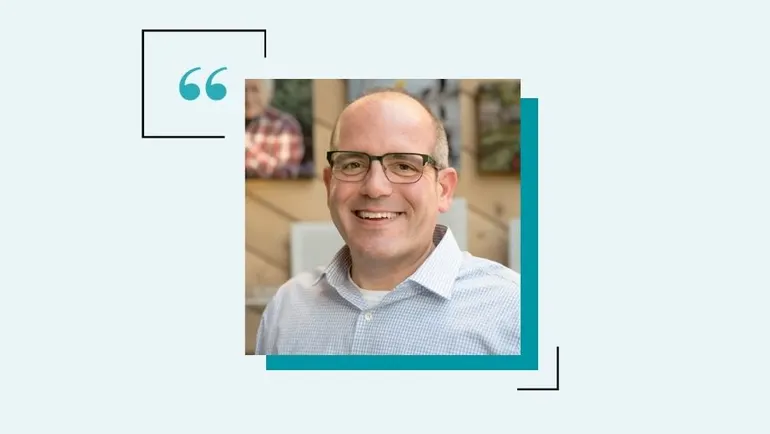
Mark Scheiwer explains how he turned an interim CFO role into the permanent job and the lessons he learned along the way.

This audio is auto-generated. Please let us know if you have feedback.
How do you turn an interim CFO role into the permanent job?
For Scotts Miracle-Gro CFO Mark Scheiwer, it involved leaning on the breadth of his finance experience and identifying where the company needed the most work. After stepping in as interim CFO in January 2025, he was named full-time CFO five months later.
In a recent interview with CFO.com, Scheiwer talked about how he approached that transition, along with building out the company’s new business plan dubbed SMG 2.0, managing a highly seasonal business and the career lessons that shaped his path to CFO.
Mark Scheiwer
EVP, CFO and chief accounting officer, Scotts Miracle-Gro
ADAM ZAKI: You’ve been the permanent CFO for about a year after serving as interim CFO. How did you position yourself to earn the permanent role while doing the job? What advice would you give other interim CFOs?
MARK SCHEIWER: Before I even got to the interim role, it started with having a broad résumé and range of experience. When I stepped into the interim role, I wasn’t nervous. I felt confident because I had touched many facets of the finance function already.
I started in public accounting with an audit background at Ernst & Young, working on large public companies. I gained experience with M&A deals, divestitures, complex accounting, treasury transactions, debt deals and SEC filings.
When I came to Scotts [in late 2022], I transitioned from talking to accountants every day to working with operators and people throughout the business. It took me a couple of years to learn how to translate that accounting language for people across the organization.
I cut my teeth as the controller, where we did a lot of interesting transactions under our CFO, Randy Coleman. Then I moved into an operating finance role, which probably tested me the most because I was in the day-to-day operations with sales and supply chain. You learn quickly in a high-growth environment, and then you learn just as quickly when that growth decelerates. You have to make quick decisions, and they’re usually wrong.
I’ve also had roles in Treasury and tax that I’ve really enjoyed.
When I stepped into the interim role, the one thing I hadn’t really done was investor relations. I knew our credibility with investors had struggled, so I dove into the area I felt needed the most work.
For me, that meant connecting directly with investors and overcommunicating. In every role I’ve had, I’ve always overcommunicated with my constituents. Through that honest feedback, at least we know where we stand.
That helped me move from interim to permanent because I had the skills going into the role, I felt confident, and I was able to focus on the areas that needed improvement.
Our stock price had been pretty volatile, and my first six months were rocky. But as we’ve deleveraged, overcommunicated and worked with investors, that volatility has started to come down.
My advice is to lean on your strengths, then dive into the areas that need the most work. There’s typically a reason for the change, so figure out what that is and try to improve those areas.
You mentioned investor perception and the company’s turnaround strategy, SMG 2.0. What is finance’s role in the company’s transformation?
We want to be a lifestyle company. We have an incredible brand, products and employees who produce those things for consumers.
Over the past 10 years or more, we morphed into predominantly a product company, and we lost our way a little bit as we navigated Hawthorne and other things. We’ve always had a sense of purpose and a long-term strategic goal.
As Nate started laying out SMG 2.0 about a year to a year and a half ago, we developed it internally, worked with investors on what was important and ultimately unveiled it publicly over the winter.
For a finance person, it’s refreshing to have a long-term strategy that you can sink your teeth into and that’s meaningful to employees. We’re all rowing the same boat in the same direction.
My supply chain finance team is partnering with operators on three- to five-year road maps around capital expenditures and plans to produce the products for the lifestyle company we want to be. That includes a greater focus on naturals and organics and being more flexible and agile with things like packaging.
It gives us the opportunity to dig into those strategies and hold the operators accountable over the long term.
Companies can lose their way and start thinking very short term. I think the 2.0 reset gets us back to thinking long term and allows finance to really dig in with the operators.
You’re CFO of a global but highly seasonal business. What advice would you give a CFO taking a job in a large seasonal business?
First and foremost, we’re a 150-year-old company, so we’ve been seasonal for a long time. That’s good and bad. We have a lot of tried-and-true processes.
As the finance leader, I always lean on one main goal: Don’t run out of money.
Our first and second quarters, which are winter months, use upwards of $1 billion in working capital. We have to have the credit capacity available during that period.
We’ve fostered really strong bank partnerships. When I stepped into the Treasury role, our leverage had gotten very high. Again, my mentality was: Don’t run out of money.
The most important thing in a seasonal business is having the funding for that growth. I relentlessly talked to the bank group and built their trust around how we were navigating those issues. That way, when we needed our credit facilities or our $750 million accounts receivable sale facility, along with our $1.5 billion credit line, they felt good about the availability of that credit.
When we sell inventory to customers, we can eventually collect the cash and pay down the debt.
So it starts with that simple adage: Again,don’t run out of money.
COVID also threw some of our processes and timing out of whack. Over the past four years, we’ve worked hard to improve daily cash flow. We don’t have a fancy Treasury system, but we have collaboration among our order-to-cash, accounts payable and operational teams to understand the daily and weekly needs of the business.
[CEO Nate Baxter] comes from a tech background, and he put in a small machine learning and AI team. They’ve helped automate some of our inventory planning. We still have a long way to go with demand sensing.
We’re trying to better understand demand cycles. Our customers’ systems aren’t always great at connecting seasonal signals, so sometimes we actually have to tell customers they can’t buy more inventory because we know the summer slowdown is coming.
You really have to dive into the operational side. We’re also investing in a newer SAP system and demand-planning tools.
Part of the requirement for those investments is that they reduce working capital. We have roughly $1 billion to $1.2 billion tied up, and we want to bring that down.
We have people at our plants who have been there for 20 or 30 years, and they know instinctively how much they need to produce. Sometimes they can override the system. Getting to know those signals and implementing a more robust process is especially important with the tools available today.
You spent 14 years in public accounting. What made you make the jump to industry back then?
I really enjoyed working with our clients. I audited Cardinal Health and effectively spent 90% of my time there. At times, I felt like I was the de facto controller.
My approach to auditing was always grounded in understanding the business. I worked with manufacturing companies throughout Ohio and tried to learn cost accounting and all the different functions. I found it really interesting.
At some point, you think, “I could probably do this another 15 or 20 years and make partner.” But I had a family of four kids and wanted to stay locally in Columbus.
I was already acting like the controller and working alongside finance executives. I thought, “I want to do what they do.” I also enjoyed the idea of actually building something.
Eventually, public accounting became stale. I wanted a new challenge and felt like working at a corporation doing interesting things.
When the opportunity at Scotts came along, it lined up with a lot of things I was interested in. I’m passionate about lawn and garden, taking care of my yard and gardening. Scotts was a company that had been around for a long time, was the No. 1 player in the space and was doing interesting transactions.
I decided to make myself uncomfortable and jump out of public accounting. It’s been a really exciting journey.
Your CPA is still active. Why do you see value in maintaining it?
At this point, it might be more of a mental thing. I come from a lower-middle-class family. My parents didn’t go to college, and I paid for much of my schooling through scholarships, loans and other things.
Early in my career, I wanted to be an accountant, and I’ve always had a passion for it. Maintaining the CPA isn’t that difficult. I do 120 hours of continuing professional education over three years, and I enjoy the topics.
I don’t have an MBA, which a lot of CFOs have. I feel like the CPA is my license to hunt. Early in my career, it was my version of an MBA. It keeps me grounded.
The accounting rules also force you to think about the economics and fair value of transactions. I always dug into the literature to understand: If we do an M&A deal, what does it mean economically? What does it mean to the P&L or balance sheet? Investors and shareholders are going to see that.
I encourage people on my finance team with accounting backgrounds to get their CPA and keep it active.
When you’re looking to attend a conference or consider a speaking opportunity, what makes you consider it?
I’ve traditionally leaned on partners we already do business with for networking, including bank partners, insurance partners, Deloitte and Ernst & Young.
They have some great CFO events, and I try to find people who come from a similar industry. It doesn’t have to be consumer products. It could be manufacturing. I like talking with them about the challenges they’re experiencing.
I attended an event at Deloitte University where one of the CFOs talked about using AI around earnings calls and algorithmic trading.
Tom and I deal with that on our quarterly earnings calls. We’ve gotten pretty good at running our prepared transcripts through AI tools to see what the sentiment would be and how we’re characterizing things. It was good affirmation that we’re not alone in that journey.
As I become more established in the role, I think networking will increasingly happen outside those organizations. I’d like to find opportunities where I could potentially join a public or private company board.
I don’t actively seek those opportunities out yet. The ones I’ve had have come naturally through existing relationships. The next phase will probably require me to be more proactive and external.
I’ve been focused over the past two years on getting the job done, stabilizing the organization and setting ourselves up for future success. Now that I’ve settled into the permanent role, I can start thinking about what comes next.
Filed Under:Human Capital,People,Technology
