

Engineering teams have always faced pressure to bring products to market faster. What has changed is the volume of information that must be evaluated before a design is ready to move forward.
Today’s validation process extends well beyond reviewing a single CAD model or test result. Engineers are working across simulations, digital twins, AI-assisted design tools, and increasingly complex product requirements while collaborating with colleagues across mechanical, electrical, software, manufacturing, and quality teams. Every design iteration, simulation, and validation cycle creates another layer of information that engineers must interpret before moving forward.
At the same time, development timelines continue to shrink while AI becomes more deeply embedded across the enterprise. Lenovo’s CIO Playbook 2026 found that 96% of organizations plan to increase AI investments over the next 12 months, highlighting how quickly AI-enabled workflows are becoming part of everyday operations. These realities reshape how products are designed and validated.
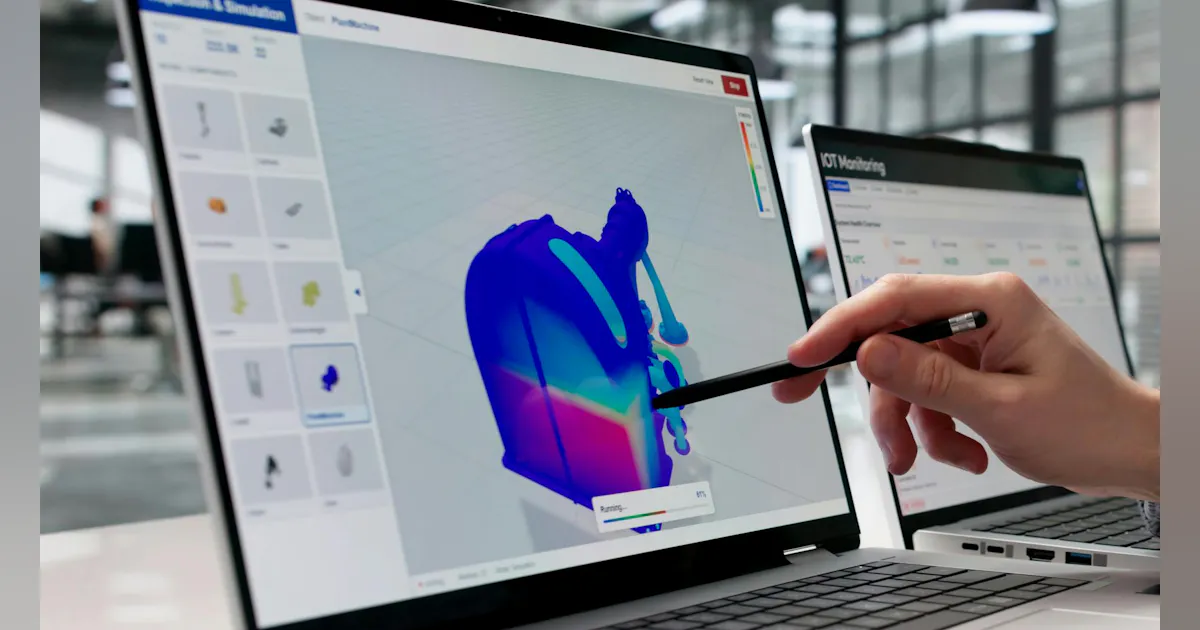
As engineering workflows evolve, visual technology is taking on a more strategic role. The monitor has become increasingly important in helping engineers compare designs, interpret simulation results, review AI-generated insights, and collaborate on decisions that ultimately determine product readiness.
Seeing More to Validate Faster
As more organizations adopt shift-left engineering practices, product validation is starting to happen earlier in the development process. Instead of relying primarily on physical prototypes, teams are increasingly using simulation, digital models, and virtual testing to evaluate designs throughout development.
As validation evolves, engineering workspaces need to evolve alongside it.
A design review rarely involves just one PCB layouts, simulation outputs, product requirements, manufacturing constraints, and validation reports before determining whether a design is ready to move forward
Displays with expansive screen real estate and high resolution support these increasingly complex workflows by making it easier to compare information side by side, identify subtle design changes, and reduce interruptions caused by constantly switching between applications. Rather than rebuilding context, engineers can spend more time evaluating the product itself.
Mechanical, electrical, and simulation teams report the strongest gains from shift-left engineering, with78% reporting measurable improvements and 37% describing the impact as game-changing. As organizations continue moving validation earlier in the development process, displays that help engineers maintain context and review information efficiently will become increasingly valuable.
Transforming Data into Faster Decisions
The rapid adoption of AI is creating another important shift in engineering workflows. Organizations are already using AI to accelerate simulation, automate repetitive tasks, and evaluate significantly more design alternatives than would have been practical only a few years ago.
Lenovo’s CIO Playbook 2026 found that more than half of organizations (60%) are in the late stages of AI adoption, yet only 27% have a comprehensive AI governance framework in place. As AI becomes more deeply embedded in engineering workflows, teams will need better ways to review, validate, and act on the growing volume of AI-generated insights.
For engineering teams, this presents an important opportunity. AI can generate insights faster than ever before, but engineers still need to understand those insights, validate recommendations, and determine how they affect product performance.
Displays become the point where AI-generated information meets engineering judgment.
Engineering workspaces should allow teams to evaluate AI recommendations alongside simulation outputs, design requirements, historical test data, and previous design iterations. Seeing this information together helps engineers understand not only what AI is recommending, but why it matters and whether it aligns with the broader design intent.
As organizations evaluate more scenarios during development, context becomes increasingly important. SimScale’s 2026 State of Engineering AI report found that teams using AI-enabled workflows evaluate more than 3X as many design variants per program. As more engineering decisions become data-driven, displays help teams compare alternatives, identify patterns, and make informed decisions with confidence.
Ultimately, the goal is not to present more information. It’s to make complex information easier to interpret so that engineering teams can move from analysis to action with greater efficiency.
Breaking Down Silos Across Design, Testing, and Manufacturing
Product validation has also become much more collaborative than ever before.
Today’s engineering decisions often involve design engineers, software developers, quality teams, manufacturing specialists, and operations leaders working together throughout the product lifecycle. Each group brings valuable expertise, but successful validation depends on everyone working from the same information. Keeping those teams aligned isn’t always easy.
Tech-Clarity’s 2025 State of Product Development research found that 65% of respondents cited miscommunication between design and manufacturing as a leading cause of delays, while 73% of top-performing organizations have strategies in place to better align engineering and manufacturing. The report also recommends strengthening collaboration through shared, real-time product data to improve communication and reduce costly handoff errors.
As engineering workflows become more connected, technology workspaces should support that same level of connection.
Increasingly, displays serve as collaborative environments where teams review the same models, simulations, test results, and manufacturing requirements during design reviews and validation checkpoints. Large, high-resolution displays make it easier to compare information side by side, maintain visual context, and ensure everyone is evaluating the same version of the product.
This becomes especially valuable during engineering handoffs, where small misunderstandings can introduce unnecessary delays or rework. A shared visual workspace reduces ambiguity, supports more productive discussions, and enables teams to align more quickly around product readiness.
Faster validation isn’t simply about helping individuals work more efficiently. It’s about helping engineering organizations make better decisions together.
Looking Ahead
Engineering workflows will continue to evolve as AI, simulation, and digital engineering become more deeply integrated into product development. These technologies will create new opportunities to accelerate validation, explore more design alternatives, and improve product quality before products ever reach production.
Organizations are increasingly moving beyond AI experimentation and focusing on scaling successful deployments across the business, a trend highlighted in recent Lenovo research.
As that happens, displays will become an even more important part of the engineering process. They will continue to evolve alongside engineering workflows, helping teams manage increasing complexity, maintain context across growing volumes of information, and collaborate more effectively across disciplines.
The future of product validation will be shaped not only by the intelligence of the tools used by engineers, but also by how effectively they can interpret and act on the information provided by those tools. Better display technology helps create that connection, giving engineering teams the clarity and confidence they need to move innovative products from concept to production.
>>Check out the TechXchange for similarly themed content

Advanced Display Technology
Display technology is getting warped and wrapped around.
