

AuthorAugust 28, 2026Categories
- Budget
- Invoicing
- VAT
As sweeping tax compliance regulatory reforms go, the United Kingdom’s (UK) Autumn Budget confirmation of a new mandatory e-invoicing requirement could easily have been shrugged off as an administrative technicality. The mandate will not enter into force until April 2029, and most multinational businesses operating in the UK are already complying with similar mandates that have been implemented throughout the European Union (EU) as part of the Value-Added Tax in the Digital Age (ViDA) initiative. So, getting into compliance with another new reporting scheme with a three-year runway should be no problem, right?
Not exactly. The shift represents a wholesale change in how businesses manage VAT compliance, moving from periodic, manual reporting toward continuous, automated digital processes that connect suppliers, buyers and, eventually, tax authorities in close to real time. And, even though many countries have already introduced some form of e-invoicing, the specific requirements and execution frameworks in each of them vary widely, introducing a patchwork of complex technical and operational requirements for companies operating across multiple jurisdictions.
This will all come to a head in October of this year, when the UK government will publish an implementation roadmap and standards at Budget 2026, which should provide detail on format requirements, necessary certifications and phasing of the new e-invoicing mandate. This is where the hard work will begin for companies that need to start building the infrastructure necessary to support this transition.
Compliance with the new UK e-invoicing mandate, and the various interpretations of ViDA rolling out across the EU, is not something that can be solved with a simple software patch or quick workflow hack; it requires a fundamental change in the way businesses confront tax compliance.
Unpacking the UK E-Invoicing Mandate
Let’s start with the basics of the requirement itself. Starting April 1, 2029, the UK will mandate electronic invoicing for all VAT invoices across both business-to-business (B2B) and business-to-government (B2G) transactions. Under a typical e-invoicing system, tax authorities are able to instantly view both sides of a transaction – in real time – wherever value is added and compare, for example, the sales invoice issued with the purchase invoice received to ensure that the tax collected and paid all match. Once the transaction is completed, the e-invoice is automatically issued and it underpins all future tax reporting for that business, becoming the single source of truth for tax compliance.
Ultimately, that process should help reduce costs for businesses operating in the UK. One recent study tracking the long-term impacts of a transition to e-invoicing found that automated e-invoicing resulted in tax compliance cost savings of 60%-80% in most cases. These savings came from a combination of increased accuracy and efficiency, a reduction in the amount of manual errors, and the ability to conduct more robust real-time analysis of transaction volumes to better manage cash flow.
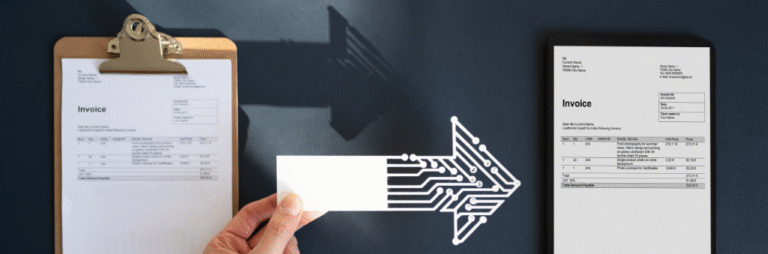
It’s also important to recognise that e-invoicing is not as simple as sending old-fashioned documents scanned into a PDF format. Every electronic invoice relies on standardised formats to ensure consistency in the structure and content of invoices, enabling seamless exchange of data between different systems. An example of a widely used e-invoicing standard is EN-16931 which uses XML to create a set of standards regarding e-invoice syntax. Peppol is a standardised set of formats which uses EN-16931 and is specifically crafted for electronic documents pertaining to procurement processes. Then there is EDIFACT (Electronic Data Interchange for Administration, Commerce and Transport), a global standard for electronic data interchange (EDI) used across various industries. While each of these brings benefits of standardisation and synchronisation across all businesses, the specific standard used can vary from one jurisdiction to the next, which can create challenges inside multinational companies that must produce e-invoices globally.
To start, the UK’s system won’t feature the real-time reporting component required in many other countries, but every VAT-registered business will need to issue specifically structured, machine-readable digital invoices rather than traditional PDFs, Word documents, or paper formats. It’s a move that represents not just a change in invoice formatting, but a significant structural shift from periodic, manual VAT compliance to digital processes. And using history as our guide, real-time, automated processes will almost certainly follow in the UK. Without question, what works for compliance in the UK will not be the same criteria for what multinationals need to pass in other countries, as each jurisdiction will have small but vital nuances to their e-invoicing reporting requirements. That’s why it’s essential that businesses begin to prepare right away.
Understanding E-Invoicing in a Global Context
The fact is that getting the formula right for UK e-invoicing compliance is much bigger than just the UK. The first step businesses need to take is mapping where they sit across this global patchwork of new reporting requirements. Each mandate aligned with the EU’s ViDA initiative follows the same broad blueprint but diverges in detail: Germany requires the managing director’s name on the invoice; Sweden requires the registered municipality; France requires the paid-up capital amount. Technical formats differ too. The Peppol invoicing standard is widely used, but Croatia’s ViDA-compliant mandate, launched only months ago, sits entirely outside that network.
There is also no “hardest jurisdiction” shortcut here, unlike with frameworks such as environmental reporting, where meeting the toughest regional standard tends to cover the rest. Mastering the most complex mandate won’t make the simplest one easier. A credible roadmap treats each market on its own terms and sequences work against the mandates that actually apply to that footprint, not a single UK-specific mandate.
Technology Adoption Will Drive Value Chain Integration
So how can businesses plan not only for a mandate that is years down the road, but for regulations that vary across several different jurisdictions, and others that have yet to be written? To ensure compliance, firms will need a full organisation buy-in and alignment of company accounting, reporting, and technology resource allocation.
Resources & Whitepapers
APThe importance of UX in accounts payable: Often overlooked, always essential
Accounting SoftwareThe power of customisation in accounting systems
Accounting FirmsTurn Accounts Payable into a value-engine
AP8 Key metrics to measure to optimise accounts payable efficiency
The future of e-invoicing is allowing all aspects of the value chain to become integrated and interconnected. That means a truly future-proofed platform needs to handle multiple reporting standards and accommodate country-specific content, and in some cases, local hosting or audit requirements. Just as important is what sits behind the invoicing layer: master data quality, including verification of trading-partner identities, and accurate real-time tax determination. Errors can no longer be quietly fixed after the fact. Once an invoice is wrong, the correct process is to reject it, request a credit note, and report each step to the relevant authority — which means accounts payable and receivable workflows need redesigning, not just re-platforming.
Why Work Should Start Now
This is why e-invoicing compliance is both a technology and a change management challenge. Businesses consistently underestimate the people, process and data work involved, assuming the project ends once a solution is installed. In practice, finance, tax, IT and procurement all need a seat at the table, budgets need to stretch beyond technology procurement into process redesign and data clean-up, and someone needs ongoing ownership as requirements evolve.
To start that process, and bring together the key stakeholders necessary to make the e-invoicing transition as smooth as possible, businesses need to make a checklist that offers an unvarnished look at where they are, and outlines a clear path forward. It should consist of the following:
- Designate an e-invoicing transformation lead:While many tax and finance professionals are generally aware of the looming e-invoicing requirement, there is still a great deal of uncertainty inside most big businesses around whose responsibility it is to drive compliance with the new mandate. Businesses need to determine whether ownership of the e-invoicing transformation initiative belongs with the CFO, CTO, COO, VP of Accounting, or some other business function lead. Importantly, the project lead needs to be given the authority to operate across tax, finance, IT, and operational silos to get the information and the access they need to keep things moving.
- Map the businesses’ footprint across the UK and beyond: It’s not just the UK that’s implementing e-invoicing. Variations of this mandate are rolling out across Europe and beyond. Businesses need to understand their exposure and take an honest assessment of what they will see in VAT registrations, transaction flows, and regulatory exposure across all jurisdictions implementing e-invoicing.
- Build coherent, flexible cross-border data architecture:Leadership must be able to identify the scope of the organisation’s exposure before committing to a specific technology or process roadmap, and develop automated capabilities for tracking, analysing, and reporting across different formats and time requirements. The underlying data and technology infrastructure requirements associated with this are significant, so businesses cannot afford to wait until the last minute in the hopes of cobbling something together.
Given how unevenly, and quickly, this landscape is developing, much of it well outside what’s been said publicly about the UK mandate alone, outside expertise can also be extraordinarily valuable in this process. Specialists tracking country-by-country developments can help businesses avoid both over-investing in a UK-only view and under-investing in jurisdictions moving faster than headlines suggest.
The UK’s 2029 deadline is a useful anchor, but for most businesses operating internationally, it isn’t the deadline that matters most. The work of assessing exposure, choosing future-proofed technology, resourcing the transition properly and bringing in expert input needs to start now, while there’s still time to do it deliberately, rather than against the clock.
- Budget 2026
- Invoicing
- VAT
