

General Compute Raises $100M—Big Deployments Wait Until 2027
November 1, 2026 at 04:10 PM
|Author: QUASA Editorial Team|5 min read
General Compute’s October 27, 2026, Series A announcement disclosed a $100 million round co-led by Blackbird and Abstract, while scheduling its first major inference-cloud deployments for Q1 2027. Fuse Venture Partners and Village Global joined the round. The San Francisco company also put more than 50 MW of capacity in its pipeline and identified an earlier $400 million debt facility from Upper90.
A TechCrunch interview with CEO Finn Puklowski reported an $800 million post-money valuation, a large customer deal worth $100 million in annual recurring revenue, his expectation of deploying 75 MW in 2027 and possible access to 200 MW of power, which he called “more than we can probably fund and get hardware for.” The report linked the earlier financing to a SambaNova chip purchase. The customer contract, deployment target and potential power access measure different parts of the business; none establishes how much computing capacity is operating today.
Equity and debt finance different parts of the buildout
The capital stack has two distinct components. The Series A brings in equity investors at a reported post-money valuation; the earlier Upper90 facility provides borrowing capacity for infrastructure. Adding their face values together would make the venture round look much larger than it is and would treat a borrowing limit as cash already drawn.
- Equity: $100 million in Series A funding, co-led by Blackbird and Abstract, with Fuse Venture Partners and Village Global among the participants.
- Debt: a $400 million facility from Upper90 to support the neocloud buildout. The facility size is not a disclosed drawdown or spending total.
The debt arrangement has a more specific history than the short funding notice suggests. Its link to SambaNova chip purchases and its broader role in financing the buildout can coexist, but the available disclosures do not establish that every dollar has been borrowed or that the entire facility is restricted to one supplier. They also leave open the timing of hardware purchases against customer deliveries.
The reported customer contract matters because expected revenue can support plans to buy and install equipment. Annual recurring revenue is a contract metric, however, and should not be counted as cash received when the equity round closes. Lenders and equity investors fund different risks: equipment can serve as a financing asset, while the startup still needs capital to coordinate suppliers, sites and service delivery.
General Compute is selling operated inference capacity
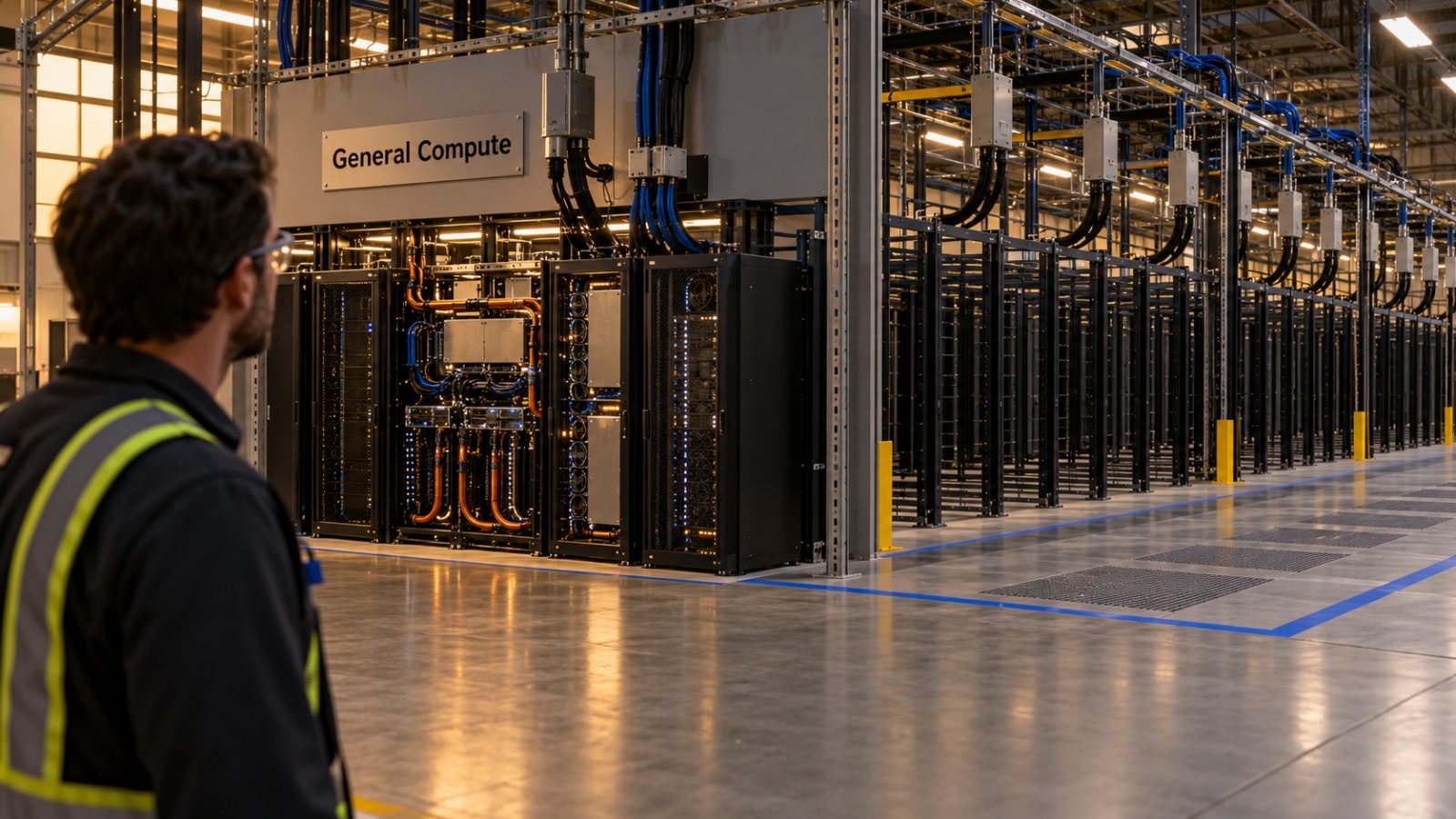
General Compute’s detailed company release describes an operating model in which it buys hardware, installs it in colocation space, and manages cooling, networking, energy and software; it also quotes Blackbird principal James Palmer warning that “both power and silicon supply chains are slow to scale.” Its planned fleet combines GPUs with purpose-built inference systems from Cerebras, SambaNova and Positron AI. Customers can contract for dedicated bare-metal capacity or for a service level that guarantees token throughput.
That model puts procurement and operation on General Compute’s side of the transaction. A customer buying a token-rate commitment does not have to choose a chip supplier or arrange a site; General Compute has to make the full chain work. The value of inference hardware as a service depends on the surrounding power, networking, software and scheduling. Hardware in a facility cannot satisfy a throughput promise until it is installed and functioning as part of the service.
The company’s approach includes renting space in existing data centers, using smaller power sources and converting former bitcoin-mining sites. This can shorten the path to a place for equipment compared with constructing a large data center from scratch. It does not eliminate the lead time for chips, financing or electrical capacity. Deployment remains a sequence of purchases and installations rather than a single event triggered by the funding round.
The megawatt figures describe a sequence, not a total
General Compute’s pipeline of more than 50 MW is prospective capacity. Puklowski’s 75 MW expectation concerns computing capacity he aims to deploy during 2027; his 200 MW figure concerns power he expects to be able to access. Pipeline, annual deployment and potential power access are different measures, so adding them would create a fictitious installed footprint. The available figures also do not specify how much the pipeline overlaps with the annual target.
The distinction is material for customers looking for usable service. Power access can give an operator somewhere to place future hardware, but it does not reveal how many inference systems are running or when a particular configuration will be ready. Likewise, a capacity pipeline can include opportunities at different stages of site preparation and equipment procurement. The first major go-live milestone in Q1 2027 is the nearer operational test of the expansion.
General Compute’s chip suppliers and colocation strategy address parts of the deployment problem, while each installation still needs equipment and a working service around it. The scale of the first major installations will show how much of the planned capacity can move into operation. Until then, the investor valuation, customer contract and power pipeline describe financing and opportunity rather than commissioned inference capacity.
Financing remains part of the operating model
The financing burden continues after this round because General Compute owns the equipment it places in other companies’ facilities. New customer capacity requires hardware, power and installation spending before the service can generate revenue. The Series A funds the company, and the debt facility offers a route to finance equipment, but neither fixes the amount or timing of future purchases.
Potential access to power can outpace the company’s ability to fund and install systems, as Puklowski’s assessment indicates. That gap makes the first major deployments in Q1 2027 the next concrete milestone: installed systems and delivered service can then be measured against the expansion now being financed.
- Suki Raises $90M—Its Next AI Agents Move Beyond Clinical Notes
- Pinecone vs Qdrant: Usage Billing or Reserved Compute Decides the Cost
- CreatorIQ’s Q Agent Can Build Campaigns—but Full Access Waits Until 2027

Infisical Raises $40M at $600M—AI-Agent Access Is the Bet
17 hours ago
Finance & Markets4
Petty Cash Software: What UAE Businesses Need to Know
Oct 29, 2026
Finance & Markets2
QUASA Conducts One of 2026’s Largest QUA Token Buybacks, Removing 1,831,261 Tokens from Circulation
Oct 25, 2026
Finance & Markets10
Best Free Wallet Monitoring Software for Crypto Payment
Oct 22, 2026
Finance & Markets7
How Digital Comparison Tools Help Canadians Find Private Health Insurance That Fits Their Needs
Know a Business Well? A Data Referral Could Earn You $100,000
Oct 21, 2026
Finance & Markets3
