

Fragmentation and First Principles Entrepreneurship
By: Lexi Chu, Intern, MIT Kuo Sharper Center
As a San Francisco teenager, my first thought is Bezos or Zuckerberg when I picture an entrepreneur. American tech billionaires building something huge and new. The promise here: What you build is what you’re worth. In San Francisco, I am surrounded by that ideology. Kids at my school wear OpenAI shirts and idolize the 19-year-old YC founder’s life. Even I got into vibe coding myself, and loved seeing the endless possibilities of things I could make for fun so easily.
Though, that’s the word that started to bother me. Fun. Who gets to build for fun? Around the world, a lot of people don’t have that luxury, especially in growth markets.
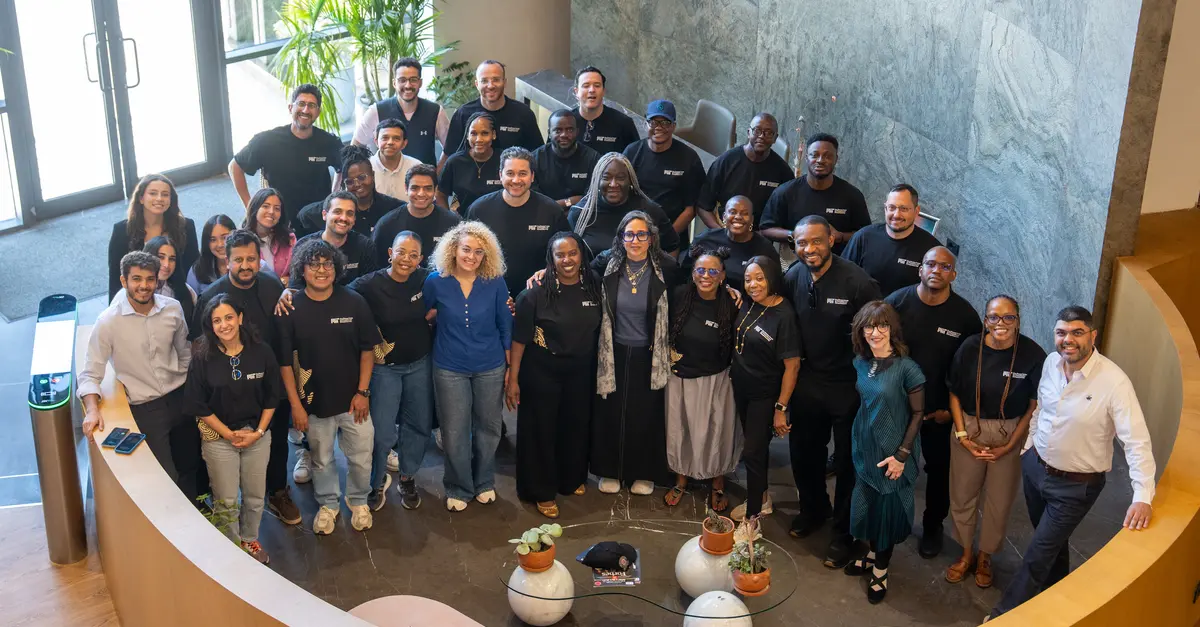
From June 14th to 18th, twenty seven entrepreneurs from nine African countries gathered in Cairo to participate in the Growth Stage Program run by the MIT Kuo Sharper Center for Prosperity and Entrepreneurship, in collaboration with the Government of Botswana. During the program, I had the opportunity to help photograph and film the five intense days of learning where the entrepreneurs attended to gain guidance, strengthen their leadership capacity, and seek better understanding on how to scale their businesses across markets.
Throughout the program, one idea kept coming up: fragmentation.
I first noticed the idea at passport control. Moving through Europe is seamless, while flying between African countries can take three times as long and cost more. Then Harriet, a Kenyan founder, shared how the Maasai people, who live across Kenya and Tanzania, can’t freely trade. Although they are the same tribe, they use two currencies and two sets of rules. They drink the same tea, but it’s sold under different brand names on either side of a border drawn by an outsider.
The same problem showed up at a larger scale in the business sessions. Ronaldo Mouchawar, for example, built Souq, the Amazon of the Arab world. He did so in a region with no postal system, no formal addresses, and a largely unbanked population. He didn’t wait for the infrastructure to arrive. He built his own logistics and payments systems and sold the company to Amazon in 2017. His point stuck with me: “The logistics problem in Africa is a design constraint, not a barrier. The founders who will win are the ones who design around it rather than wait.” Then Walid Hassouna, who built Egypt’s leading consumer-credit platform, said he asks one question before entering any market: “are banks willing to lend me money there? If not, I don’t go.” That question only exists because capital itself is fragmented.
Fragmentation was the consistent concept. The more I heard about it, the more I wanted to know where it originated.
Colonial infrastructure in Africa wasn’t built for Africans. Railways ran to ports rather than between cities. Arbitrary borders cut straight through communities of people like the Maasai. It was built to extract wealth. So when these countries gained political independence, true economic independence was still far from reach. Today, many post-colonial governments are still burdened by this outside-in, top-down logic. Foreign aid, international institutions, and grant programs are decided from far away.
Steve Biko, an apartheid activist, said: “The most potent weapon of the oppressor is the mind of the oppressed.” Years of colonial rule did not just leave broken infrastructure, but also the belief that solutions to your country’s problems come from somewhere else: A foreign government, a foreign investor, a foreign solution to your own country’s problems. When a London governor wrote land policy for 19th-century India with no input from the people actually living under it, we called it wrong. So what do we call it when a program manager in New York decides what Rwanda needs today?
What I saw from the Kuo Sharper Center entrepreneurs refused that idea. Twenty-seven founders building the infrastructure that no one gave them.
They weren’t applying for a grant and hoping.
They were building.
They weren’t solving for outside markets, but for the gaps in their own local markets. They live where the problem is, so they understand it, and advances in technology now lets them build and compete faster than ever before. That’s how solutions for billions of people’s problems will actually get solved.
So what does this mean for me, a 16-year-old from San Francisco?
The founders I met in Cairo have something I don’t: tacit knowledge. They have the first principles understanding you can only build by living inside a problem, not visiting it. That’s what makes their solutions real, and what gets lost every time an outsider decides what a place needs.
Growing up in San Francisco, I thought ambition meant how fast you grow and how much you raise. Africa changed what I find impressive. What got me wasn’t the scale of what these founders were building. It was how much they could do despite how much had been taken from them. How they built from first principles solving real problems. That’s a harder skill. And I don’t have it yet.
I’ll be honest, five days wasn’t enough. So I’m going back. I’m organizing a trip for students from my school to visit these markets. Go, not to advise or volunteer, but to watch, ask questions, and sit with a reality that’s drastically different from ours.
My ask to anyone my age who wants to build: go spend time somewhere that the infrastructure you take for granted doesn’t exist. Not to fix it. To learn from the people who already are. The version of entrepreneurship I grew up with in San Francisco is real. The Bezos and Zuckerberg entrepreneurs are impressive, no doubt, but it’s narrow. The world worth building for is much bigger than the one I’m familiar with, and there is so much it can teach us.

MIT Kuo Sharper Center for Prosperity and EntrepreneurshipWhat Slave-Trading Systems Are We Part of Today?
MIT Kuo Sharper Center for Prosperity and EntrepreneurshipAfrica’s Renewable Boom Is Expanding. African Ownership Isn’t.
MIT Kuo Sharper Center for Prosperity and EntrepreneurshipThe Hidden Lever
