

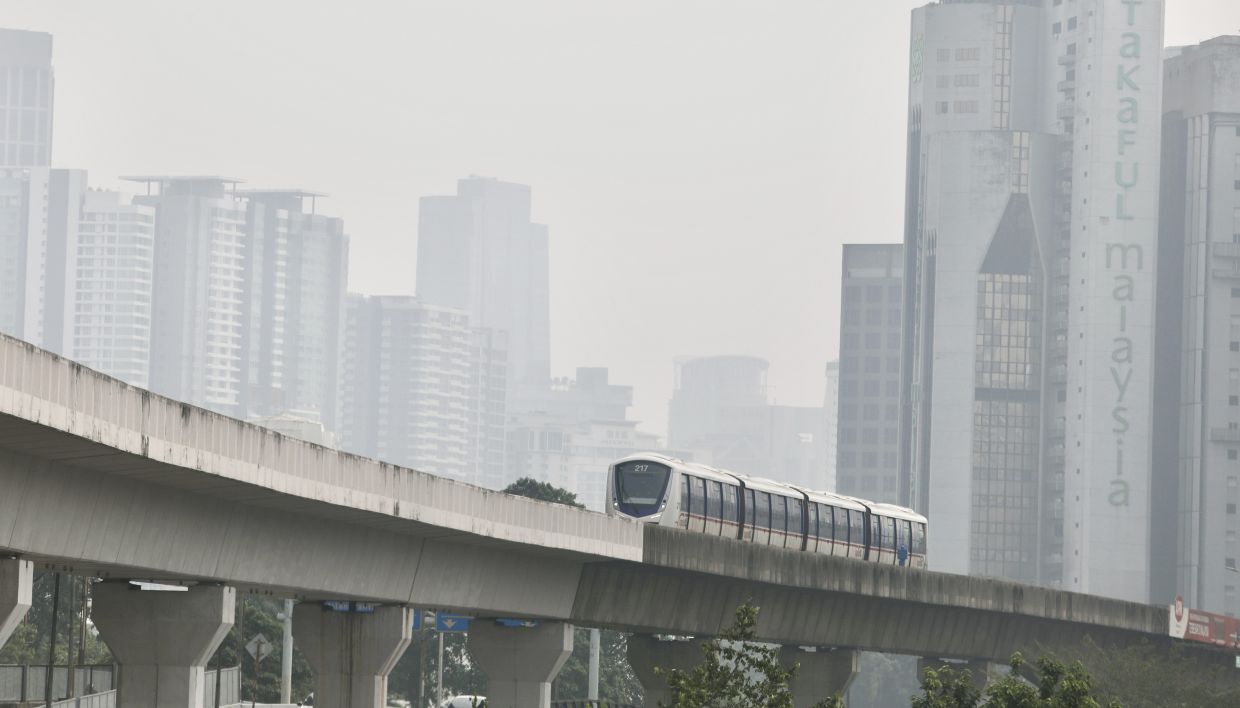
PETALING JAYA: The issue of trans-boundary haze must be brought to the fore at the upcoming Apec and Asean meetings as its effects extend beyond the environment to public health and industrial productivity, says the Federation of Malaysian Manufacturing (FMM).
Its president Jacob Lee Chor Kok said the FMM had commissioned an independent scientific study on this year’s fire season and trans-boundary haze affecting Malaysia and submitted the research paper to the Natural Resources and Environmental Sustainability Ministry.
“For manufacturers, prolonged haze can result in employee illness, absenteeism, disruptions to production and deliveries and additional expenditure on protective measures and healthcare.
“These costs ultimately affect business competitiveness and economic resilience,” he said in a statement on Wednesday (Oct 28).
The study, titled “The 2026 Fire Season and Trans-boundary Haze in Malaysia”, covers the period from July 1 to Oct 22.
Undertaken by Carbon Spur Sdn Bhd chief scientist Dr Piyu Ke, it draws on satellite observations, air-quality monitoring, atmospheric modelling and an FMM member survey to assess the sources, severity and consequences of prolonged haze exposure.
FMM said the research also examined the cumulative effects of pollution exposure instead of focusing solely on peak air pollution readings.
The findings remain provisional as the fire season was still ongoing at the study’s data cut-off date.
Lee urged regional leaders to strengthen cooperation in scientific research, environmental monitoring, early warning systems, sustainable land management and fire prevention.
“Trans-boundary haze does not recognise national boundaries. Its consequences are shared by neighbouring countries, their populations and their economies. Therefore, its prevention cannot be the responsibility of any single country alone,” he said.
FMM called for faster implementation of the Second Roadmap for Asean Cooperation on Transboundary Haze Pollution Control, which covers 2023 to 2030 and supports the regional goal of a haze-free Asean by 2030.
It urged transparent and regular reporting against the roadmap’s targets, timely sharing of hotspot and air-quality data and coordinated early warning and rapid response mechanisms.
The federation also sought stronger enforcement against activities causing forest and peatland fires, alongside adequate resources for prevention and sustainable land management.
It said findings from the 2026 fire season should help identify gaps in implementation and strengthen measures to protect public health and economic productivity.
FMM also encouraged Apec economies to explore satellite monitoring, <a href="https://bitcomme.com/deakin-university-gift-city-campus-launches-master-of-applied-artificial-intelligence-professional-with-industry-roundtable-in-bengaluru/" title="Deakin University GIFT City Campus launches Master of Applied Artificial Intelligence (Professional) with Industry Roundtable in Bengaluru”>artificial intelligence and scientific collaboration to improve regional environmental resilience.
Lee said interconnected manufacturing supply chains meant environmental disruptions in one country could affect businesses across national borders.
FMM said it was prepared to engage with the ministry, the Environment Department and other relevant agencies on the study’s findings and practical policy recommendations.
“Through science, technology, responsible governance and collective commitment, we must move from repeatedly responding to haze emergencies towards preventing them,” Lee said.
