

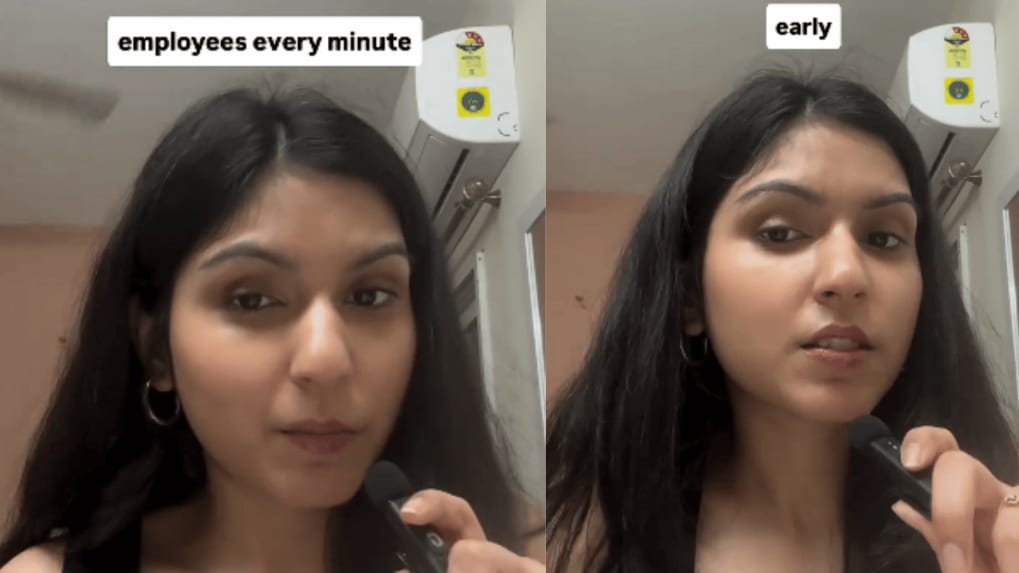
Employee monitoring: Delhi woman says tracking every minute hurts productivity
What if tracking every minute an employee spends at work actually makes them less productive? That is the argument Delhi-based Tanya Singhal has put forward in a post that is gaining attention online.
Singhal shared her experience of working in two very different environments: one where login and logout times, leave and even leaving a few minutes early were closely monitored, and another where the focus was simply on getting the work done.
Her conclusion was clear: surveillance did not make her work harder. Trust did.
‘Why would I give five minutes extra?’
In an Instagram post, Singhal described one workplace where employees were closely watched and even leaving five minutes early after completing their work could have consequences.
She contrasted that with a workplace where employees had more control over their time, as long as their responsibilities were completed.
Her point was that the difference changes how people respond to work.
“If you penalise me for leaving five minutes early even when my work was done, why would I want to give five minutes extra when you need it?” she argued.
According to Singhal, employees are more likely to go beyond their formal responsibilities when they feel their own time and personal lives are respected.
When looking busy becomes the goal
Singhal also argued that excessive monitoring can shift an employee’s focus from productivity to simply appearing productive.
Her view is that when workers feel constantly controlled, they may start optimising for what can be seen by their managers rather than what actually needs to get done.
That can mean prioritising being online, responding instantly or staying at a desk over completing meaningful work efficiently.
“Give someone autonomy and they’ll give you everything. Count their minutes and they’ll give you exactly that: minutes,” she said.
The post taps into a larger workplace debate around how companies measure performance, particularly as hybrid and flexible working arrangements become more common.
Singhal’s argument is not that employees should have no accountability. Instead, she makes a case for measuring outcomes rather than treating hours logged or time spent at a desk as the main indicator of performance.
She said her own experience in a flexible workplace made her more motivated to finish tasks efficiently because she knew she could reclaim her time once the work was done.
The post has since drawn agreement from several users, with comments including “Trust works better than surveillance” and “Stop counting minutes, value results.”
For companies, the question raised by the post is a simple one: is an employee’s productivity best measured by how long they are watched, or by what they actually deliver?
Follow Storyboard18 on Google for the latest and breaking trending news and industry updates, along with in-depth coverage of digital media and special coverage. Stay informed with the latest perspectives only on Storyboard18.
Tags
First Published on September 7, 2026, 17:18:29 IST
