

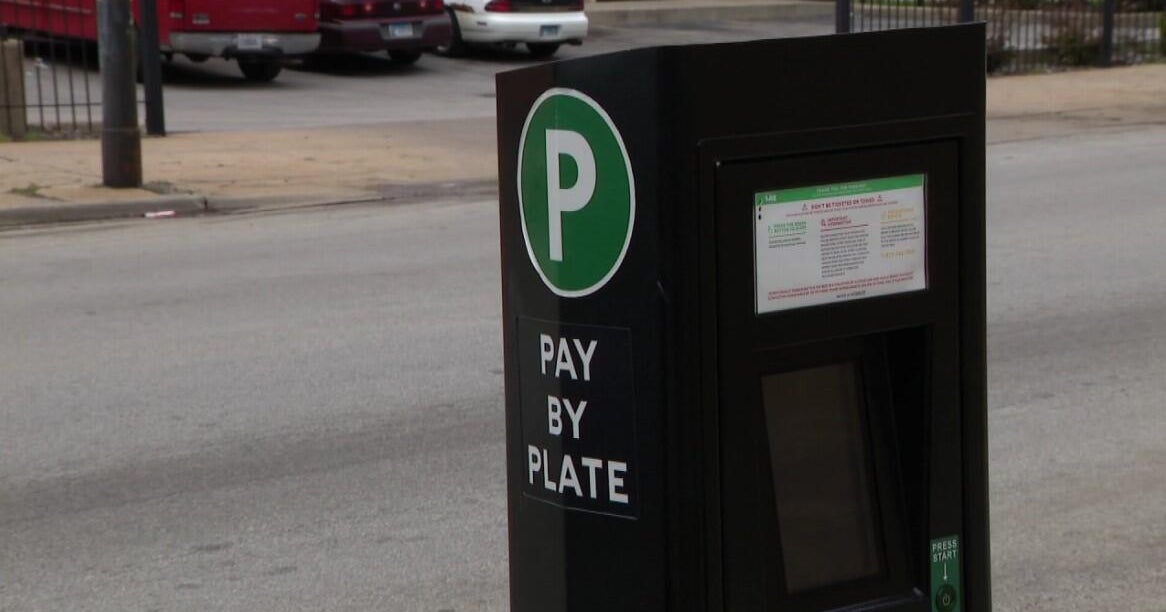
The City Council Finance Committee on Thursday backed a deal allowing Chicago’s parking meters to be sold from one private company to another, as part of an agreement that would see the city start to net a share of future profits.
Only two members of the Finance Committee voted against the sale of the city’s parking meters to New York-based investment firm Stonepeak Partners for $2.53 billion.
The full City Council will hold a special meeting to approve the deal on Friday, ahead of a Sept. 30 deadline for the city to either approve the sale or risk having to fight the deal in court.
In 2008, the City Council approved a deal negotiated by Mayor Richard M. Daley to lease the city’s parking meters to Chicago Parking Meters LLC for 75 years. The company paid the city $1.15 billion for the parking meters, but has since doubled its investment.
Calling the parking meter lease “a textbook case of what not to do in municipal finance,” Finance Committee Chair Ald. Pat Dowell (3rd) said the deal she and a handful of other aldermen negotiated to authorize the sale to Stonepeak will essentially allow the city to make lemons out of lemonade.
“Today we have an opportunity not only to apologize to Chicagoans for the city’s past mistakes, but to back that apology with real, tangible benefits for taxpayers for the first time,” Dowell said.
In May, Stonepeak Partners agreed to buy the system from Chicago Parking Meters LLC, who made the infamous 2008 purchase, but would not disclose the terms of the sale. That reticence led to calls from the City Council for transparency, with the handful of alders who opposed the 2008 deal demanding details before anything moved forward.
Stonepeak is buying out the remaining 57 years left on the contract. Under the deal negotiated b Dowell and Alds. Nicole Lee (11th), Walter Redmond Burnett (27th), Scott Waguespack (32nd), and Gilbert Villegas (36th), the city will receive an upfront payment of $75 million immediately upon the transfer of the parking meters to Stonepeak.
The city also will receive a share of profits, with Stonepeak paying the city 5% of their annual net operating income from the parking meters. City officials estimated that will net the city more than $367 million over the remaining 57 years of the deal.
Stonepeak also agreed to sell Omni Air International, a cargo airline it owns that provides long haul deportation flights for the U.S. Department of Homeland Security. Several alders had raised concerns about Stonepeak’s ownership of Omni given its role in immigration enforcement and mass deportation operations that have impacted city residents.
In addition, Stonepeak agreed to establish some non-metered blocks in Chicago as potential electric vehicle charging stations, then operate them while sharing revenue between the city and the company.
The company also agreed to make sure at least 50% of the employees working on the parking meter system are Chicago residents.
If Stonepeak attempts to sell the parking meters to another company, it must provide the city with 30 days notice and submit a recommendation to Chicago City Council, which will then have 90 days to consider to approve or disapprove the proposed transfer. The city also would receive an additional payment of 2% of the sale price.
“I think that this is an incredible deal for the people of the city of Chicago,” Lee said. “I’m really not willing to gamble any further with the future on this.”
However, Ald. Bill Conway (34th), a former investment banker with JP Morgan and an adjunct finance professor at DePaul University, argued that after Stonepeak is able to factor in the costs of its interest expenses and depreciation of the parking meters, the city will likely end up netting around $140 million in profit sharing over the course of the deal.
“It’s still a win for the taxpayers, it’s just not quite the big win that I thought it was,” Conway said.
Ald. Jason Ervin (28th), who had proposed setting up an infrastructure trust for the city to buy back the parking meters itself, was one of only two members of the Finance Committee to vote against the deal. He argued the City Council was rushing to approve the new deal and should take more time to dig into the details before the Sept. 30 deadline.
“Rome was not built in a day, and I think that there are questions that need to be answered,” he said. “I do believe that we can do better, and I would hope that we have an opportunity to do better.”
Ald. William Hall (6th), the other Finance Committee member who voted against the deal, criticized city officials for not making sure Black-owned firms could get a bigger share of the deal.
“There should be a line drawn in the sand or just some more clarity around why aren’t more Black lead companies involved in the current operation of Chicago Parking Meters and the potential transaction from Stonepeak,” he said.
Mayor Brandon Johnson has said his administration explored the possibility of buying back the city’s parking meters, but determined it would have been too costly.
Johnson said the city would have had to take on a massive amount of debt to buy back the parking meters, and nearly 100% of any parking revenue collected by the city would have to go to paying off that debt for the next 40 years, and effectively force the city to raise parking rates every year to cover that cost.
The mayor also said the city would have faced the risk of parking habits changing significantly over the life of the contract, such as a rise in the number of self-driving cars or a dramatic increase in the use of public transit leading to a significant drop in parking revenue needed to pay off the cost of the contract.
