

Add preferred source
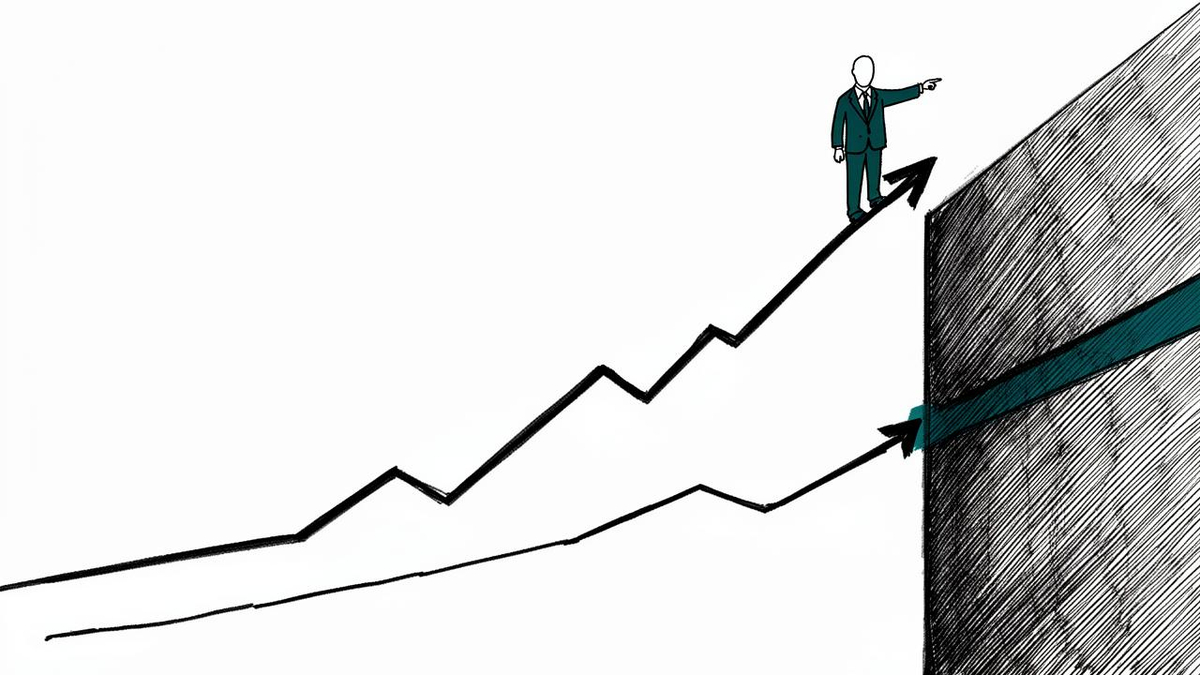
Australia’s 2026 Intergenerational Report projects the economy will more than double in real terms over 40 years, driven by an assumed productivity rebound from 0.3 percent to 1.2 percent annually. Treasurer Jim Chalmers says artificial intelligence will be pivotal to that recovery. But economists including HSBC’s Paul Bloxham and independent analyst Chris Richardson have sharply criticized the assumption, with Richardson calling it “bollocks.” Under a more pessimistic 0.8 percent productivity scenario, per-capita income would be A$20,000 lower at A$129,800, the budget deficit would widen to 4.2 percent of GDP, and gross debt would reach 55.9 percent of GDP. Health and aged care spending is projected to nearly double to 9.7 percent of GDP, while fuel and tobacco excise revenue enters terminal decline.
Key Elements

Australia’s latest 40-year fiscal blueprint rests on a productivity rebound that independent economists describe as implausible, exposing households to a potential A$20,000 (approximately $14,000) annual income shortfall by 2066 if the recovery fails to materialize.
Treasurer Jim Chalmers released the 2026 Intergenerational Report on Monday at the Australian National University, projecting that productivity growth would climb from its 0.3 percent average over the past decade to 1.2 percent annually. That assumption underpins forecasts for the economy to more than double in real terms over four decades and for per-capita income to rise 55 percent.
The report sketches a future Australia that is bigger, older and more expensive to run. Government spending would climb to 27.7 percent of GDP by 2065-66 under the baseline, a record outside the pandemic, driven chiefly by health and aged care costs that are projected to nearly double from 5.5 percent of GDP today to 9.7 percent.
But the central assumption has drawn sharp criticism. HSBC chief economist Paul Bloxham questioned why Treasury expects productivity to snap back so quickly when it declined 0.2 percent in the June quarter alone.
“Our take is that Australia’s economy is largely ‘supply constrained’ due to a lack of housing and cheap energy – AI seems unlikely to fix these problems,” he said.
Independent economist Chris Richardson was more blunt, calling the assumption “bollocks” in a post on X. “The rise of AI is being used as a terrible toupee to try to hide the ever-larger bald spots evident in the Australian economy and the Australian budget,” he wrote.
Chalmers has framed artificial intelligence as “the biggest economic transformation of our lifetime” and said it would “play a pivotal role in reaching long-term productivity growth of 1.2 per cent and higher if productivity gains accelerate over time.”
Treasury noted that two-thirds of Australian businesses have adopted AI in some form, though fewer than 10 percent describe it as significant. The department also pointed to Australia’s outsized use of Anthropic’s Claude, which runs more than four times higher than the country’s population share would suggest.
The stakes are substantial. Treasury modeled a downside scenario in which productivity grows at 0.8 percent annually – still above the Reserve Bank of Australia’s 0.7 percent medium-term assumption – and the results show a markedly weaker nation.
Diverging futures under different productivity assumptions
| Metric (2065-66) | 1.2% productivity | 0.8% productivity |
|---|---|---|
| Real GDP per person | A$157,300 | A$136,600 |
| Gross national income per capita | A$149,500 | A$129,800 |
| Budget deficit (% of GDP) | 1.8% | 4.2% |
| Gross debt (% of GDP) | 27.4% | 55.9% |
| Real GDP growth | 1.6% | 1.2% |
Note: Figures reflect Treasury’s baseline and downside scenarios in the 2026 Intergenerational Report.
Under the pessimistic path, real gross national income per capita – a measure of living standards – would be A$129,800 instead of A$149,500, though still above the current level of A$96,500. The deficit would balloon to 4.2 percent of GDP from 1 percent last financial year, while gross debt would reach 55.9 percent of GDP, up from 33.1 percent today.
The budget’s structure would also shift dramatically. Personal income tax is projected to rise to 14.1 percent of GDP by 2065-66 from 12.3 percent today, making the government increasingly reliant on wage-based revenue. That projection hinges on a longstanding Treasury assumption that tax receipts will never exceed the record 24.2 percent of GDP set in 2005-06 – without which, Treasury conceded, personal income taxes would rise “significantly.”
Meanwhile, traditional revenue sources are in terminal decline. Fuel excise will fall sharply as more Australians switch to electric vehicles, while tobacco excise collections shrink amid the growth of the black market. By 2066, excise and customs duty receipts will be worth less than 0.5 percent of GDP, down from 2.5 percent in 2006.
On the spending side, Treasury identified health and aged care as the single biggest pressure over the next four decades. Extra funding for public hospitals will account for 60 percent of the rise in health spending, climbing to 2.5 percent of GDP by 2065-66 from about 1.2 percent today. About one-third of the projected increase relates to ageing.
“While high life expectancy is resulting in more older people working, it is also increasing the number of years spent in retirement and accessing government services,” Treasury wrote. “Moreover, older people typically use more health care and aged care services, which are among the most costly to provide.”
Chalmers said deaths would outnumber births for the first time by the 2060s.
Treasury attributed the past decade’s weak productivity to the end of the mining investment boom, the absence of significant technological innovation, weakening competitive pressures and a decline in business dynamism. The rise of the so-called “non-market sector” – health, education and the public service – has also cut 0.3 percentage points off productivity growth each year since 2017-18, given these sectors have lower measured productivity than private industries such as mining and financial services.
The department argued its 1.2 percent assumption aligns with those used internationally, citing the United Kingdom at 1.5 percent, New Zealand at 1 percent and Canada at 0.9 percent.
Treasury also examined an upside scenario in which productivity grows at 1.6 percent over the next 40 years. That path would eliminate the budget deficit and allow the federal government to pay off almost all of its gross debt by 2065-66.
The report underscores the budget’s structural challenges regardless of which productivity path unfolds. Spending on defence, interest on government debt and the National Disability Insurance Scheme will all increase as a share of GDP over the next four decades. Age pension outlays will decline as more Australians rely on their superannuation, while education spending is expected to fall from 5 percent of GDP this financial year to 3.7 percent by 2066 as the school-age and university-age population share shrinks.
Migration offers one lever to ease the pressure. Under a scenario where net overseas migration averages 285,000 annually instead of the assumed 235,000, gross debt would fall to 22.9 percent of GDP by 2065-66.
For investors and policymakers, the report frames a critical question: whether Australia can engineer a productivity revival through technology adoption and regulatory reform, or whether structural constraints – housing shortages, energy costs and an ageing population – will keep the economy on a lower-growth trajectory that strains the budget for decades.
The answer will determine whether the average Australian in 2066 earns closer to A$149,500 or A$129,800 – a A$20,000 gap that compounds across a working lifetime.
Once added, BigGo Finance appears first in Google Search Top Stories, so you get the broadest, most up-to-the-minute, and most comprehensive global financial news first.
