

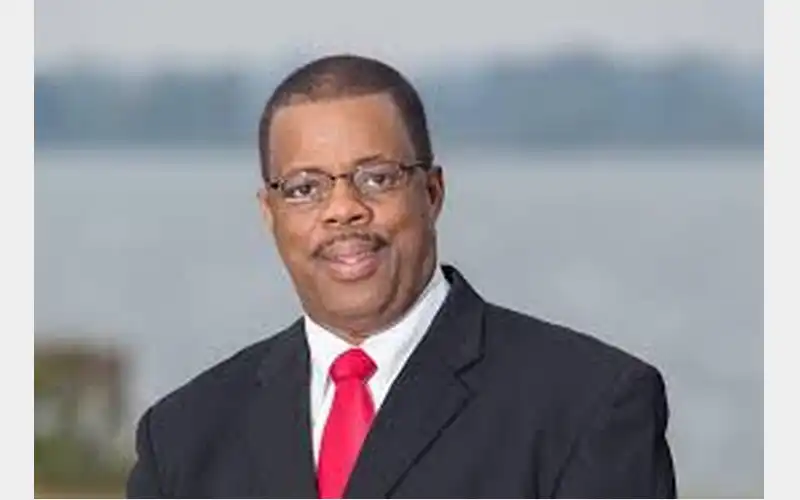
Interim Jefferson County Judge Ivan Whitfield says vehicles and equipment were purchased without the Quorum Court’s prior knowledge, a practice he believes helps explain a state audit finding involving $895,639 in improperly classified county judge expenditures.
The finding was among several included in Jefferson County’s 2024 audit, which examined the final full calendar year of former County Judge Gerald Robinson’s administration.
Arkansas Legislative Audit classified the expenditure issue as a material weakness in the county’s financial controls. Auditors said the purchases were recorded under incorrect classifications and that the county’s records did not comply with state requirements for accurate financial reporting.
During an appearance Monday on Talk Back Live, Whitfield said Arkansas county judges have broad purchasing authority that can be used to obligate the county before members of the Quorum Court are consulted.
Whitfield said the financial and legal problem arises when a purchase is made without enough money in the appropriate budget category and the county judge later asks the Quorum Court to provide the funding.
Whitfield said his review of county finances showed equipment and vehicles had been purchased without the Quorum Court’s knowledge and brought before justices afterward. He said that process operated outside the county’s normal system of checks and balances.
The audit identified several transactions that support broader concerns about purchasing procedures.
Auditors found payments connected to a Mack Trucks contract were made before the required court approval. They also found the county did not seek competitive bids for $68,420 in Road Department trash-cleanup services or a separate Road Department construction project costing $178,627.
Certain lease-purchase agreements, service contracts and bidding documents also were not properly maintained or filed with the Jefferson County clerk, according to the audit.
Whitfield said he asked Jefferson-Lincoln County Prosecuting Attorney Kyle Hunter to meet with auditors after the report was received. According to Whitfield, Hunter is reviewing the audit and would determine whether any findings involved intent, possible criminal conduct or administrative oversight.
The audit itself did not accuse anyone of stealing county money, recommend prosecution or say the $895,639 was missing.
Whitfield used the term “misappropriation” while discussing the findings Monday, but the audit formally described the issue as the misclassification of expenditures and a failure to maintain accurate financial records.
A separate unresolved finding involves $305,694 Jefferson County paid in February 2021 for solar panels intended for three county buildings.
Auditors reported that the panels still had not been installed at the time of the 2024 audit. The solar expenditure was listed as a repeat finding because it had been raised during an earlier review without being resolved.
Whitfield said auditors continue to expect the county to account for what happened to the solar project.
Robinson previously said changes to other county construction projects led money initially intended for the solar panels to be redirected toward other project costs.
He also previously attributed expenditure-classification problems to disputes over supplemental appropriations, saying unsuccessful funding requests affected his office’s ability to use the appropriate budget categories.
The audit’s findings go beyond the classification of county judge expenditures and the solar project.
Jefferson County also failed to obtain federally required compliance audits for 2021, 2022 and 2023 despite spending more than $750,000 in federal funding during each of those years.
Other findings included a residential trash contract signed before an emergency court order related to the service change, a $2,963 Road Department catering purchase for 100 meals when only 45 people signed in and vacation payouts made to two sheriff’s department employees who had not met the county’s continuous-service requirement.
Whitfield said correcting the county’s purchasing problems does not require a new policy.
He said county officials must follow existing bidding and appropriation laws, document transactions and obtain the required Quorum Court approval before committing county money.
Whitfield took office July 1st following Robinson’s retirement June 30. His administration has since begun reviewing county contracts, purchasing practices and Road Department operations while working with Legislative Audit to address the findings.
