

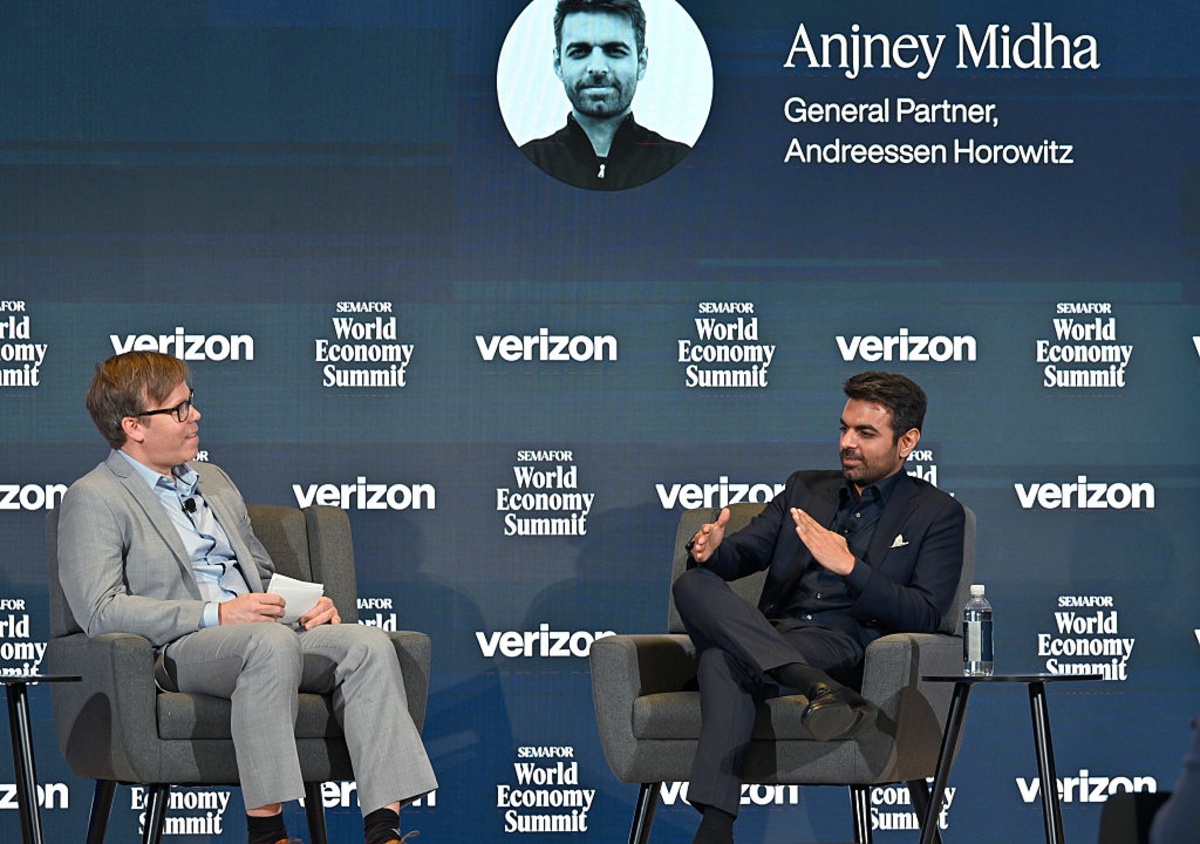
Andreessen Horowitz — the venture capital firm that spent fifteen years arguing software would eat the world — has closed a $1.1 billion fund dedicated exclusively to AI hardware and physical infrastructure, marking the moment Silicon Valley’s most ideologically committed software investor formally declared that physics is now the binding constraint on artificial intelligence. The fund, called the Machine Age Fund, was announced Thursday by five of the firm’s general partners: co-founder Ben Horowitz, Martin Casado, Raghu Raghuram, David Ulevitch, and David George.
The number that explains everything is one megawatt. Today’s AI data center racks draw between 100 and 250 kilowatts — already twenty times what a standard cloud-era rack consumed. Within three years, a16z projects rack power will hit one megawatt of electrical power. That is the power draw of a small factory, packed into a few feet of server enclosure, and it forces the simultaneous reinvention of every layer beneath it: the chips, the memory, the copper-replacing interconnects that can no longer carry the load, the cooling systems, the electrical architecture, the real estate, and the grid access that determines whether any of it gets built at all.
The $1.1 billion Machine Age Fund is a16z’s bet that this reinvention creates a venture-scale startup opportunity — one that Goldman Sachs AI capex projections cannot fill on its own.
Why Hardware Now: The 28-Fold Density Leap That Broke the Supply Chain
The physical trigger for the fund is straightforward to state and stunning in its engineering implications. rack density jumped 28-fold between an NVIDIA H100 system and a Rubin GPU rack. A rack that ran an H100 cluster at five to ten kilowatts now has to deliver 100 to 250 kilowatts to its successor, with a path to 1 megawatt — and nothing in the hardware supply chain was built to handle that transition at speed.
“Every time we have one of these technical epochs, it puts pressure on the infrastructure,” general partner Martin Casado said, Casado on AI infrastructure pressure
The engineering cascade runs through every layer. Within a rack, copper cabling has hit its limits at these densities, making optical or other alternative interconnects a necessity rather than a premium option. Memory bandwidth is the next chokepoint: the models driving this demand need cheaper, higher-bandwidth memory across the entire memory hierarchy, not just at the top. Power delivery itself requires a new architecture — NVIDIA’s 800V high-voltage DC design represents the emerging standard, though it demands substantial electrical infrastructure redesign throughout data centers. And cooling systems engineered for ten-kilowatt racks cannot contain the heat generated by a 250-kilowatt one.
Data center campuses, meanwhile, are data centers scaling to gigawatt class — a scale previously occupied by utilities and industrial sites, not technology companies. Independent analysis confirms the trajectory: Goldman Sachs power demand forecast will grow from 41 gigawatts in 2026 to 66 gigawatts in 2027; construction of new capacity proceeds at roughly 15 gigawatts per year, meaning the physical gap cannot close before 2030. Grid connections currently take five to seven years to secure — while a data center can be built in twelve to eighteen months — creating a structural bottleneck that behind-the-meter power procurement (private solar, nuclear microreactors) exists specifically to address, as Bessemer Venture Partners documented in its May 2026 data center stack roadmap.
The hardware industry, as a16z put it in its fund announcement, is accustomed to growing accustomed to 20–30% annual growth — not the triple-digit growth needed to catch up with demand.
What Venture Capital Fills That Hyperscaler Capex Cannot
The hyperscaler numbers are extraordinary. The top five cloud and infrastructure companies — Amazon, Alphabet, Microsoft, Meta, and Oracle — are projected to spend over $600 billion in 2026, with roughly 75% of that targeting AI-specific buildout. Goldman Sachs global AI capex projection at $765 billion for 2026, growing to $1.6 trillion annually by 2031. Against those figures, the Machine Age Fund’s $1.1 billion is, arithmetically, a rounding error.
That framing misses what the fund is actually doing. Hyperscaler capital expenditure buys existing, proven infrastructure at scale — it procures known GPU architectures, builds data centers around established power and cooling designs, and signs long-term power agreements with utilities. It does not write early-stage checks to a founder developing a novel chip architecture that might replace copper interconnects in five years, or to a startup engineering a liquid cooling system capable of extracting heat from a one-megawatt rack without flooding a building. That is what venture capital does: it funds the technology that the next generation of hyperscaler procurement will eventually buy.
In H1 2026, physical AI startups raised $47.4 billion across 521 deals — up nearly 80% year over year Excluding OpenAI and Anthropic, hardware near one-third of US VC of all U.S. venture capital invested in 2026, per SVB’s Physical AI and Robotics Report. Within a16z’s own deal flow, hardware over 20% of deal flow of the firm’s incoming opportunities
The partners framed the moment with deliberate historical context. Every major computing transition — from mainframes to client-server, to the internet, to cloud and mobile — required a parallel reinvention of physical infrastructure, and each created a generation of hardware companies that captured durable value before the software layer above them matured. What is different this time, the fund’s launch post argues, is the magnitude and speed: “Everything needs an upgrade, now.”
Getting Back to Hardware Roots — a16z’s Prior Physical Bets
The Machine Age Fund is new; the thesis is not entirely so. A16z prior hardware bets including Skydio, wrote its first check into defense technology firm Anduril in 2019 (when Anduril was valued at approximately $1 billion), invested in SpaceX, and participated in Waymo’s 2020 fundraise. These were selective hardware bets made within a firm still primarily organized around software investing.
The team now backing the Machine Age Fund reflects the hardware expertise those bets required over time. Guido Appenzeller, who Appenzeller from Intel Data Center Group where he served as CTO, brings direct chip-industry experience. Raghuram and Casado spent multiple decades building and investing in data center system software that required deep hardware partnership at every layer. David Ulevitch and Erin Price-Wright have led the firm’s hardware and U.S. manufacturing investments through its American Dynamism practice, which already operates a $1.18 billion fund focused on domestic industrial technology.
“Hardware is in our team DNA, and great to get back to roots,” the partners wrote.
The Machine Age Fund sits alongside, not instead of, the firm’s software-focused vehicles. In January 2026, a16z closed $15 billion in new funds across six funds, including a $1.7 billion Infrastructure Fund 2 and a $6.75 billion growth fund. The Machine Age Fund brings total assets under management to more than $100 billion, making the $1.1 billion vehicle roughly 1% of the firm’s total capital — a focused bet, not a wholesale pivot.
What Is Fundable: AI Chips, Memory, Robotics, Edge Devices
The fund’s stated investment scope spans the entire physical stack that AI runs on. At the component level, that means novel chip architectures and memory systems — the raw compute and storage that determine what workloads AI can run and how efficiently it can run them. At the systems level, it means the full data center stack investment scope that ties GPU clusters together.
Beyond data centers, the fund covers robotics — physical systems in which AI models interact with and manipulate the real world — and home AI appliances, a nascent category where the machine intelligence built in cloud data centers eventually becomes embedded in consumer hardware. Edge devices are an explicit priority: power-efficient AI edge devices, as the launch post puts it.
A16z’s recent portfolio already shows where early checks are going. The firm participated in the funding of Netris, which automates GPU cloud networking to address the bottleneck where clusters slow down at the interconnect layer. Other recent hardware portfolio companies named in the announcement include Unconventional AI, Nexthop, Volta, Atoms, Heron Power, and Mind Robotics — a range of bets from chip design to power infrastructure.
Is This a Bubble? How Skeptics Frame the AI Infrastructure Wave
No fund announcement at this scale lands without the bubble question attached. A16z’s Casado addressed it directly in comments accompanying the announcement, saying that while some valuations may fall, overall demand for AI infrastructure remains structurally strong.
The skeptical case is worth stating clearly. Analysts have noted a significant gap between the scale of AI infrastructure investment — $400 billion or more in annual spending — and AI revenue estimated at $100 billion. A working paper from June 2026 co-authored by researchers at multiple institutions examined the AI investment narrative and concluded that the bubble question should be analyzed as a segmented problem across the AI stack — semiconductors, cloud infrastructure, data centers, foundation models, application software — rather than as a uniform judgment. The physical infrastructure layer, characterized by massive capital requirements, long construction timelines, and revenue models tied to long-term contracts with creditworthy hyperscalers, has different risk characteristics than early-stage application software betting on unproven market adoption.
Wing Venture Capital, in a June 2026 essay titled “Software Ate the World. Now Hardware Is Eating Software,” offered context for the rotation: the VC fled semiconductors for two decades while concentrating capital in asset-light cloud and SaaS. AI has reversed that rotation — but the physical layer is genuinely expensive, genuinely hard, and genuinely constrained in ways that software is not. The Machine Age Fund’s bet is that the difficulty is the point: constraints create durable value for the companies that solve them.
Frequently Asked Questions
What does the a16z Machine Age Fund invest in?
The fund invests in the physical infrastructure layer that AI runs on: semiconductor chips and memory, networking equipment and interconnects, storage systems, data centers, robotics platforms, home AI appliances, and energy systems. It also covers the supporting physical buildout — cooling systems, electrical infrastructure, and real estate — that data centers require as rack power density rises from today’s 100–250 kilowatts toward a projected 1 megawatt per rack within three years.
How much power does an AI data center rack actually use — and why does it matter?
A rack in a traditional cloud-era data center drew between 20 and 40 kilowatts. Today’s AI training clusters run at 100 to 250 kilowatts, with some reaching 500 to 600 kilowatts; NVIDIA is targeting 1 megawatt per rack on its Rubin Ultra architecture. That escalation — roughly a 28-fold density increase from an H100 system to current Rubin-class hardware — forces every layer of the physical stack to be redesigned simultaneously: copper networking can no longer carry the load, legacy cooling systems cannot contain the heat, and electrical grid connections that take five to seven years to permit and construct cannot keep pace with a buildout moving at venture speed.
Is a16z the only major VC firm betting on AI hardware?
No. Physical AI startups raised $47.4 billion globally in the first half of 2026 — up roughly 80% from the same period in 2025 — across 521 deals, according to Crunchbase data. Kleiner Perkins has launched a $3.5 billion AI-focused fund; NVIDIA’s venture arm (NVentures) has appeared in multiple physical AI rounds; and other major firms including Sequoia, Khosla, and Lux Capital have made repeated bets in the space. What the Machine Age Fund represents is the formalization, under a dedicated vehicle with a named team, of a thesis that a16z has been expressing through individual portfolio bets for a decade — and a signal that Silicon Valley’s most ideologically software-first firm now considers hardware a primary, not secondary, investment category.
Why can’t hyperscalers fund all the AI hardware innovation themselves?
Hyperscaler capital expenditure — hundreds of billions of dollars annually — buys proven infrastructure at scale: it procures established chip architectures, builds data centers on known power and cooling designs, and signs long-term grid agreements. It is not structured to write early-stage checks to founders building the next interconnect standard, the cooling system for a one-megawatt rack, or the chip architecture that might replace NVIDIA’s dominance in five years. Venture capital exists precisely to fund that earlier-stage, higher-risk innovation that large procurement cycles cannot. The Machine Age Fund is the institutional argument that the gap between hyperscaler procurement and the next generation of hardware it will eventually buy is large enough — and close enough to being filled by startups — to justify a $1.1 billion dedicated vehicle.
ⓒ 2026 TECHTIMES.com All rights reserved. Do not reproduce without permission.
