

Acknowledgments
This task force report is part of a joint initiative by the Center on Global Energy Policy (CGEP) at Columbia University SIPA and the New Energy Industrial Strategy Center (NEIS Center) on the role of governments in supporting the financing of strategic energy transition technologies and projects. It reflects the authors’ understanding of key points made over the course of two roundtable discussions and also represents the research and views of the authors. It does not necessarily represent the views of CGEP, Columbia University, or the NEIS Center. The piece may be subject to further revision.
This work is generously supported by, and delivered in partnership with, the NEIS Center—a thought partner, funder, and community builder that helps create advanced energy systems that support competitive economies and power the industries of the future.
The authors extend their sincere appreciation to the task force project chairs Dave Turk, Wally Adeyemo, and Michael Bruce. They are also grateful to Josh Zoffer, Narayan Subramanian, Sarah Ladislaw, and Jonas Lahm for their guidance, leadership, and thoughtful inputs throughout the project. The authors are deeply grateful to Cina Vazir for his leadership and advice on key parts of the publication. Finally, the authors thank Jack Arnold, Kevin Brunelli, Maximilian Kessler, and Ashish Sharma for their invaluable contributions to the research and drafting of this report.
Top Discussion Points
- The effectiveness of government tools to support the financing of clean energy and critical minerals technologies changes as technologies and projects progress from early research through to demonstration and then commercial-scale operations.
- At early stages of technology development (technology readiness level [TRL] 1–3), grants are typically the most appropriate instrument. Some level of “failure” across a portfolio of grant recipients is a sign of a healthy grant program rather than a weakness.
- At middle stages of technology development (TRL 4–7), cost-sharing agreements between the government and recipient can offer advantages over straight grants because they introduce incentive alignment and commercial discipline.
- At later stages of technology development (TRL 8–9), revenue stabilization instruments are a primary lever for unlocking the large amount of project finance debt required for commercialization of projects.
- The challenge for policymakers is not just choosing the right public financing tool at a given point in time but also appropriately updating it as a technology evolves.
Governments in developed economies have expanded the use of public financing tools to support clean energy and critical materials technology development over the past decade. Notwithstanding recent rollbacks, the Infrastructure Investment and Jobs Act, also known as the Bipartisan Infrastructure Law (BIL); the Inflation Reduction Act (IRA); and the CHIPS and Science Act (CHIPS) were unprecedented in their scale of funding ambition. These measures included a mix of tax incentives, grants, and loans to a wide range of industries and recipients, from large corporations and utilities to research labs conducting early-stage R & D.
The Center on Global Energy Policy (CGEP) at Columbia University SIPA and the New Energy Industrial Strategy Center (NEIS Center) conducted two closed-door expert roundtables in 2025 to reflect on lessons from the BIL and IRA experience, with some discussion of international policies as well. The roundtables brought together approximately 60 participants from across the clean energy technology, investment, and policy ecosystem, including technology and project developers in geothermal, nuclear, batteries, minerals, and renewables; original equipment manufacturer (OEM)-adjacent actors; venture and growth equity investors; infrastructure and project finance investors; bankers; and former senior officials from US government agencies. This paper summarizes a longer task-force report from the roundtables, which can be referenced for additional detail and sourcing information.
This summary paper introduces the conceptual frameworks—technology readiness levels (TRLs) and policy instrument families—to analyze how financing challenges evolve as technologies move through different development stages. The main financing barriers and appropriate policy tools across each TRL stage are discussed, followed by insights on embedded conditionality, program administration, and political durability. A brief consideration of specific policy tools that can be deployed to meet current challenges in the critical minerals, batteries, wind and solar, geothermal, and nuclear sectors is also included.
The task force focused on “market-led” approaches to industrial policy, where private capital leads project development rather than the state assuming full ownership or control. The authors do not engage with the important political economy debates surrounding industrial policy approaches. It must be acknowledged, however, that this analysis operates within a specific techno-economic paradigm that has its own political economy ”winners” and ”losers.” Most notably, market de-risking instruments help capital providers, as those tools bridge a technology’s evolution to their required returns profile without requiring taking on additional risk. This paradigm should itself be the subject of continued analysis and critique to meet the urgency of addressing the energy transition. This paradigm should itself be the subject of continued analysis and critique to meet the urgency of addressing the energy transition.
A central takeaway from the roundtables was that technology development and deployment failures can stem not only from insufficient amounts of government support but also from misapplication of policy instruments as technology risk profiles change. The same instrument can be effective at one TRL but less effective at another. Public support needs to be actively recalibrated as technologies mature—moving from risk-tolerant grants at TRL 1–3, to incentive-aligning cost-sharing at TRL 4–7, to revenue-stabilizing tools such as tax credits and offtake agreements at TRL 8–9. Instrument design and program administration are also critical. Features such as grant speed and flexibility, milestone-based disbursement, credible tolerance for portfolio-level “failure,” and durable institutional structures shape whether policy programs succeed and can sustain changing political conditions.
Technology Readiness Levels and Policy Instrument Families to Support Financing
The TRL framework was originally developed by NASA in the 1970s to describe technical maturity in a narrow sense, but its use has widened to include broader risk categories (e.g., market risks) that remain unresolved in a technology or project’s development
For the purposes of this report summary, TRLs are grouped into three buckets (see also Table 1):
- TRL 1–3: early research and proof-of-concept activities, including basic research, laboratory validation, early prototypes, and predemonstration experimentation.
- TRL 4–7: pilot, demonstration, and first-of-a-kind (FOAK), pre-full-commercial-scale projects. Technologies have been validated in the relevant environment, but their executability, cost, and performance at commercial scale remain uncertain.
- TRL 8–9: commercial-scale buildouts and deployments. Technologies have been technically demonstrated and are capable of reliable performance but face construction, scale-up, cost competitiveness, market, regulatory, and geopolitical risks.

Government policy tools to support the financing of developing technologies are grouped into six instrument families. The families reflect shared characteristics of policy instruments rather than shared relevance to TRLs (see Table 2). The main focus of the task force was on instrument families 1–4 because they directly provide finance or support the financial viability of the recipient. Several challenges, such as foreign currency risk and permitting, are not easily reducible to concepts of risk and return but still represent major barriers to financing, and measures to address these are included in instrument families 5 and 6.
- Upfront capital support includes grants, cost-sharing agreements, concessional loans, loan guarantees, convertible notes, and government equity stakes. These instruments reduce the amount of private capital that needs to be raised and/or provide downside protection.
- Revenue enhancements include investment and production tax credits, accelerated depreciation, and royalty reductions or holidays. These instruments improve project economics once there is an established line of sight to mobilizing private capital, but challenges remain around the cost of that capital or securing the amount required.
- Revenue and price stabilizations include feed-in tariffs (guaranteed renewable energy price), contracts for difference, forward contracts, and advanced market commitments. These instruments address risks from low, uncertain, or volatile market prices and demand.
- Offtake and procurement tools include direct government purchasing, demand aggregation, strategic stockpiling, or long-term procurement commitments. These tools can anchor demand when there is lack of an established offtake market. While similar to and often solving for the same type of commercialization challenges as revenue and price stabilizations, these instruments directly purchase the underlying physical product as opposed to managing volatility in pricing and demand.
- Other risk-mitigation instruments include political risk insurance, completion guarantees, and foreign-exchange hedging. These tools are particularly important for cross-border projects and for technologies exposed to regulatory or geopolitical uncertainty.
- Other enabling tools, including permitting fast tracks, land and energy subsidies, local content rules, trade measures, and exploration support, shape the broader development and investment environment. While not financing tools per se, this category can be critical for securing financing.
Financial Support Needs Change as Technologies Develop
Financing challenges shift across TRL stages as risks change from early research through to demonstration and then commercial scale. This section explores the policy tools that roundtable participants considered best suited to addressing those evolving challenges.
TRL 1–3: Public Capital to Absorb Technical Risk
At TRL 1–3, technical uncertainty makes conventional financing metrics (e.g., cost of capital, payback periods, revenue projections) largely irrelevant. The central challenge is not mobilizing large volumes of capital but ensuring sufficient risk-tolerant funding for repeated iteration, experimentation across multiple technical pathways, and allowance for dead ends. Public R&D grants are the most effective instruments at this stage. Metrics for success at TRL 1–3 include technical learning and a progressing pipeline of technologies, not individual recipient success rates.
Grant program design is just as important as grant size. Small grants with clear but adjustable technical objectives can outperform large, rigid funding packages. Speed of administering and approving projects is also important, particularly in the context of technologies facing international competition. One roundtable participant said that in China, the time from application to disbursement for an equivalent grant program to theirs was 3 months compared with their experience in the US of 12 months and that this difference was critical when competing in a start-up race. Heavily bureaucratized programs with slow approvals, excessive reporting requirements, and inflexible rules undermine the risk-taking that these instruments are meant to support. Multiyear authorization for grant programs and crafting credible narratives about the public value of government support for new clean energy technologies also support the political durability of grant programs.
Philanthropic capital, prizes, incubators, and accelerators are useful complements but not substitutes for a well-designed public grant program. They lack the signaling of policy direction to the private sector and the scale required to build a national R&D ecosystem.
Another funding option, strategic government equity stakes, requires clear governance frameworks and exit pathways. At TRL 1–3, participants noted that equity investments should avoid rigid valuation approaches that may distort technical decision-making and discourage exploration of different technological pathways.
TRL 4–7: Public Support as a Bridge to Commercial Viability
TRL 4–7 can be the most fragile phase of the innovation-to-commercialization pathway, when technologies are scientifically validated but not yet commercially viable. In some cases, failures at this stage are not for lack of scientific promise but for lack of the risk-tolerant capital required to support a period of noncommercial performance while learning-by-doing occurs. Roundtable participants noted that China has excelled in supporting new technologies by widely deploying generous state funding to TRL 4–7 stage recipients and allowing for learning-by-doing to take place.
The key instrument shift at TRL 4–7 is from pure grants to cost-sharing agreements. While government grants typically do include a minimum cost-sharing requirement as well, cost-sharing agreements are used here to refer to arrangements in which a significant share of the costs is borne by the recipient.
Cost-sharing between government and recipient aligns incentives because the recipient now has “skin in the game.” Cost-sharing agreements also take advantage of private sector vetting and expertise, unlike grants, which more heavily rely on public sector knowledge. This coselection with the private sector provides the government with additional data points to inform recipient selection, sometimes described as the challenge of “picking winners.” Sliding-scale cost-sharing can reflect the recipient’s risk profile, with costs paid by the recipient increasing as risk level declines. Public support at this stage can enforce commercial discipline, while overly generous or poorly structured grants can delay the development of bankable project structures and prolong reliance on nonrepayable funding.
Technical validation by public agencies at this stage can act as a quasi-financing instrument through milestone-based disbursements that tie funding releases to demonstrated technical progress. Roundtable participants noted that this is particularly relevant for technologies with underdeveloped advisory expertise such as independent engineers and third-party validators to inform investor due diligence. Public certification sends a de-risking signal that can meaningfully unlock private capital.
Government equity investments at TRL 4–7 can provide an early demonstration of public commitment to a project and signal confidence to the market, catalyzing private investment in subsequent rounds. For this signaling to be effective, investors at the roundtables stressed the importance of clarity around control, governance, and exit intentions, given that the government as an investor is not solely driven by financial returns.
TRL 8–9: Public Instruments to Absorb Scale-Up and Commercial Risk
At TRL 8–9, technologies are technically proven, and the dominant challenges involve construction, scale-up, end-market, and regulatory risks. Roundtable participants noted that project finance lenders (who rely on specific types of project contracts to reduce construction, operational, and revenue risk, often including fixed-price and fixed-volume offtake contracts) require cash flow predictability that new product markets often cannot provide. They also highlighted that permitting uncertainty and regulatory delay at this stage can be key constraints to securing financing. Even in the case of projects with robust returns, participants noted that long permitting lead times and regulatory uncertainty can shift investor interest to alternative opportunities with lower returns but clearer regulatory pathways.
Concessional loans require collateral and repayment, making them more appropriate for later TRL stages. The variety of customizable features in a loan (e.g., principal, interest rate, amortization, covenants, collateral) allows the government to tailor loan terms to the specific risks and characteristics of the project recipient.Loan terms can be structured to support the specific sensitivities of private capital while still ensuring downside protection for the government.
At TRL 8–9, the public financing role can expand from absorbing balance-sheet risk to meeting the rigid investment parameters of infrastructure and project finance lenders. Roundtable participants discussed how contracts for difference, price floors, feed-in tariffs, and long-term government offtake agreements can unlock significant private capital, even with modest price stabilization that mitigates remote downside scenarios.
Tax credits are standardized and therefore scalable, and given the nearer line of sight to taxable income at later TRL stages, they are well suited to projects and technologies in this phase. But because the government remains at arm’s length from the tax credit recipient, the tool is less suited to projects of national strategic importance for which the government seeks a more engaged relationship.
Contingent forms of support, such as reserves that can be drawn if specific risks materialize (e.g., construction overruns, regulatory delays, supply chain disruptions), are a type of public finance instrument that roundtable participants said are underutilized. This support can ease project finance constraints and is especially relevant for material risks outside of the developer’s control that are difficult to insure against.
Instrument Priorities by Technology Cluster
Participants at the roundtables also discussed policy tools to address specific clean energy sectors in the current US context. While the task force report contains a detailed analysis of each cluster, including ideas for innovative instruments at each stage, the summary below can orient US policymakers around general sector progress.
- Critical minerals. Minerals projects often straddle TRL stages simultaneously. Novel processing methods may be at TRL 5 while conventional extraction is at TRL 9, which requires layering government instruments rather than applying a single approach. At early stages, the binding constraint is typically uncertainty about future end markets, making procurement commitments a useful complement to grants. At TRL 8–9, price stabilization and long-term government offtake can be important to support the competitiveness of domestic players.
- Batteries. Next-generation chemistries (e.g., solid state, lithium sulfur) remain at early TRL stages and can benefit from R & D grants. Lithium iron phosphate batteries are technologically mature but face cost competitiveness challenges against Chinese manufacturers. Revenue stabilization and production tax credits with chemistry-specific adders can be useful instruments in this phase of new battery chemistry development.
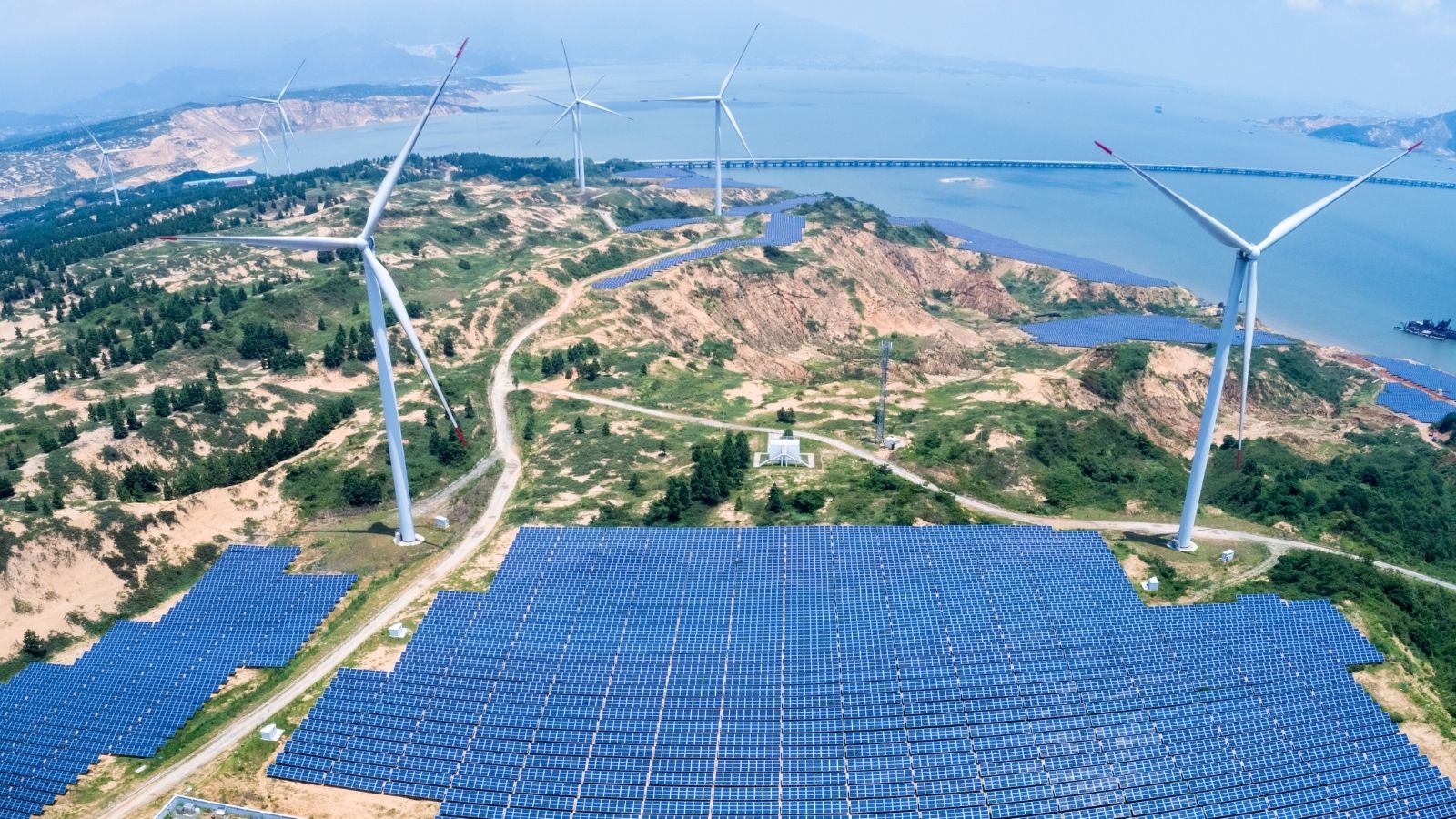
- Wind and solar. Mainstream onshore wind and utility-scale solar PV are at TRL 8–9 and no longer require capital risk absorption. Government support is more focused on accelerating deployment and meeting other industrial policy goals (e.g., domestic content) than on mitigating technology risk. Appropriate instruments can include revenue-stabilization and revenue-enhancement tools such as government power purchase agreements, contracts for difference, and tax credits. The primary financing barrier at this stage is interconnection and permitting delays. Floating offshore wind, however, is at TRL 4–7 and presents a genuinely different profile, as bankability is hampered by complex installation procedures, limited insurance market depth, and uncertain regulation.
- Geothermal. Enhanced and closed-loop geothermal systems are progressing through TRL 4–7, where milestone-based cost-sharing is an appropriate government tool. Risk-sharing instruments that reduce upfront exploration exposure (including allowing tax deductions for exploration costs to be transferred to investors) can meaningfully strengthen project economics at this stage, given high drilling costs and subsurface uncertainty.
- Nuclear. Several nuclear technologies in the US (including some advanced reactor concepts) remain at TRL 1–3 and could benefit from R & D grants. Small modular reactors are at TRL 4–7, where grants, cost-sharing agreements, government equity stakes, and potentially even convertible notes are relevant. Conventional large light water reactors are at TRL 8–9 but face construction and execution risks. Contingent risk support such as completion guarantees and loan guarantees can be consequential at this phase. A lesson that cuts across nuclear at all stages is that government support must be paired with diligence on project contract structure, as financial instrument design alone cannot compensate for poorly structured engineering, procurement, and construction arrangements, which have been the cause of significant project delays and cost overruns in the recent past.
Conditionality, Administration, and Political Durability
Governments can embed conditionality into financing tools to align them with other policy objectives, such as social, political, or geopolitical goals. Eligibility for financing programs, for example, can be conditional on meeting specific requirements such as offering prevailing wage levels or restricting foreign entity involvement. Another way to accomplish this is by adjusting the size and terms of government financing based on meeting certain conditions. For example, the IRA’s tax credits involved “bonus adders” for using domestic content minimums. This can allow conditionality to be graduated rather than binary.
Several cross-cutting lessons on the political durability and administration of government financing programs also emerged from the roundtable discussions.
- Institutional structure can support durability. Grant or lending programs administered at arm’s length from policy departments that are structured as technocratic agencies with clear mandates are more durable through election cycles than programs that sit within policymaking agencies.
- A single accessible register of public programs would support uptake. A publicly available, searchable database of policies to support financing across federal, state, and local levels would reduce the navigational burden on smaller developers that currently lack the bandwidth to identify available support.
- Workforce retention strengthens programs. Government programs that can recruit flexibly from the private sector while retaining institutional knowledge across political cycles are better positioned to deliver robust programs. Participants highlighted that national labs are sometimes government owned but contractor operated, which can support the preservation of talent through political cycles.
- Governments must establish credible narratives about acceptable failure rates. The political memory of Solyndra, a solar panel company that went bankrupt in 2011 after receiving $535 million in DOE loan guarantees, has cast a long shadow over public willingness to fund early-stage risk. Building durable political support requires acknowledging that not every recipient of government support will progress.
CGEP @ Climate Week 2026
September 21-25, 2026 | Columbia University | New York City
The Center on Global Energy Policy will host a series of energy
and climate focused events this September during Climate Week NYC.
