

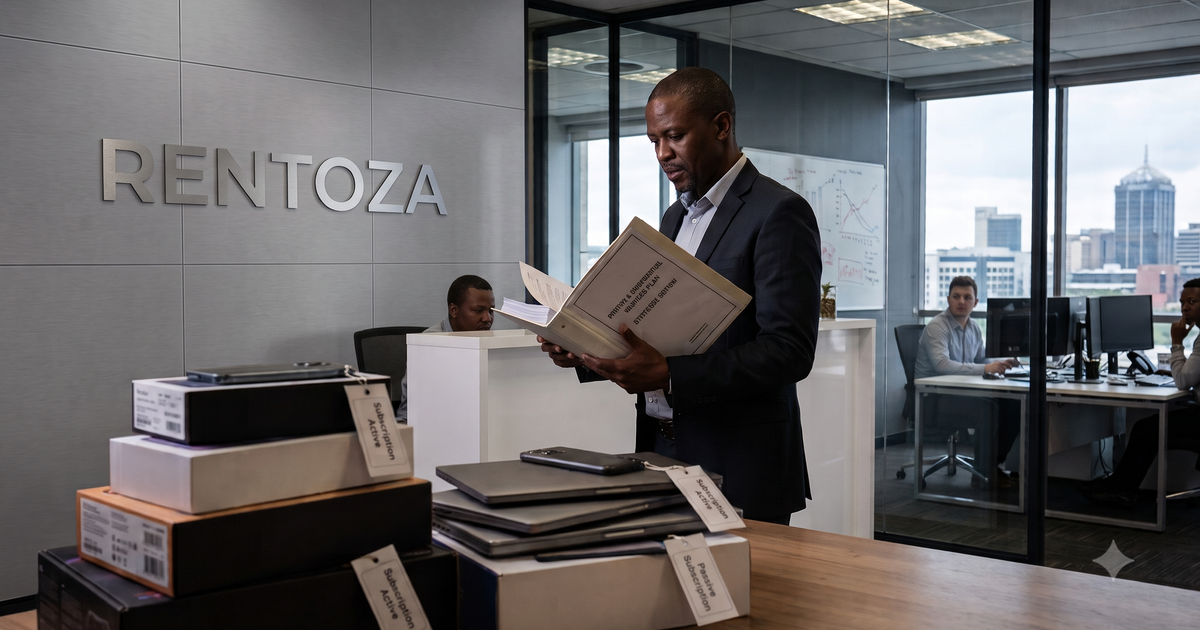
- South African subscription startup Rentoza entered voluntary business rescue in July 2026.
- The crisis stems from cash flow problems and an inability to secure new funding.
- Operational warning signs appeared earlier via delayed customer deliveries and refunds.
- A practitioner is now restructuring the company, with a formal rescue plan due in September.
South African technology subscription platform Rentoza announced that it entered voluntary business rescue on 1 July 2026, saying the company will continue operating while a restructuring plan is developed.
The Sandton-based company appointed Mpoti Moalusi as its business rescue practitioner to oversee efforts aimed at stabilising the business, restructuring its balance sheet and attracting new investors.
According to documents published by the company, the move follows mounting financial distress caused largely by its inability to secure additional funding, deteriorating cash flows and delays in completing its 2024 and 2025 financial audits, factors that undermined its ability to raise fresh capital.
DON’T MISS THIS:African startups get $180 billion from a small, rich island and Gulf financiers
A startup that rode Africa’s subscription boom
Founded in 2017 by Chris Govender, Mishaan Ratan, Aviraag Ramdhani and Avinesh Reddy, Rentoza built its reputation by allowing consumers to subscribe to smartphones, laptops, gaming consoles, household appliances, fitness equipment and other products instead of buying them outright.
The company positioned itself at the forefront of Africa’s growing subscription economy, arguing that many consumers wanted access to technology without the high upfront cost of ownership.
After starting as a rental marketplace connecting customers with third-party suppliers, Rentoza pivoted first to a rent-to-own model before evolving into a direct subscription platform.
The strategy attracted investors. In 2022, the startup secured R20 million in funding from the Mineworkers Investment Company, capital that helped expand its subscription platform across South Africa.
DON’T MISS THIS:
According to the company, Rentoza has processed more than 36,000 subscriptions since launch, with around 14,000 active subscriptions.
Smartphones became its biggest growth driver, accounting for roughly 70% of subscriptions as consumers increasingly sought alternatives to expensive handset purchases.
Warning signs emerged before the rescue
The business rescue did not come entirely without warning.
Last year, customers increasingly complained about delayed deliveries and slow refunds after making upfront subscription payments.
Some users reported waiting weeks to receive products or reimbursements after cancelling their orders.
At the time, Chief Marketing and Strategy Officer Mishaan Ratan acknowledged the operational challenges but said they affected fewer than 2.3% of customers and pledged to clear outstanding refunds while improving customer support.
The company also sought legal services to strengthen debt collection efforts, signalling mounting financial strain even as it continued expanding its product offerings.
DON’T MISS THIS:
Funding winter hits African startups
Rentoza’s restructuring comes as African startups continue to face one of the toughest fundraising environments in years.
After record venture capital inflows during 2021 and 2022, funding across the continent has slowed significantly as higher global interest rates, weaker investor appetite and greater scrutiny of startup profitability forced many companies to prioritise cash preservation over aggressive expansion.
Businesses built on asset-heavy or inventory-intensive models, including mobility, hardware leasing and subscription services, have been particularly exposed because they require continuous capital to acquire products before generating long-term subscription income.
Rentoza acknowledged that its inability to secure fresh funding ultimately contributed to its financial distress.
What happens next?
Business rescue allows financially distressed South African companies to continue operating while attempting to restructure their finances rather than proceeding immediately to liquidation.
Rentoza said its immediate priorities include improving liquidity, preserving operations, reducing costs and maintaining essential services.
Over the longer term, the company plans to seek new funding or a strategic investor, restructure its balance sheet and negotiate settlements with creditors.
The first meeting of creditors and employees was held on 17 July, while the business rescue practitioner is expected to publish a formal rescue plan by 4 September 2026.
If approved by creditors, the plan will guide the company’s restructuring and determine whether one of Africa’s best-known subscription businesses can recover from its funding crisis.
