

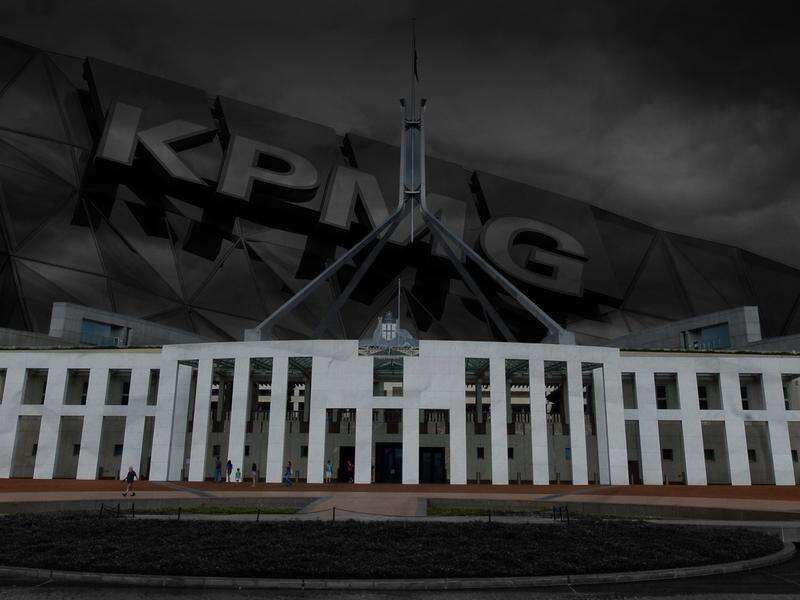
The federal government released an options paper on Wednesday proposing a number of radical changes to the sector, toughening regulatory oversight of the partnerships.
One proposal would prevent auditing companies providing non-audit services, such as accounting and consulting, which would fundamentally change how professional services firms operate.
This would remove the influence of accounting services on auditing and increase confidence in audit quality, Treasury said in its consultation paper, even though it could reduce audit quality and overall efficiency.
Such a move would prevent a repeat of the KPMG audit leaks saga.
Earlier in 2026, KPMG was mired in scandal after Labor senator Deborah O’Neill aired allegations its auditors misused confidential client information to win more audit work.
PwC came under fire for a similar breach in 2022 after leaking federal government tax information to enrich itself and its corporate clients.
Trust in auditing underpinned Australia’s financial system, which had implications for superannuation and the financial wellbeing of everyday Australians, Senator O’Neill said.
“This has shocked corporate Australia,” she told reporters.
“The decision about where we invest our $4.5 trillion dollars (in super) relies on the honesty of the books of these big companies.
“That is what the auditors should be doing; that’s their job, not lining their own pockets, not stepping away from their professional responsibilities.”
The proposed changes were a long time coming, corporate governance expert Helen Bird said.
“They’ll fundamentally change the regulatory landscape for accounting firms,” said Ms Bird, of Swinburne University of Technology.
Importantly, the government had acknowledged accounting partnerships could no longer self-regulate, she said.
By bringing them into the remit of corporate regulator ASIC, they would be effectively treated more like financial services firms.
As well as operational separation of the different arms of the business, Treasury recommended improving audit surveillance, requiring firms to meet quality management and ethical standards, and limiting the number of partners in an accounting firm from 1000 to 400.
The options in the discussion paper would be a significant step to restoring trust in the system, Assistant Treasurer Daniel Mulino said.
“These firms have grown very substantially, and that was accommodated by current regulatory settings,” Mr Mulino said.
“That is one of the settings that we will look at, whether that should be brought down to be more in line with other professional services.”
The options paper showed the number of audit files inspected by ASIC each year had collapsed from almost 100 in 2017/18 to 15.
EY supported many of the options outlined in the consultation paper and had advocated for reforms to bolster governance in the sector, regional chief executive David Larocca said.
PwC, Deloitte and KPMG also welcomed the opportunity to engage on measures to strengthen trust in the sector.
Prime Minister Anthony Albanese said the behaviour of some of the big accounting firms was unacceptable.
“They simply have engaged in behaviour that’s not consistent with Australian law or consistent with the way that people would expect big corporations to operate,” he told the ABC.
EY also faces scrutiny after an employee was one of two people who allegedly accessed the prime minister’s personal banking account while on secondment at the Commonwealth Bank.
The EY employee has since been sacked.
