

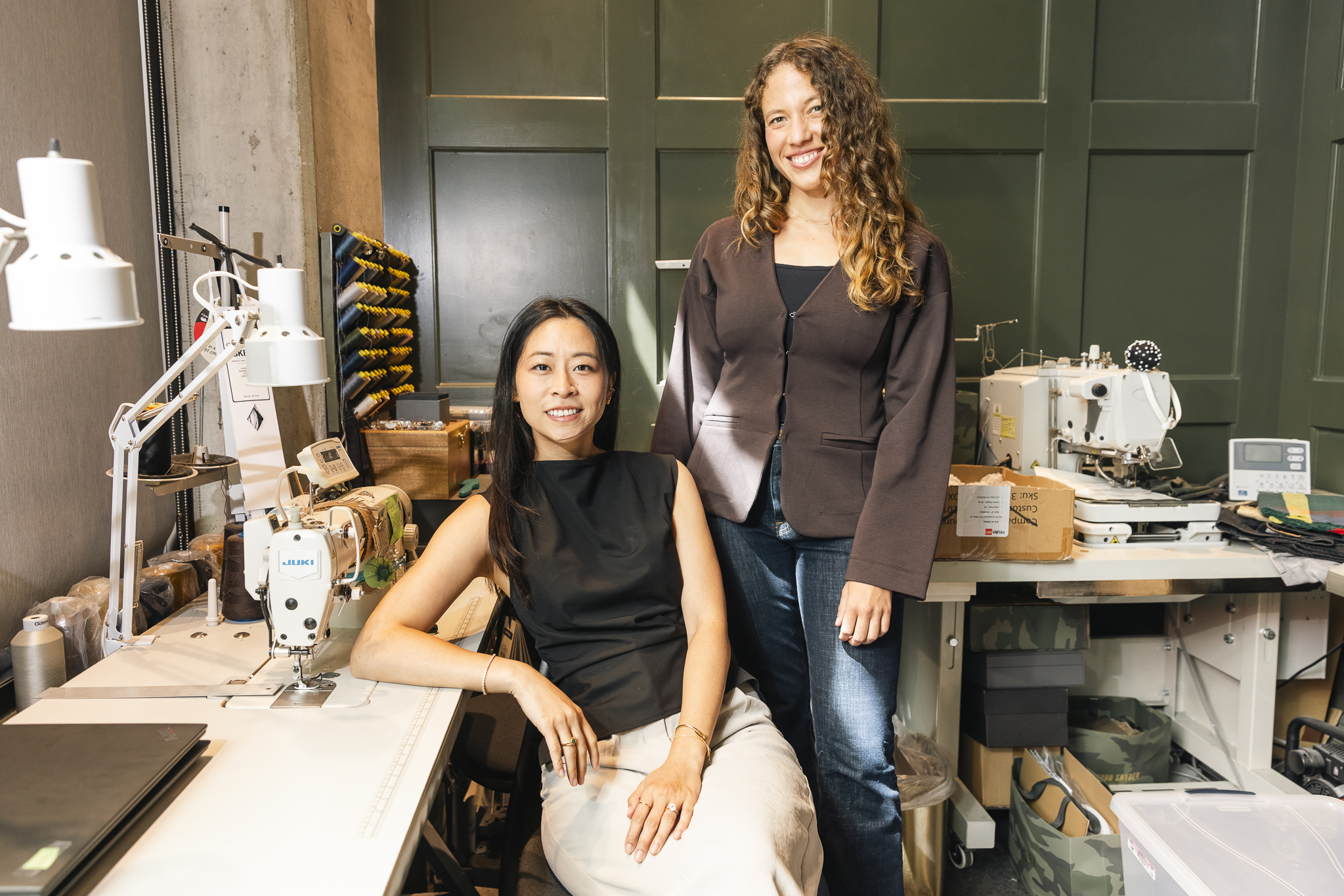
It’s a balmy Wednesday afternoon in Hayes Valley, and Caden Broussard’s hands are completely full.
She’s carrying several bags of clothing and asked to meet me here because it’s where she’s making returns at the nearby boutiques for her long list of clients. The hardest part about shopping for men in San Francisco, she told me, is finding pants. “I think a lot of men in the bay have big thighs from cycling,” she posited.
For Broussard and her business partner Jinny Chen, who both run Cello, a San Francisco startup with an elite team of stylists mostly based in New York who help people revamp their wardrobes, this is all just part of the job. Their customers — who are mostly wealthy, single men in their early 30s and mid-40s who work in the Bay Area’s booming artificial intelligence industry — also share the same goal, especially when it comes to dating or meeting new people.
Article continues below this ad
“Engineers, product managers and founders almost universally have all told me, ‘I don’t want to dress like a tech worker,’” Broussard said.
Even in the year 2026, fleece Patagonia vests still dominate their closets, along with Lululemon’s ABC pants, which are in over a third of their wardrobes, according to Cello’s internal data. Basically, 75% of men’s wardrobes in San Francisco are stuck in business casual purgatory: Their outfits are mostly restricted to neutral colors like black, brown, gray, white and navy, and they typically only have about 13 different brands in their closets.
But it’s understandable why these same men want to distance themselves from the tech industry by ditching the clothes that represent it: Aside from the fact that they’re aesthetically boring, these clothes are political.
Allbirds, aptly called “Salesforce Ones,” for instance, were once an enduring symbol of tech culture in San Francisco before the company suddenly pivoted to AI, and dreary North Face jackets are still common in the city’s grayest commercial corridors. Rent in the city is soaring due to the AI boom, and resource-guzzling data centers are continuing to break ground in California, creating even more tension between the working class and white-collar elites. These types of pieces directly associate its wearer with a maligned industry — but they also make everyone look exactly the same.
As a result, it’s kept Cello’s stylists very busy.

Though the company has been around for only a year, it’s already taken on over 150 San Francisco clients, and they had to stop doing intakes to manage a growing wait list of over 1,000 new customers. According to Broussard, they got most of their first clients by putting up flyers directly outside of Google, Uber and OpenAI offices.
“Most people I know find the SF dating scene very challenging,” she told me. “While that’s unfortunate on a personal level, it’s been good for our business because it’s given many men a reason to care about clothes.”
After scanning and digitizing clients’ wardrobes to help them visualize what they actually own, Cello’s stylists assess them for “gaps,” using this information to create cohesive outfits tailored to each person’s taste, build and budget. This closet curation service costs a one-time fee of $160, and experts are assigned to clients based on their goals and personal needs.
“I think style has a lot more impact than people realize,” Tianyun Lan, a New York-based stylist at Cello who works in the editorial industry, told me. “It changes how you see yourself, but it also influences how the world interacts with you.”
“Clothing can affect your confidence, the way you carry yourself, and even the way you approach certain situations or opportunities,” Lan continued. “It is a form of communication.”
The biggest struggle that Lan’s clients face is fear of change: Oftentimes, they’ll have the same colors and silhouettes of the same blue button-downs, the same worn-out T-shirts and the same set of polos because they feel familiar and safe. Rather than completely nuking someone’s wardrobe, her goal is to expand it, she explained. She doesn’t encourage clients to chase after short-lived trends that don’t actually reflect who they are, either.
Access our new app with ad-free reading, curated maps and more.
GET IT NOW
“I think people usually come to a stylist because they are looking for something more personal,” Lan said. “They want to feel understood, seen and more confident in their own choices.”
Even though Cello is a tech startup, the way it functions is surprisingly human. Much like a trusted hairdresser, stylists are privy to their clients’ personal lives, indirectly providing validation and emotional labor in the process. Some need new wardrobes after overcoming cancer, others are postpartum, and many are trying to find partners or land promotions. For Broussard and Lan, seeing their clients empowered by their new clothes is one of the most rewarding parts of the job.
“Feeling really good about what you’re wearing just makes you feel better and more confident,” Broussard told me. “I think that’s super important for men.”
— OpenAI and Anthropic are ruining San Francisco
— Gen Z gave Walnut Creek a nickname. It’s sticking.
— Why ‘everyone is going to know and love’ Bay Area’s newest trail
— Point Reyes beach closes to the public after fishing boat crash
Get SFGATE’s top stories sent to your inbox by signing up for The Daily newsletter here.
