

Add to Google Preferred Sources
Andreessen Horowitz has launched a $1.1 billion fund called Machine Age, dedicated to AI hardware and physical infrastructure. The fund will invest in computer chips, memory, data centers, robots, interconnects, edge devices, and the cooling, materials, electrical capacity, and real estate needed to support AI systems. The move marks a departure from the firm’s traditional focus on software scaling and comes as venture capital increasingly turns toward AI’s physical layer. The announcement highlights growing concerns that AI-driven data centers are straining electricity grids, with power availability slowing new capacity buildout. The firm described AI advancement as a social and national imperative.
Key Elements

Andreessen Horowitz is taking a sharp turn from its software-first playbook, unveiling a $1.1 billion fund dedicated entirely to the hardware and physical infrastructure underpinning artificial intelligence.
The Silicon Valley venture capital firm announced the new vehicle, dubbed the Machine Age fund, on Friday. It represents a deliberate expansion beyond the software scaling thesis that has long defined the firm’s investment strategy, with capital earmarked for the tangible systems AI depends on.
“We need faster, more efficient systems. We need cheaper and higher-bandwidth memory across the memory hierarchy. We need faster and more scalable interconnects between nodes and systems,” the firm wrote in a post on its website. “We need power efficient edge devices for AI to explore and interact with the world. And of course we need all the cooling, materials, electrical, and real estate build out to support them.”
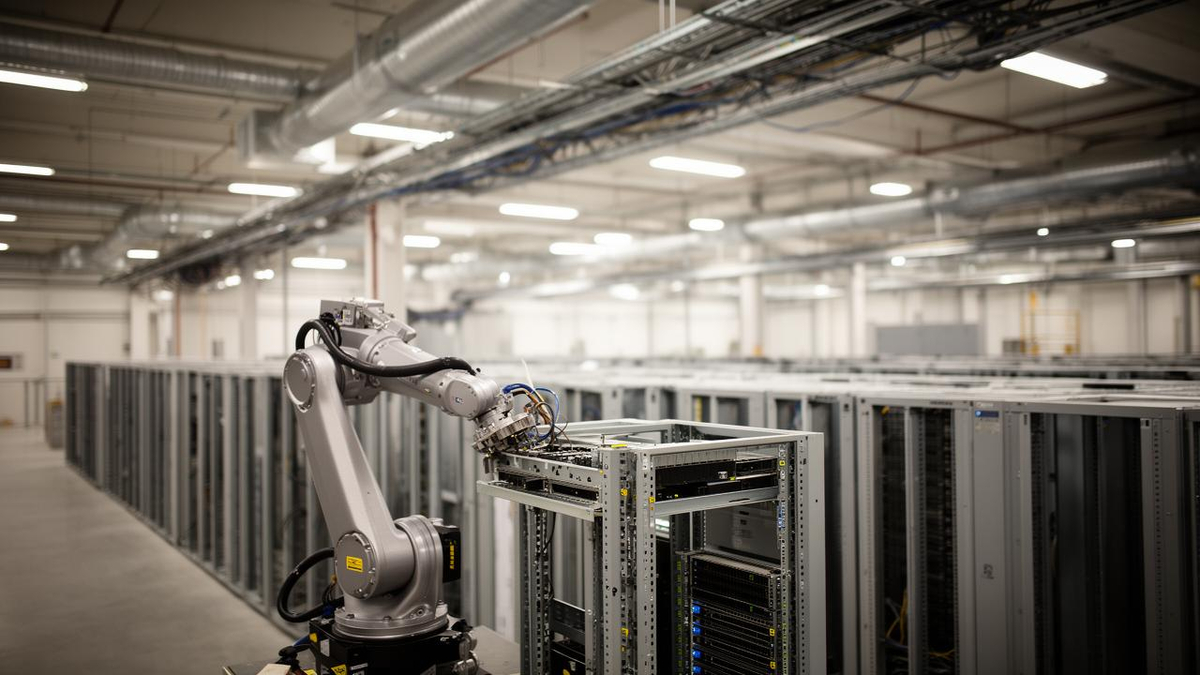
The fund’s stated objective is to “open the throttle and accelerate the physical buildout of AI,” a mandate that spans computer chips, memory, data centers, robots, interconnects, and edge devices, as well as the cooling systems, materials, electrical capacity, and real estate required to keep them running.
The launch lands at a moment when venture investors are increasingly gravitating toward AI’s physical layer. The computational demands of large language models and other advanced systems have pushed data center construction into overdrive, straining electricity grids and creating bottlenecks in power availability and grid connections that are slowing new capacity.
Andreessen Horowitz framed the push in sweeping terms, describing AI as the “strongest tool ever developed for solving problems and bestowing abundance” and calling its advancement a “social and national imperative.”
| Focus Area | Examples |
|---|---|
| Compute | Computer chips, memory, interconnects |
| Physical systems | Data centers, robots, edge devices |
| Supporting infrastructure | Cooling, materials, electrical capacity, real estate |
Note: Categories reflect the investment areas outlined in the firm’s announcement.
The move signals that even firms historically associated with asset-light software businesses now see hardware as a critical bottleneck — and an opportunity — in the AI race. As model training and inference workloads grow, the constraints are shifting from code to silicon, power, and physical space.
For portfolio companies and the broader startup ecosystem, the new fund could provide a capitalgled to attract venture backing. Data center developers, chip designers, and robotics startups all face steep upfront costs that the fund is now positioned to underwrite
The announcement also underscores how AI’s center of gravity is moving from pure algorithms toward the infrastructure that makes them possible, a shift that could reshape the competitive landscape for both startups and established hardware players.
Once added, BigGo Finance appears first in Google Search Top Stories, so you get the broadest, most up-to-the-minute, and most comprehensive global <a href="https://bitcomme.com/kraken-robotics-reports-q2-2026-financial-results/” title=”Kraken Robotics Reports Q2 2026 Financial Results”>financial news first.
