

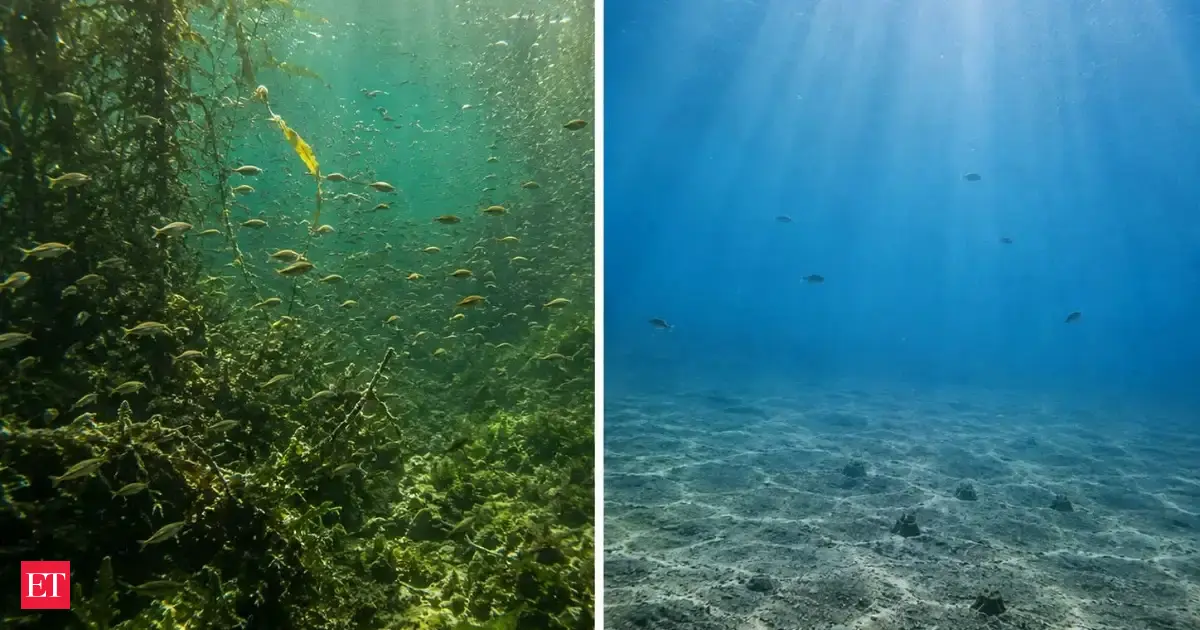

In a research paper titled “Some observations on the ecology and fish management of reservoirs in the United States,” published in the Canadian Water Resources Journal, the USGS scientist N.G. Benson concluded that, by 1980, 1,608 American reservoirs larger than 500 acres each were created, taking about 4 million hectares of riverbeds, forests, and farmlands in the process. The scientific explanation behind it has been around for more than 40 years since 1982. It was a massive, pre-planned reshaping of the natural American landscape, and Benson’s findings reveal what happened next with the fish and plankton communities that survived in the wake of such transformations. Benson described a pattern of early growth, followed by decline and then a long period of relative stability. Four decades later, this pattern has informed reservoir management in the USA.
Growth first, then a leveling off
The first time a valley floods, it becomes a buffet. Dead trees, grasslands, and soil pour their nutrient bounty into the floodwaters. Plankton flourishes. Fish can increase rapidly when food and newly flooded spawning habitat are abundant. Rapid production takes hold. Then the decline sets in, and production settles at a lower level than its peak.
Glen Canyon Dam is a US reservoir that impounds Lake Powell. Image credits: Wikimedia Commons
Why? According to Benson’s USGS research, it boils down to two things becoming scarce: first, the temporarily abundant spawning and nursery habitats; second, detritus, which is the organic matter that sustains the food web. Once the flooded vegetation starts receding and the shoreline stabilizes into something more like a regular lake, the free meal is over. The fish population and their biomass settle down at a more humble level.
This isn’t ancient history; it’s still how US reservoirs behave.
New studies are only reiterating the basic premise, however. A 2024 study titled “Reservoir ecosystems support large pools of fish biomass,” published in Scientific <a href="https://bitcomme.com/wishpond-reports-q2-2026-financial-results/” title=”Wishpond Reports Q2-2026 Financial Results”>Reports, estimated that the total standing stock of fish in US reservoirs is around 3.4 billion kilograms, with annual secondary production estimated at about 4.5 billion kilograms per year: numbers that seem truly impressive for an ecosystem intentionally created by humans. At the same time, the same study is quick to point out that the trends in fish biomass in reservoirs are “non-linear,” implying that the idea that all reservoirs just gradually dwindle is not quite right either.
Furthermore, a 2022 historical review titled “Reservoir Fish Escapement in North America: A Historical Review and Future Directions,” published in the North American Journal of Fisheries Management, states that fishery managers have known for decades now that reservoirs do not operate the same way natural lakes do, and this is precisely the reason behind the existence of most of the current reservoir management practices, such as stocking, water level adjustment, man-made structures, and vegetation planting. In other words, many reservoirs require ongoing human intervention to maintain the fish population at a consistent level.
Largemouth bass. Image credits: Wikimedia Commons
American reservoirs are rather man-made systems supporting drinking water sources, hydroelectricity production, flood prevention, and, fisheries, all sustained through outdated infrastructure that operates outside its initial design. Benson’s study suggests that flooding a valley does not create a permanently positive ecological outcome. Dams are often presented as providing sustainable energy, reliable water supplies and recreation, but they also require ongoing ecological management. But the fish beneath the surface have been adjusting to the loss all along.
Add
as a Reliable and Trusted Newsp channel)
Read More News on
reservoir fish ecologyhumans impact on reservoir ecosystemsplankton and fish communitiesreservoirfish populationlakesfisheriesAmerican reservoirsfishecosystem
(Catch all the US News, UK News, Canada News, International Breaking News Events, and Latest News Updates on The Economic Times.)
Download The Economic Times News App to get Daily International News Updates.
