

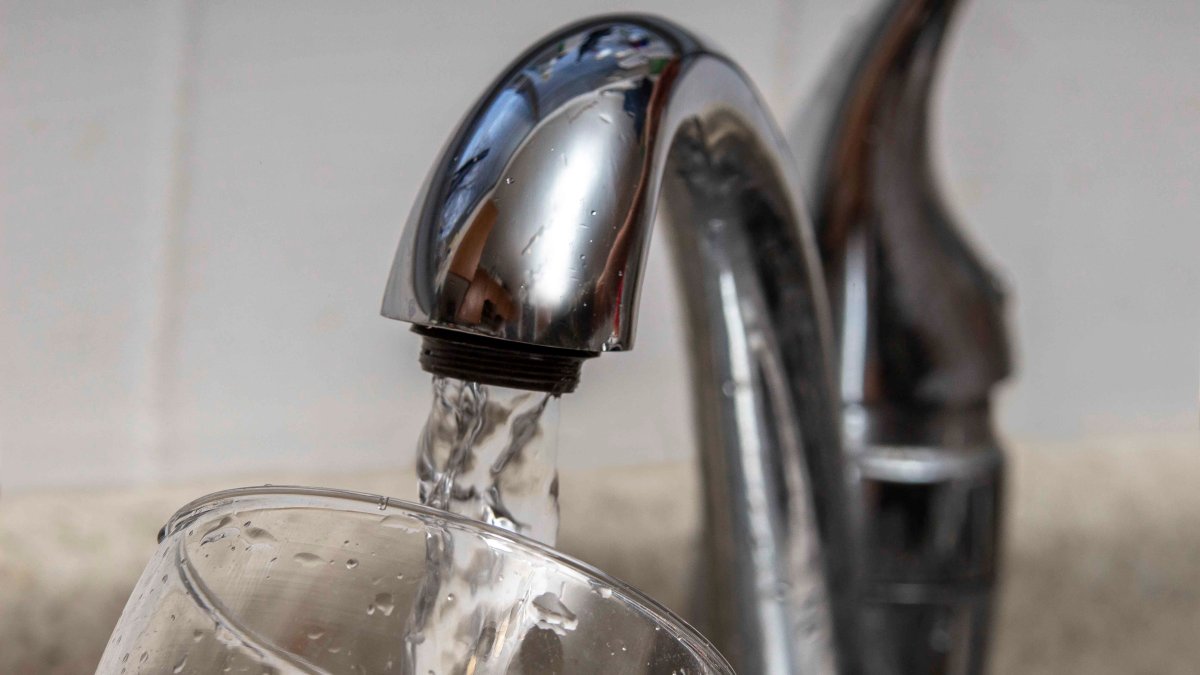

It’s a life or death question for your family: How do you know if the water coming out of your tap is safe if Illinois officials don’t know?
Last Tuesday, NBC 5 Investigates reported on the problem. Now we’re hearing from a suburban Chicago state representative working on a solution and sharing her concerns after the latest cyberattack on U.S. water.
Stream NBC 5 for free, 24/7, wherever you are.
“I think my immediate thought was we need to make sure that we do something to keep our water safe,” said State Rep. Dagmara Alevar, a Democrat who represents southwest suburban Romeoville.
Right now, if your Illinois water system was hacked by cyberterrorists, there is no regulation in place requiring them to report it anybody, either state officials or the feds.
“Cyber security is one of those things that we need to be taking seriously,” Alevar told NBC Chicago in an interview on Monday. “Whether it is a hacker who is from a different country or somebody who is in the United States or down the street, our responsibility is the same, right? We want to make it as difficult as possible for hackers to get into our systems.”
Is Illinois equipped to handle Iranian cyberattacks on water systems?
Iran’s not-so-secret weapon that’s capable of reaching the Chicago area
That wasn’t the case in Minnesota, Michigan, Wisconsin and several other states the past month. These states saw cyberattacks on their water processing computers, and attacks experts say the incidents had Iranian fingerprints.
Rep. Alevar’s legislation, House Bill 3576, would tighten security and require Illinois’ 1,700 community water systems to report any attack to state emergency agencies.
“The bill was introduced before we saw the cyberattacks that have come in the last couple of weeks,” Alevar said. “If anything, I think that we are no longer talking about hypotheticals, but we’re talking about serious risk and things that are happening as we are seeing now.”
When it comes to a potential cyberattack on the drinking water supply in Illinois, is the state fighting with one hand tied behind its back? Chuck Goudie examines that question.
At several small water systems in the U.S., the Franklin Project coordinated by University of Chicago and DEFCON is providing cyber aid and locating water computers susceptible to attack.
“They don’t have to poison the well. All they have to do is convince the public that the well is poisoned…” said an employee of a small New England water purveyor that was inspected by experts from the U of C Franklin Project.
“We’ve had dozens and dozens of them deployed to water utilities over the last two years. Many of the utilities have been able to shore up their own security,” said Jake Braun, former deputy national cyber director in the Biden White House. Braun is now a top cyber expert at University of Chicago and a founder of the volunteer project.
Cyberterrorism experts agree that Tehran is targeting city water systems by hacking into computers, already striking several communities in the Midwest. Chuck Goudie has more details.
And in Illinois, Rep. Alevar says all water systems have to be buttoned up to ensure that what comes out of your tap doesn’t become a weapon of terrorists.
“We want to make sure that we are not just responding to attacks but being proactive about making sure that we don’t have any,” she said.
“Frightening cyberattacks” on water also prompted new federal legislation introduced Monday by Democratic U.S. Sens. Amy Klobuchar from Minnesota and Adam Schiff of California that would put water plant cybersecurity in the hands of the Environmental Protection Agency. Many Republicans and some leading water industry groups already oppose it.
