

Quick commerce is taking a growing share of online sales, forcing established e-commerce platforms to rethink their strategies as consumers increasingly prioritise delivery speed and convenience.
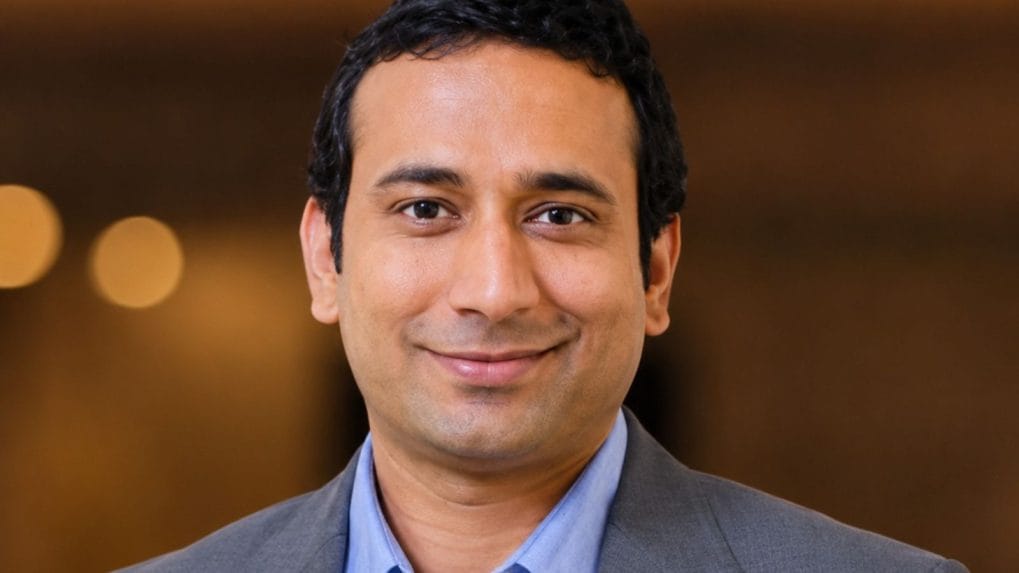
The shift is evident in the changing sales mix of a large client of WPP Media. Four years ago, quick commerce accounted for around 20% of a WPP client’s sales. Today, that share has risen to 80% Head of Commerce, WPP Media South Asia
“One of our large clients used to get 20 percent of their sale about three and a half, four years ago from quick commerce. Because quick commerce was very small and nascent. Today it is the other way around. 80 percent of their sale happened from there,” Ranganathan told Storyboard18.
The shift reflects changing consumer preferences and the emergence of new shopping platforms. While Amazon and Flipkart were once among the primary destinations for online purchases, quick commerce platforms have introduced another option for consumers who do not want to wait for conventional deliveries.
Trending Topics
Carlsberg India IPOMicrosoft OutageJensen Huang ResignsSunil DsouzaSwiggy Revenue
This is also prompting e-commerce majors to enter the quick commerce race through services such as Amazon Now and Flipkart Minutes.
Ranganathan believes the choice between e-commerce and quick commerce is not determined by speed alone. Price and the consumer’s willingness to wait remain equally important considerations.
For instance, if a product costs Rs 100 on Amazon and Rs 150 on Blinkit, consumers must decide whether the convenience of faster delivery justifies paying the premium.
“In case I believe that no, I am willing to wait for a day, I will go with Amazon. But in case I believe that no, I don’t want, then I will go with a Blinkit,” he said.
The emergence of faster-delivery services within established e-commerce platforms is also changing the nature of competition.
“They are precisely to solve for that problem of losing share. How can they ensure that they don’t lose share to anyone else,” Ranganathan said, referring to Amazon Now and Flipkart Minutes.
“Amazon is okay to lose to Amazon Now. Flipkart is okay to lose to Flipkart Minutes. Because it is the same company.”
Convergence is also being seen with the entry of platforms like Blinkit, Instamart, and Zepto into sectors that have never been considered part of quick commerce. The reason behind this is the increasing convergence of e-commerce and quick commerce.
Quick commerce success does not guarantee offline growth
Besides revolutionizing the online shopping experience, the rise of quick commerce is also creating opportunities for brands that seek to test their products on new distribution channels.
In traditional practice, the launch of a product entailed creating an inventory, going through the distributor channel and getting into kirana shops or modern trade stores. Only after determining the success of the product would the brand consider scaling up its operations.
Another approach could be using quick commerce as a method of testing consumer acceptance. Brands with a successful product in a certain region may use this experience to look at expanding to other regions and distribution channels.
But a successful product in quick commerce should not be automatically considered successful in modern or general trade channels
“One thing they need to be cognizant of, what works in quick commerce is not something that will necessarily work in other channels,” he said.
Consumer preferences, he explained, vary depending on the shopping mission and the platform. A consumer buying Coca-Cola at DMart may choose a different SKU when shopping on Amazon or quick commerce.
“It is basis the shopper mission and basis the place where I buy that determines what kind of SKU I buy,” he said.
Brands therefore need to adapt their product formats and assortment to the channel rather than replicate the same strategy everywhere. A product’s success in quick commerce can offer useful insights, but its expansion into other channels requires a separate understanding of consumer behaviour.
Digital-first brands need to move beyond customer acquisition
While changing distribution channels are creating new growth opportunities, digital-first brands face another challenge: sustaining growth after exhausting their existing pool of addressable consumers.
Ranganathan said brands that rely largely on demand fulfilment eventually reach a point where acquiring more consumers becomes difficult and expensive.
Using the example of a liquid handwash brand, he explained that there is only a finite number of consumers actively looking to buy the product at any given time. Once the brand has reached much of that audience, it needs to create demand among newer consumers.
“Then you need to ensure that you build, create demand for that brand of yours. Because if you do not do that, then your CAC will go up and your sales growth will not happen,” he said.
This, he argued, is also why established digital businesses such as Amazon, Flipkart and Netflix continue to advertise despite already having large consumer bases.
“They are doing these things because they want to reach out to newer audiences, whom they can sort of reach out to and communicate and make them as the preferred port of call,” he said.
For digital-first brands, the next phase of growth will therefore require a shift from simply capturing existing demand to creating new demand and expanding their consumer base.
Start with the consumer problem, not the channel
When asked what changes he would make if he were creating his brand again, Ranganathan replied that he would start by recognizing the consumer challenge that the brand will address.
This is because most brands today have access to so much consumer information, and therefore he feels that they are not necessarily lacking data. But sometimes brands that enter new channels use the same strategies as those used in other channels.
“If I were to launch a brand by myself, I think first one of the things I would do is try to understand what is the problem that the brand is solving for,” he said.
The next steps would involve understanding the category, identifying competitors and determining the product format and price point that would work.
Only after establishing these fundamentals would he test the product in a limited manner, ensuring that it is suited to the channel in which it is being launched.
“Once that happens, then you will make tweaks and take it to the next level,” he said.
Follow Storyboard18 on Google for the latest and breaking brand marketing and industry updates, along with in-depth coverage of digital news. Stay informed with the latest perspectives only on Storyboard18.
Tags
First Published onNovember 15, 2026, 10:01:01 IST
SPOTLIGHT

Special CoverageGen Z is rewriting the media-to-commerce funnel, forcing brands beyond traditional cohorts
The conversation highlighted a fundamental shift underway in the relationship between audiences, platforms and brands. Rather than treating Gen Z as a uniform consumer segment, marketers are increasingly having to account for individual behaviours, fragmented content consumption and a stronger expectation
SAC 2026: Swiggy, Nestlé, HDFC, Flipkart, Puma, Lahori Zeera shine | Why Piyush Pandey remains India’s creative North Star
Storyboard18 brings you top five news updates from the world of advertising, marketing, and business of brands.
