

Some say grocery shopping has become aevention (CDC) food recalls and an outbreak of Cyclospora infections
“I feel like, every single day, there’s another announcement for something,” said Miranda Hildebrand. “Whether it’s shards of glass or a particular brand that happens to sell hundreds of other brands under different names. It makes it feel a little scary.”
Hildebrand said she’s trying to keep track of current food recalls after a 50% increase in salmonella-related alerts from last year to now.
“Makes it feel a little scary to even be able to trust when you go out to eat or what you’re putting in your homes,” she said.
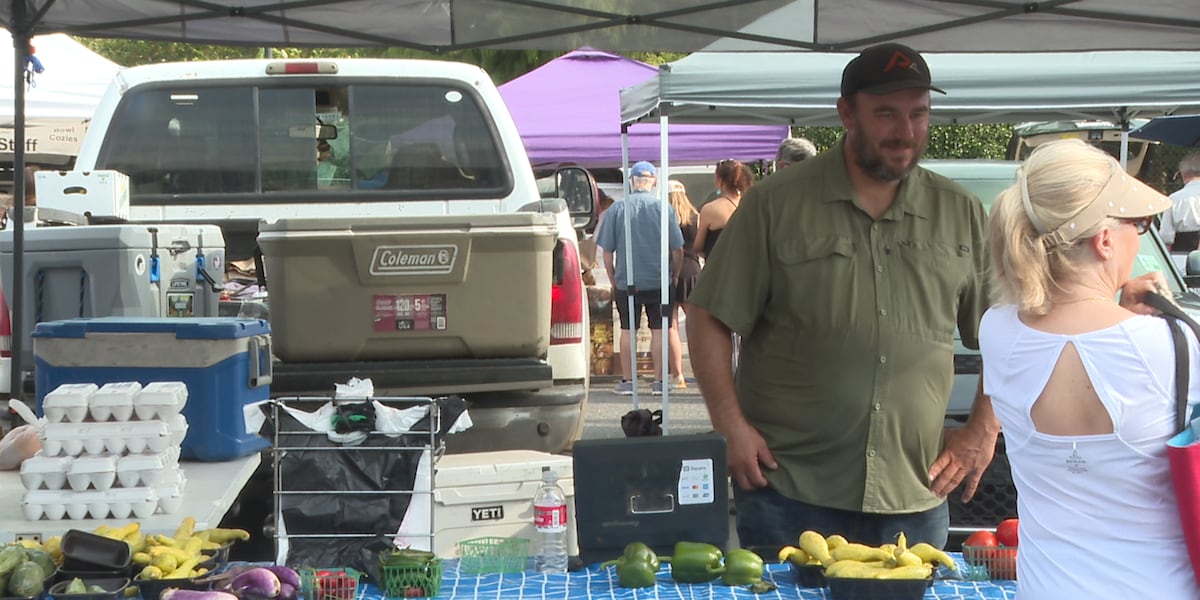
She says that’s why she shopped for produce Sunday (Aug. 23) at the Crescent City Farmers Market, where vendors bring their local, seasonal crops weekly.
Andrew Dennis travels from his farm in Monticello, Miss., to City Park each week. He said small talk at the checkout counter has shifted.
“Customers in the past took for granted and just bought things,” Dennis said. “Now, with the news coming out and you guys covering a lot of what’s going on in our world, they’re more aware of what’s going on. Asking questions.”
Concerns at the market largely are driven by this year’s Cyclospora outbreak. It is a parasite that can cause gastrointestinal illness for weeks or months if not treated properly.
According to an August 2026 CDC report, the agency has received reports of 15,716 laboratory-confirmed cyclosporiasis cases acquired in the United States since May 1, 2026. That compares with 1,180 cases reported over the same period in 2025.
The CDC also said at least 11,841 additional cases may require further investigation.
So far, doctors reported cases in 47 states, plus the District of Columbia and Puerto Rico. The CDC reported 828 hospitalizations and two deaths among cases acquired in the U.S.
Patients ranged in age from 1 to 99, with a median age of 46, and 57% were female. Most people reported getting sick on July 7, 2026.
The CDC said the increase is driven in large part by a multistate outbreak linked to processed iceberg lettuce grown in central Mexico. The agency said it is also investigating at least six other clusters for which sources have not yet been confirmed.
The CDC believes the iceberg lettuce outbreak stemmed from human waste contamination on a Taylor Farms field. The company recalled all iceberg lettuce sourced from central Mexico in July.
“I’d love to get my food from somebody who’s grown it. They care. They’ve touched it. They’re clean. I just … it’s a trust issue,” said Daryl Fife, a local shopper.
That trust is what keeps Dennis coming back to his stall for a sixth year.
“I know every plant out there. Personally, I walk over every day. I know what’s on the plant. If we see a disease, we can pull the plant quick. We know who’s touching the produce. Our hygiene, our PPE. Everything about it, we know,” he said.
Lettuce typically is harvested in the spring or fall, so Fox 8 could not find a stall selling a local option.
“I really miss salads. I haven’t had lettuce for a really long time,” Hildebrand said.
Until consumers regain trust in mass producers, they say they’ll keep returning to the farmers market to meet their food’s grower.
“We’re held responsible, one-on-one. Not through a receipt, a check-in to a service station. It’s right here,” Dennis said.
See a spelling or grammar error in our story?Click Hereto report it. Please include the headline.
Copyright 2026 WVUE. All rights reserved.
